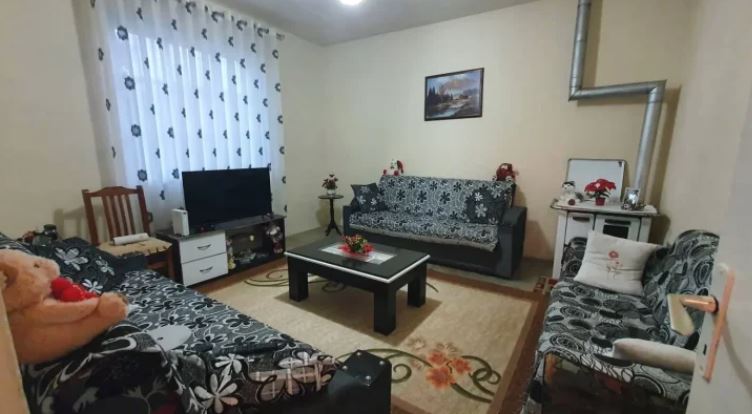



About 38% of families in Albania are unable to keep their homes warm due to low incomes and costs, while the country still does not have a specific program that links financing for housing renovation or heating improvements to families in energy poverty.
The finding comes from the 2026 report on the implementation of the Green Agenda in the Western Balkans, which analyzes developments during 2025.
The report places this problem in the context of reducing the price of electricity for households, Albania's main measure for energy affordability through 2025.
As of February, the tariff for household consumers using up to 700 kWh per month was reduced from 9.5 lek/kWh to 8.5 lek/kWh, or by 1 lek per kilowatt-hour. Of the approximately 1.07 million household contracts, approximately 95% fall into this consumption band and benefit from the lower tariff.
However, the report estimates that price reductions do not solve the structural problem of energy poverty. According to data cited in the document, 27% of the population constantly faces difficulties in paying for utility services, while the percentage of households that cannot provide adequate heating reaches 38%. The report cites this as the highest level of energy poverty in Europe.
The Social Protection Strategy 2024–2030 foresees measures against energy poverty, including the consolidation of financial schemes and the promotion of solar panels in rural areas. Albania's Reform Agenda also foresees the gradual adjustment of tariffs to market prices, accompanied by measures for families in energy poverty.
However, the report finds that until 2025 there was no dedicated program to specifically target grants for housing renovation or heating system improvements to these families.
The contrast with some countries in the region also shows the type of interventions that the report considers necessary. In Montenegro, for example, more than 4,500 households were involved in energy efficiency measures by March 2025, over 2,500 applications had been approved and the program had a total value of over 15 million euros. Grants amounted to up to 10 thousand euros per beneficiary for window replacement, thermal insulation, solar panels and efficient heating systems.
This shifts the problem in Albania from the price of energy to the quality of housing and the ability of low-income families to invest in energy efficiency.
Precisely for this reason, the report recommends that financing for building renovation in the Western Balkans be directed more towards households in energy poverty and not only towards consumers who have capital to invest. /ekofin.al