Democratic Party MP Jorida Tabaku describes the arrest of Ergys Agas not as an isolated case, but as an opportunity to see the mechanism of a system built on criminal money, the captured economy, and political and media influence.
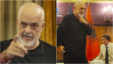
According to her, at the top of this pyramid stands Prime Minister Edi Rama, while the costs are paid every day by Albanian citizens. Tabaku has analyzed the arrest of Ergys Agas and the political and economic system that, according to her, gave him power and influence.
For Tabaku, Agasi should not be seen as an isolated case, but as one of the mechanisms of a larger scheme, which over the years has linked the interests of the criminal world with power, public tenders and politics.
"Ergys Agasi is nothing more than one of the mechanisms of this system. The man, the 'fixer' and, according to the data made public, the intermediary between the dark world of crime and power," declared Tabaku.
She referred to investigative materials and published investigations, according to which Agas's office was attributed with influence in determining the winners of information technology tenders, the businesses that should compete, those that should complain, and the companies that should withdraw from the competition.
"How could a person, from a private office, decide on state tenders, on administration directors and on businesses that should compete? This power does not arise by itself. It cannot be sustained without political support," said the Democratic MP.
According to Tabaku, the arrest of one individual, no matter how important, is not enough to dismantle the scheme.
"The mechanism can be replaced, the office can change and the intermediary can have a different name. But the scheme continues to function as long as the architect who conceived, built and defended it remains standing," she emphasized, placing political responsibility on Prime Minister Edi Rama.
-The three columns that hold the system
Tabaku argued that the system is built on three main pillars, which finance and feed each other.
The first column, according to her, is black money and its connection to the criminal world. This money is introduced into the economy, laundered through construction, property and services, and then seeks to benefit from the state budget.
"It's not just about money that needs to be laundered. It's about money that needs power. Because whoever controls the money also wants to control decision-making," Tabaku declared.
The second column is the captured and privileged economy, where a circle of businesses benefit from public tenders, concessions, PPP contracts, and construction permits without real competition.
According to Tabaku, winners are not always determined by the best offer, as the criteria are drafted in favor of predetermined companies, while honest businesses are eliminated from the competition.
"The winner is decided before the envelopes are opened," she said, adding that favored companies pay two types of "taxes": corruption and electoral.
The first, she says, goes to the officials and intermediaries who open doors, draft criteria, and sign contracts. The second is activated during election campaigns, when beneficiary businesses are asked to provide money, people, resources, and influence to keep the party that favored them in power.
Tabaku also brought to attention the communications made public from the file of former Deputy Prime Minister Arben Ahmetaj, where Mirel Mërtiri appeared writing: "Congratulations PS Përmet!"
"The government awards the tender. Business earns public money. Part of it turns into electoral influence and support. The government wins the elections and then distributes the next tenders," the MP explained.
The third column is the political and media one. Tabaku distinguished between free journalists and the system's attempt to control public debate, relativize scandals, and shift attention away from those responsible.
"This does not mean that every journalist and every media outlet is part of the scheme. On the contrary, there are journalists and media outlets that have done an extraordinary job of uncovering the facts. But the system invests in ensuring that critical voices remain isolated and propaganda has more space than the truth," she said.
-"Corruption is the bill that every family pays"
Tabaku emphasized that the entire system is financed by Albanian taxes, depriving families of the opportunity to have better healthcare, education, and public services.
"Corruption is not an abstract concept. It is the medicine that is missing in the hospital, the school without the proper conditions, the road that is paid for several times more expensively, and the small business that closes because it cannot compete with the privileged," she declared.
According to the Democratic MP, the prime minister tries to distance himself every time a scandal breaks out, by sacrificing a director, denying a minister or claiming he was unaware.
"This system is his offspring. You cannot run the country for so many years, control every decision, appointment and major investment, and then claim that everyone acted behind your back," Tabaku said.
She demanded that investigations not stop only at the intermediaries, but go all the way to the orderers, beneficiaries and political leaders.
"Albania needs tenders where the winner is determined by the best offer and not the government's phone call. It needs an end to concessions, PPPs and tailor-made laws, as well as an administration where the director is accountable to the law and the citizen," said Tabaku.
In conclusion, she described confronting this system as a battle to return the state to its citizens.
"Albania cannot continue to be shackled by a system that feeds on our taxes. It is time to break these shackles and return the state to the Albanians," concluded Jorida Tabaku.