



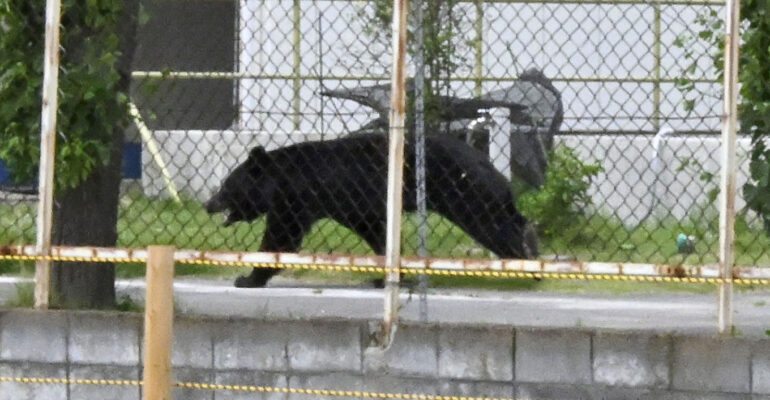



Japan is facing one of the worst periods of conflict between people and bears, with a record number of attacks recorded over the past year. According to authorities, 13 people have been killed and more than 220 others injured in bear attacks between April 2025 and March 2026. With autumn approaching, authorities are on high alert, as this is the period when bears are intensively looking for food before winter. One of the main reasons for the increase in incidents is the expansion of residential areas into territories that once clearly separated settlements from forests. The loss of agricultural land has made the boundary between urban areas and bear habitats increasingly blurred.
“With the loss of farmland that once protected settlements from bears, the boundaries between cities and forests have become much more blurred,” explains wildlife researcher Liam Adcock. At the same time, the number of bears in Japan has increased significantly. Tighter hunting restrictions and a decline in the number of hunters have favored the growth of brown bear populations in Hokkaido and Asiatic black bears in other parts of the country.
Japan is estimated to have an estimated 57 bears. Climate change is also making the situation worse. Natural food sources, such as berries, vegetables and acorns, are appearing later or are less abundant in some areas. As a result, bears are forced to look for alternatives, and one of them is human waste. This has pushed the animals closer and closer to residential areas. Last year alone, about 50 cases of bears near settlements were reported. The Japanese government has described the situation as a serious threat to public safety and has taken measures to control the bear population. The authorities' plan envisages reducing their numbers in some regions by 2030.
However, wildlife experts argue that eliminating the animals is not the only solution. In Japan, alternative technology and methods are increasingly being used to prevent conflicts between people and bears. In several areas affected by the presence of bears, including Gunma, Toyama and Ishikawa, artificial intelligence cameras have been installed in forests near residential areas. The cameras are able to identify bears and immediately alert the authorities. This gives residents time to warn and the authorities the opportunity to intervene before the animal gets any closer. In Hokkaido, a drone system has also been created that can be deployed within minutes of a bear being reported. The drone can track the animal's movements from the air until the authorities arrive.
Experts say the technology could be an effective tool for detecting and repelling bears, but high costs make it difficult to deploy on a large scale. That's why a much more unusual solution has been brought back to some Japanese communities: a robot that looks like a wolf.
Known as the “Monster Wolf,” the robot is a mechanical replica of a wolf, equipped with solar power and voice and movement systems. The device costs about $4 and is designed to scare away bears by imitating the sounds of a wolf. The goal is to keep the animals away from residential areas and farmland. The company that makes it has reported that sales have doubled after the number of cases of bears appearing in cities increased. Meanwhile, a smaller, more portable version is also being developed, suitable for campers, fishermen and people who spend time in nature.
Another way to prevent incidents is to use apps that inform citizens in real time. Engineer Daniel Koka has created “Kumamap,” a digital map that collects data on bear attacks and sightings. The information is obtained from local authorities, the media, and verified citizen reports. The goal is for people to know which areas pose a risk before traveling or entering bear habitats. The app has gained widespread use in Japan. By early August, it had recorded more than 156 incidents and reached about 6 million users.
Meanwhile, researchers are also experimenting with more traditional methods. The Picchio Wildlife Research Center is training specialized dogs to detect the presence of bears and drive them away from residential areas. According to the researchers, fewer incidents have been recorded in cities where this method has been used, despite an overall increase in encounters between people and bears. As autumn approaches, when animals increase their search for food before winter, Japan is expected to face another difficult period. Authorities are trying to find a balance between protecting citizens and preserving wildlife, while technology is becoming one of the main tools to avoid deadly collisions.