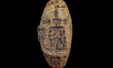



An ancient ring discovered in the 1960s in a fort in the Judean Desert has brought back scholars’ attention to Pontius Pilate and the crucifixion of Jesus. A new analysis of the object, which is engraved with the Roman governor’s name, suggests that he may not have worn the ring himself, but that it may have belonged to one of his administration’s employees. The ring is made of a copper alloy and bears a Greek inscription that relates to the name of Pontius Pilate, the Roman governor of Judea who had the authority to order Jesus’ crucifixion. But its relatively poor quality has raised questions, as gold and gemstone jewelry were more common among people of power and status.
Catherine Bonesso, a professor of ancient Judaism at the University of California, Los Angeles, argues that the ring is more likely to have belonged to an employee of Pilate's administration than to the governor himself. This interpretation could help explain a detail of the biblical account of Jesus' crucifixion, according to Candita Moss, a historian of early Christianity at the University of Birmingham.
The Gospel of John, in chapter 19, shows that a sign was placed on the cross of Jesus that read: “Jesus of Nazareth, King of the Jews.” According to the biblical text, the inscription was prepared at the behest of Pilate. However, Moss suggests that the governor may not have written the text himself, but may have delegated this task to a subordinate. “I think the ring helps us understand why the Bible says that Pilate wrote the inscription that was placed on the cross of Jesus, even though we as historians know that he could not have written it himself,” Moss said, according to the published material.
According to her, Pilate may have entrusted this task to another person working for his administration. This remains a historical hypothesis and not a proven conclusion from the ring itself. The biblical account also describes that Pilate tried to release Jesus, but ultimately sentenced him to crucifixion after pressure from the crowd. According to Roman practice, a sign indicating the charge or reason for the sentence could be placed on the cross of condemned persons.
Bonesso’s argument relies on a linguistic detail in the ring’s inscription. Scholars have debated for years how to interpret the Greek form of Pilate’s name and whether it represents his name or a form that indicates a connection to him. In a 2018 study, the inscription was interpreted as an attempt to write in Greek the form of the name that was used in a different linguistic context, with a final letter missing. Bonesso proposes an alternative explanation, relying on the Latin form “PILATO,” which could be used to mean “for Pilate” or “towards Pilate.”
Analyzing previously published images and drawings, the researcher also questions the interpretation of 2023, according to which the inscription consists of two separate words. According to her hypothesis, the name may have been split to fit the available space on the ring, while the placement and orientation of the letters may be related to the way the engraving was made. In addition to the possible connection to Pilate, the material of the ring provides clues to the status of the person who may have used it. Copper alloys were more often used for simple jewelry, worn by ordinary people, soldiers and lower-ranking officials, while wealthy and powerful figures were more likely to own rings made of gold or with precious stones.
The engraved motif on the top of the ring, considered common in Jewish tradition, also supports the possibility that it was made by a local craftsman. Bonesso argues that the object can shed light on how the Roman administration in Judea functioned and on the role of local residents in it. He also notes that the people who used signet rings, including scribes, could have been slaves or former slaves. However, the ring does not prove that Pontius Pilate himself wore or used it, nor does it directly prove who wrote the inscription on Jesus' cross. Its importance lies in the opportunity it offers to better understand the people who worked for the Roman administration and how official duties were carried out in Judea at that time.