


Merita Kaloçi | Memorie.al
The CIA has published documents that talk about the organization of local government in Tirana and those who were at its head, starting from the Executive Committee of the People's Council of the district, the Prefecture, etc., as well as the relevant sections that were subordinate to them. Likewise, after the names that were published by the CIA on the leaders of the State Security, the leaders of the Ministry of Internal Affairs have also come to light. The CIA has published several other documents on the security services, while showing how the Soviets initiated the reform in the Albanian Army that was at that time under the leadership of the Minister of People's Defense, Major General Beqir Balluku.
February 1954
Local government organization and the Ministry of Interior
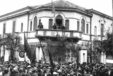
The Tirana Executive Committee is actually the former organization of the city municipality and is located in the former municipality building. It has a chairman, a secretary and 11 members who are each responsible for specific administrative issues such as trade, finance, planning, construction, education, housing, labor and civil status.
Municipal elections are held every two years; the last one was held in 1952. The members of the committees appoint the heads of the neighborhood committees of Tirana, which are also divided into different functional sectors. The members of the neighborhood councils are elected after the conclusion of the local elections.
In May 1951, the housing office was transferred from the executive committee to the center, to a building on Shqipëria e Re Boulevard, due to the large number of applicants. The main function of the Ministry of Interior is in fact that of directing State Security. It also has three main branches according to the three administrative divisions of Tirana.
The following individuals held important administrative roles in the Tirana Executive Committee until 1952: Bim Sina, chairman of the Executive Committee, born in Tirana, married to an employee of his offices, named Merushe Shapllo. Both were partisans during the war and are ardent communists. In recent reports Sina has been in charge of the Secret Archives.
Selaudin Bekteshi, secretary of the executive committee, born in Tirana, 28 years old, married without children. He was also a partisan and is an ardent communist. Murat Mema, responsible member of the Trade section. Born in Tirana, 32 years old, former partisan and ardent communist. Qazim Mema (no relation to Murat Mema), responsible for Finance, born in Tirana, former partisan.
October 1954
People's Army
At the end of 1953, a reorganization of the People's Army of Albania was carried out, according to the instructions of Soviet officials. Several infantry brigades in Korça, Tirana, Gjirokastra and others were disbanded and in their place 3 army corps with infantry brigades and regiments were created. An armored car unit was stationed in the village of Zemblak, dependent on the Korça regiment. An infantry unit was also stationed in Bilisht. The units were armed with Soviet rifles, some of which were sniper rifles.
These battalions do not have transport vehicles, but only animals such as horses and mules, with which they pull the artillery. These units conduct training every day. About 20 officers have gone to the Korça battalions to participate in the training carried out on the heights of Voskopoja, which lasted three weeks. Until mid-1954, the battalion commander of this area is Captain Zarifi from Poloska, who was replaced by Colonel Lulzim Skëndo from Kurveleshi.
Some sources have confirmed that the presence of so many officers in a battalion is due to the fact that brigades have an administrative structure similar to regiments and in case of mobilization they can become regiments. An artillery unit is also located in the Bilisht infantry barracks. This is armed with Soviet 75 mm caliber cannons. Their transportation is done by mules. It is not known exactly how many mules belong to the artillery unit, as they are kept together with the infantry mules, but together they amount to about 120 heads.
Training and recruitment
A number of officers who are released from the army are called up from time to time by letters for two-month training. Residents of the Devoll area have reported on the training of the infantry battalion stationed in Bilisht. In early October 1954, residents of the area who were to perform military service presented themselves at the Bilisht recruitment office.
The people were examined by the committee and those who were selected for border guard service immediately began training. While the others were released and are said to be starting service a few months later. Since 1954, the length of military service in Albania has been extended from two to three years, while for the air force and navy, from three to four years. The information comes from people who serve in the army.
Bilisht Barracks
The barracks are located at the southeastern exit of the city near the Korçë-Kristalopigji highway. They are two one-story stone buildings and one two-story, where the infantry battalion and artillery men are located. In the two-story building there are also carpenters, tailors and shoemakers. The water for the barracks comes from the Bilisht reservoir, as well as electricity, from the main network.
The barracks are surrounded by barbed wire, while a dividing wall with the road is also being built. During the day, the barracks are guarded by a guard stationed at the entrance to the camp and there are also two permanent posts with machine guns. The Church of Arghija e Parashqevië near the Bilisht cemetery serves as an ammunition depot for the battalion and is surrounded by barbed wire.
Labor army
In late August, the Bilisht police commander, Captain Beqir Alia, gathered the residents and gave a speech in which he tried to convince the young people to join the volunteer labor army, arguing that the work was needed to build the Cerrik oil refinery. But since only one person agreed to apply, the authorities were forced to hire paid workers.
In the village of Bilisht there are about 15 armed residents, who must assist the police whenever necessary, to set up ambushes or in pursuit operations. One of these is Ahmet Çakerri, who is the most trusted by the authorities, because he is a communist. Whenever there is a need for help, the police turn to him.
Border fortifications
Until April 1954, the residents of Kapshtica could not cross the Kapshtica-Kristalopigji highway to reach the cattle pastures on the southern side. But later the road was opened and the villagers could graze their animals close to the border. Previously, an area there had been mined, which was cleared by the authorities.
About 75 percent of the inhabitants of Bilisht are Muslims and 25 percent are Orthodox Christians. But the village has no Hoxha and the mosque has been turned into a cinema, so the inhabitants do not perform religious rites. Likewise, the Orthodox population does not go to church, because those who do so are ridiculed by the communist youth of the village.
In Bilisht there is only one Orthodox priest, who celebrates mass on Sundays in the Church of Saint Anasthasis. His name is Kristo Llafazani. Bilisht has a hospital with about 60 beds. The hospital has a doctor who graduated in Tirana and 5 nurses (3 women and 2 men). Medical visits are free for everyone.
Those hospitalized must pay 40 lekë each day for treatment, plus medication, which they must purchase from people who receive packages from abroad, due to the lack of medication in Albania. Due to the difficult living conditions, many residents are affected by tuberculosis, especially young people.
27 May 1952
Memorandum
Jacob T. Beam's comments on Albania and related issues
In connection with the Cold War strategy documents and for general operational purposes, I am passing on to you some statements and observations made by Mr. Beam, who is the second officer of our embassy in Belgrade. He has just returned from Belgrade, after a one-year term. Beam is a keen political observer and his views should be of interest to us.
Regarding Albania, Mr. Beam thinks that the Yugoslavs are sticking to their policies of a year ago. Their policy is to continue to keep things simmering in Albania, but they refuse to do anything that would upset the current regime, for fear of some reprisal from the Soviets.
They continue to believe that if Yugoslavia is attacked from the East, they will immediately invade all of Albania, and as far as is known, they do not agree to allow participation from Greece or other countries in this invasion. The Yugoslavs are believed to have several agents entering and leaving Albania who are well informed about the current situation in the country.
The situation in Albania
Since 1048, when Tito's regime broke with the Soviet Union, Albania has been isolated from land contact with Soviet satellite states. This, in addition to the country's own harsh terrain and the long-standing clandestine traditions of Albanians, especially in the tribal areas of the north, seem to make Albania a promising target for clandestine operations, with the aim of overthrowing the current communist regime.
The presence of a large number of Albanian refugees in Europe suggests the development of a political center outside Albania, composed of representatives of anti-totalitarian elements and friendly to US policies for the Balkans, which could serve as a starting point for anti-communist elements within Albania.
American and British intelligence services in the summer of 1949 were responsible for the formation of the National Committee of “Free Albania” (NCFA), a political center of representatives of democratic Albanian refugees, which could serve as a cover for covert operations in Albania. And since then, operations of the political and military branches have been carried out in the name of the NCFA.
Proposal
The NCFA is a representative group of Albanian refugees that acts as a focal point for those ultimately interested in the liberation of Albania. The group acts as an official cover for the unofficial activities of the CIA and serves as a tool for the public denunciation of the issue of Albanians held captive in Albania. It is controlled by the CIA and the British MI6 services. The leaders of the NCFA have been made clear that they are in no way considered the “Government in Exile” of Albania.
Tasks and proposals
Publication of the newspaper “Albania” in Albanian, and use of its main content for propaganda leaflets dropped by air in Albania. Timely publication of periodical notices on Albania, published in English, French and Italian, distributed to the main Western press agencies. (Preparation of the content of the publication Albania was carried out under the OBTUSE project, which is supported and assisted by OBLIVIOUS).
Preparation of texts for propaganda brochures and writings for clandestine radio broadcasts. Operation of “poison letters” by mail, against senior leaders of the communist regime in Albania. Monitoring of Radio Tirana, monitoring of the world press for news about Albania, which could be used in our propaganda program. Connections with emigrant groups, especially those that are part of the National Committee of Free Albania./ Memorie.al