





Albania is facing an increasingly pronounced labor shortage in many sectors of the economy, with staff vacancies also affecting the elderly care sector.
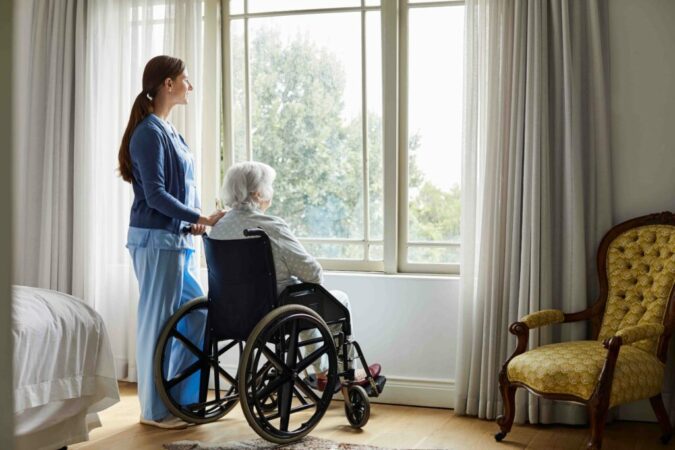
In addition to the shortage of geriatricians, private senior centers are facing difficulties in finding local caregivers. Emigration and the departure of the workforce are pushing the managers of these centers to consider the possibility of employing foreign nationals. The Philippines and Tunisia are being seen as new sources of employment.
Hysni Kuka, director of a center for the elderly in Tirana, told Monitor that he is considering the possibility of employing two citizens from the Philippines. The main reason, according to him, is the difficulties faced in finding local employees, mainly related to immigration.
Another center for the elderly in Sauk is considering hiring two Tunisian nurses. According to center managers contacted by Monitor, the employees previously worked in Albania, in the service sector during the tourist season.
However, considering the possibility of employing them in elderly care, according to the center's managers, is accompanied by a number of question marks, especially regarding professional qualifications and lack of knowledge of the Albanian language.
"The lack of staff is making it very difficult for us to continue our activity. We are having difficulty finding employees. The reason is emigration, like everywhere else. For this reason, we are forced to look at the possibility of employing foreign citizens. But we are not very optimistic about their employment either, we see as a problem the lack of knowledge of the Albanian language, the lack of knowledge of the procedures for their employment, but also the lack of stability, since these employees can leave without notice," say the center's leaders.
According to market data, net salaries for caregivers in senior centers range from around 55, 60 to 70 lek per month, for an 8-hour work schedule.
Meanwhile, in private homes for the elderly, monthly fees, according to the director, start from 70 thousand lek-100 thousand lek per month up to 120 thousand lek per month, depending on the health condition of the elderly person.
Whereas if a family hires an elderly care worker at home, the fees start from 50 thousand lek, 60 thousand lek to 80 thousand lek per month for 6 hours of work.
The need for foreign workers is not limited to businesses and elderly care centers. The employment of foreign nationals has also expanded into Albanian families.
Filipino nationals are being hired to care for children as nannies, to care for the elderly, and to maintain homes.
Data from the Electronic Registry for Foreigners, provided to "Monitor" by the State Police, show that by June 2026, the number of foreign citizens employed in Albania reached 22,6 thousand, up from 18,1 thousand in December 2025.
The increase in the employment of foreigners is a trend that has strengthened in recent years. In 2025 alone, their number increased by 43,4% compared to 2024.
About 90% of foreign citizens employed in 2026, or about 20,3 thousand people, are equipped with a unique permit as employees. While about 10%, or 2,361 citizens, are registered as self-employed.
Among foreign workers, citizens from the Philippines, India and Egypt dominate. A total of 10,258 unique permits have been approved for these three countries, or about half of the total.
Filipinos top the list. As of June 2026, 3,552 Filipino citizens were granted work permits in Albania, accounting for about 16% of the total number of employed foreigners.
Following them are Indian citizens with 3,423 employees, while 3,283 employees have been registered from Egypt.
Next in line are Turkey with 1,503 unique permits and Italy with 1,306 permits. Other countries include the USA with 619 permits, Indonesia with 229 and China with 212./ Monitor