


By DASHNOR KALOÇI
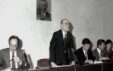
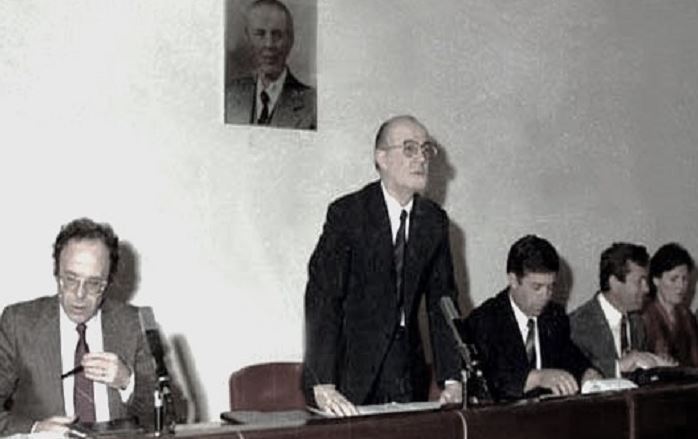
When not even a week had passed since July 2, 1990, when thousands of Albanian citizens climbed over the railings and walls of foreign embassies in Tirana and entered their premises with the intention of leaving Albania, the senior leadership of the Albanian People's Party, headed by Secretary General Ramiz Alia, held the 11th plenum of the Central Committee, which held its proceedings on July 6 and 7. Although the agenda was predetermined in three main points, where the development of education in Albania predominated, almost throughout the proceedings of that plenum (especially in point 4, "Miscellaneous"), the event of those days, otherwise known as "July 2 of the embassies", was discussed and debated. In that plenum, which was attended by all members and candidates of the Central Committee of the Albanian People's Party, the first secretaries of the district party committees, ministers, key cadres of the education, culture, science, economy sectors, leaders of the organization of the Albanian Labor Youth Union, from the apparatus of the Central Committee of the Albanian People's Party, Radio-Television, ATSH, etc., Nimet Cani, Ali Vukatana, Reiz Malile, Shpëtim Çaushi, Zylyftar Ramizi, Qemal Lame, Zef Loka, Pirro Kondi and Hekuran Isai were absent, who had been "in the field" for several days, "managing" the embassy event.
After the opening of the meeting by Ramiz Alia, the floor was given to the Minister of Education, Skënder Gjinushi, who also delivered the relevant report ("On the improvement of the education system and the further strengthening of the quality of the school"), the topic of that plenary session was "the embassy incident", discussing and analyzing in detail how and why it happened ("the role of foreign agencies"), up to the tasks that arose for managing that situation in those hot July days, where over five thousand Albanian citizens from all over the country were in the interiors of some of the main embassies in Tirana, awaiting departure from Albania.
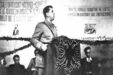
In addition, throughout that meeting, but mainly in item no. 4 of the agenda (which was discussed in the last session), some of the main events that had occurred in different parts of the country during that year were analyzed, such as; the protests in Shkodra in January for the removal of the bust of Stalin; the events in the city of Kavaja where the people of that city clashed with police forces; the mass escapes from the state borders with Yugoslavia and Greece, mass gatherings in religious holy places, such as the Church of Shën-Ndout in Laç i Kurbinit; the legalization of religious beliefs and the opening of cult objects; or other problems that were being addressed, such as; the talks and the international factor for the restoration of diplomatic relations with the USA, the Soviet Union, (talks held with the Deputy Soviet Foreign Minister in Sofia by Sofokli Lazri); the Kosovo problem; international pressure for Albania to open up to the world and its accession to several international conventions; the privileges of the senior leadership of the Albanian People's Party and their families who lived mainly in the "Block"; the rumors circulating among the people about Enver Hoxha's family and Ramiz's relations with Nexhmije; changes in legislation and the penal code; the release of political prisoners; the issuance of passports to citizens who wanted to visit their relatives abroad; the new economic mechanism; the housing and employment of many extras in all districts of the country; the granting of land and livestock to the cooperative peasantry; and even the supply of the population of the cities with basic food products and various industrial goods.
As we will see from the archival documents belonging to the 11th plenum of the Central Committee of the Albanian People's Party, which we emphasize are being published for the first time, in addition to the leadership and some of the senior officials of that time, several other senior figures who continued their political careers after the 90s were also discussed or mentioned at that meeting, such as; Skënder Gjinushi, Fatos Nano, Sali Berisha, Rexhep Mejdani, Gramoz Pashko, Spiro Dede, Dritëro Agolli, Ismail Kadare, Moikom Zeqo, Mehmet Elezi, Lisen Bashkurti, Koço Kokëdhima, Ylli Popa, Aleks Luarasi, etc.
Likewise, in the voluminous file of this plenum, of great interest are also those documents belonging to the secretaries of the Party Committees of the districts or the "Information Group" who have gone to all the districts of the country and have identified all the main issues that have emerged in the meetings of the basic organizations of the party, where "On the letter of the Central Committee" was discussed, documents that constitute the largest and also the most important part of the file in question. It can even be said to be among the most important of the entire period of the communist regime of Enver Hoxha and his successor Ramiz Alia, since that period of time with the events that took place, marked the prologue to the fall of that regime.
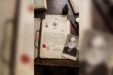
Also of great interest are the documents belonging to the last session of that meeting with item no. 4 of the agenda "Miscellaneous", which constitutes the hottest point of the entire plenum, where the dismissal from duties and retirement of three members of the Politburo (Rita Marko, Manush Muftiu and Prokop Murra) was discussed, even with fierce debates, or the dismissal from ministerial duties or other high functions that they had held for years of several other "leaders", such as Simon Stefani, Pali Miska, Muho Asllani, Lenka Çuko, Vito Kapo, Pirro Kondi, Jovan Bardhi, etc., and the appointment of "new comrades" to the leadership of the high forums of the Party and the State, such as; Xhelil Gjoni, Abdyl Backa, Niko Gjyzari, Kiço Mustaqi, etc. Regarding these, etc., we are familiar with the documents in question, extracted from the Central State Archive (the Fund of the former Central Committee of the Albanian People's Liberation Army), which are published for the first time and with the relevant facsimiles by Memorie.al.
Continues from last issue
MINUTES OF THE MEETING OF THE 11TH PLENUM OF THE CENTRAL COMMITTEE OF THE ALP, HELD ON JULY 6 AND 7, 1990
VARIOUS
Some issues of today's situations and the political problems that arise from them.
COMRADE TAHIR MINXHOZI: I have an opinion, Comrade Ramiz, a possible candidacy could also be Comrade Muharrem Mezini.
COMRADE RAMIZ ALIA: Muharrem is the chairman of the Executive Committee of the Kukës District.
COMRADE TAHIR MINXHOZI: He is also a candidate for the Party's Central Committee, he is a good friend...!
COMRADE RAMIZ ALIA: I didn't talk about the biographies of the comrades I presented, because I thought they were known by public opinion. The point is that public opinion doesn't need to ask who one or the other is, so more or less well-known comrades should be chosen.
COMRADE SHEFQET PEÇI: I think we should judge the proposal for the three members of the Politburo once.
COMRADE RAMIZ ALIA: Agreed. Comrades Kiço Mustaqi, Vangjel Çërava and Xhelil Gjoni were proposed to me as members of the Politburo. Do you agree with this, comrades? (They agree). As secretaries of the Central Committee of the Party, Xhelil Gjoni and Abdyl Backa were proposed to me. Abdyl is a candidate of the Central Committee of the Party, but based on the Statute, the secretary of the Central Committee of the Party can also be a candidate, we have had such cases.
If you want to accept him as a member of the Party Central Committee, we can vote on this first. Do you agree? (They agree). As candidates for the Politburo, I initially proposed Xhemal Dymyla and Niko Gjyzar. I would also add some arguments from where we started to propose these two comrades. Since Manushi, who is leaving the Politburo, is from the Vlora district, we needed another comrade from Vlora, so we thought of Niko, who is a capable comrade, now the General Secretary of the Council of Ministers. Xhemal is from Shkodra.
In the Political Bureau, there are two comrades from Shkodra, Besnik and I. If you have any objections, we will leave Xhemal's candidacy, since he is from Shkodra. We can choose Shane, who is from Gjirokastra. As for Xhemal, I thought that he is the first secretary in the Shkodra Party Committee, he has been the first secretary in several districts, he has skills and he has a name in the Party. (The comrades agree on Xhemal Dymyla). Is there any objection to Niko and Xhemal? (There is none)
COMRADE SPIRO KOLEKA: I think we should also make Niko a member of the Party's Central Committee.
COMRADE RAMIZ ALIA: Do you agree that we should also make Niko a member of the Central Committee and then a Candidate for the Politburo? (They agree). Regarding comrade Simon, opinions were given that we should propose to the Government that he become chairman of the State Control Commission. Do you agree? (They agree). Meanwhile, in the Politburo, Simoni will continue to remain as a member.
As for the leading comrades of the Tirana Party Committee, for now we are leaving them as they are. The Presidency of the Council of Ministers considers that comrade Hekuran be appointed Minister of the Interior and be at the same time Deputy Chairman of the Council of Ministers. Comrade Simon is stripped of his function as Deputy Prime Minister.
COMRADE ADIL ÇARÇANI: Nikua is also a minister, Secretary General in the Council of Ministers.
COMRADE RAMIZ ALIA: Are there any objections? (There are none). Now, regarding the replacement of comrade Vito as Minister of Light Industry, comrade Jovan Bardhi as Minister of Food Industry, etc., comrade Adil must submit the proposals to the Presidium of the People's Assembly and once approved, they can be announced. Comrade Vito has also agreed to retire.
Since the concern was raised that the foreign press and agencies might give these changes a bad echo, I wanted to tell you in a completely social, unofficial way, comrade Manush, that we should not give these things any importance. These agencies have said many "black" things about us before. They will say more in the future, because the enemy has worked and is working for this purpose. We should not only think that the sources of these slanders are among our people. Often they have also been assumptions, intrigues and diversions that the enemy has been making all his life.
We have both been in the leadership of the Party for 40 or so years and we know what has not been said by the enemies during these years! They have wanted to set us against each other and they are trying to do the same today. I spoke about this issue at the last meeting, the intention of the enemies is clear, they want to divide the Party by saying that there are conservative and liberal forces in its leadership.
As long as they say this, someone will definitely be called a liberal, someone will be called a conservative. You were impressed that this time they called you a conservative, while on other occasions, even in the foreign press, you and I have seen them call you a liberal. Enemies calculate differently and choose the language that suits their plans.
They will still continue to speak ill and fabricate, so we should not worry about such issues. Wait what they will invent now, after these changes! They will surely say that Ramiz Alia "cleansed the opponents". Such formulations will be the titles of their articles.
COMRADE MANUSH MUFTIU: Excuse me for explaining a little the idea I had, I think I was misunderstood. I don't care at all what the foreign press says about me, because I've been listening to its slander for 50 years and I'm not worried about it.
COMRADE RAMIZ ALIA: Okay, what was your concern today?
COMRADE MANUSH MUFTIU: I expressed this concern today because there are people here among us who spread these words. Such conversations have emerged in journalist circles.
COMRADE RAMIZ ALIA: For this, the concern is justified, but if it is about some people who can speak this language, we should not think that these words came from Party sources. We hear, for example, that Dr. Gramoz Pashko, “advisor to Ramiz Ali”, “organizer of state laws Aleks Luarasi”, “reformer Fatos Nano, the closest person to Ramiz Ali”, gives an interview to “Voice of America”.
There is also a lot of nonsense in the interviews that Gramoz Pashko gives, as there is nonsense in other interviews. I believe that these people can also express different views and I do not exclude that we should be careful in these issues. But I wanted to clarify that no misunderstanding should be created among our friends. Is there any other opinion from the friends? (There is none).
COMRADE HALIL LEJLI: We made a proposal for the dismissal of Marash Hajat, comrade Ramiz.
COMRADE RAMIZ ALIA: What do you think, we should dismiss Marash?
Hayat from his position as editor-in-chief of "Zërit të popullit"?
FRIEND PHOTO ÇAMI: Yes, Marashi is not present at this meeting…!
COMRADE RAMIZ ALIA: There was no thought here to look at the issue of his being in the Central Committee, but only whether he should be dismissed from the post of editor-in-chief. Since Marashi himself is not present today, can we let the Political Bureau look at this issue? Also, in the Bureau, we have the thought to look at the need to strengthen the work in the Tirana Party Committee.
COMRADE HALIL LEJLI: Okay, agreed.
COMRADE RAMIZ ALIA: Do comrades agree with this opinion? (They agree). Before we close this meeting, we are returning once again to the issue I emphasized at the beginning. We must be very careful especially these days, today, tomorrow, and the day after tomorrow, because there is talk of unrest. Special care is needed in all areas from Shkodra to Durrës and Tirana, as well as in Gjirokastër and Saranda. You, comrade Syrja, in Saranda must show more prudence, because these issues are not resolved with arrogance, with cobras and with shouting. In this situation, any such attitude is exploited by the enemy and used against us. Therefore, people must be talked to in a calm, calm and cool manner.
You, the comrades of Tirana, who are here as guests, as well as the comrades of the Plenum of the Central Committee of the Party, I think that you should immediately contact comrade Pirro Kondi, make yourself available to the Party Committee for any work needs that are felt in this situation. Comrade Hekuran and comrade Simon should immediately begin to take over the work and tasks that were assigned to them. We must at all costs avoid all this pressure that is being exerted by avoiding the gathering of people at all costs. When I said “at all costs”, I want to emphasize the need for organization and not violence. Let us all jump into action on this issue that requires sound nerves and composure, but also determination.
COMRADE ADIL ÇARÇANI: The comrades of the executive committee and several departments that follow the fulfillment of living conditions and market supply needs, which are completely possible, must also take action.
COMRADE RAMIZ ALIA: Then we close the meeting. Goodbye and good work! (Applause)./ Memorie.al