





By DASHNOR KALOÇI
Although it was widely promoted that; "unlike capitalist countries, in Socialist Albania the health service was free for all citizens:, throughout the entire period of the communist regime of Enver Hoxha and his successor, Ramiz Alia, it left much to be desired. Even in many aspects, such as the equipment and equipment of hospitals and other health facilities with various modern medicines and medications, it was a problem that remained unresolved until the collapse of that regime. But one of the biggest wounds of health care before the '90s, is said to have been that of the high number of deaths of children aged 0 to 1 year, or as it was otherwise known in the medical term; "infant mortality".
Among other things, this is also known from some archival documents of the Ministry of Health of that time, where its correspondence with some of the highest party and state institutions and bodies of that time is located, in which it is known that during 1971 alone, in all districts of the country, out of 72.771 births, 7027 deaths were recorded in children aged 0 to 1 year.
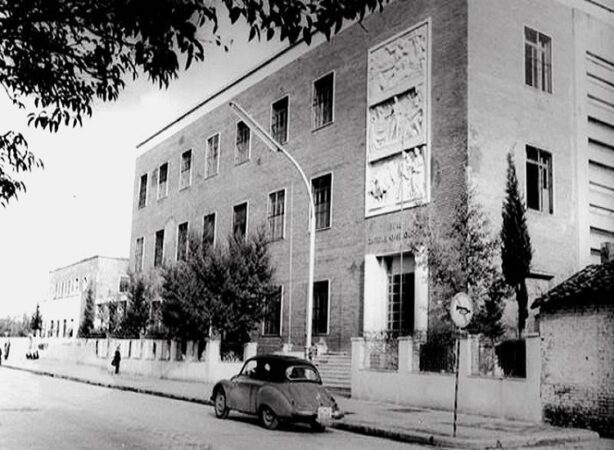
But what shocked Tirana and alarmed the top party and state leadership of that time was the death of 27 babies in the Tirana Maternity Hospital (today the “Nana Mbretereshë” Maternity Hospital) in just a few days at the end of September and the beginning of October 1972, which forced the relevant bodies of that time to close the Tirana Maternity Hospital altogether. But why did such a high number of deaths occur in that maternity hospital at that time and what were the reasons for the decision to close that Birthing Center? What is said in the report-information of the Minister of Health of that time, Dr. Llambi Ziçishti, sent to the highest instances of the state and what was the reaction and response of the top leadership of that time, starting from Prime Minister Mehmet Shehu, the secretary of the Central Committee of the Albanian People's Party, Hysni Kapo, the first secretary of the Tirana Party Committee and the member of the Politburo, Manush Muftiu, etc.?
The following archival documents, published for the first time, provide a detailed overview of the alarming state of infant mortality in Albania in 1971, as well as the efforts of the state apparatus to bring this tragic phenomenon under control. Through the report of the Deputy Minister of Health, Dr. Kleo Miho, as well as official reports signed by Dr. Bukurije Maçi at the Directorate of Mother and Child, the true picture of medical service in districts and villages during the communist regime is revealed.
These official documents from early 1972 reveal not only the high infant mortality rates, where respiratory diseases such as bronchopneumonia accounted for up to 60% of cases, but also the deep infrastructural backwardness in rural areas. The documents reveal the failure of the plan to build maternity homes and clinics, the lack of maternity permits and medical check-ups for children aged 0-3, as well as the scandalous food conditions in village nurseries, where even the most basic items such as wheat bread and milk were lacking. Through an administrative self-criticism, the reports also attack the bureaucracy of local health departments and the superficial or fictitious presentation of demographic data from districts. Regarding this, etc., we are familiar with the documents in question, extracted from the Central State Archive (the fund of the former Central Committee of the Albanian People's Liberation Army), which are published for the first time and with the relevant facsimiles by Memorie.al.
Continues from last issue
REPORT-INFORMATION OF THE DIRECTOR OF THE DIRECTORATE "MOTHER AND CHILD, IN THE MINISTRY OF HEALTH, DR. BUKURIE MAÇI SENT TO THE PRESIDIUM OF THE PEOPLE'S ASSEMBLY, REGARDING THE HIGH NUMBER OF CHILD DEATHS DURING THE YEAR 1972
PEOPLE'S REPUBLIC OF ALBANIA Tirana on 10.1.1973
MINISTRY OF HEALTH
Mother and Child Directorate
No. 472 Prot.
PRESIDIUM OF THE PEOPLE'S ASSEMBLY
People's Councils Sector
TIRAN E
Attached is a provisional overview of infant mortality for 1972 and a comparison with the three previous years. As can be seen, there is a decrease from 1970 and '71, a decrease that is noticeable in all districts. If we take into account the great influenza epidemic in the months of November - December, as well as the epidemic virus of June - September of this year (1972) which mainly affected young children, this decrease is relatively significant and approaches the year 1969, which was the calmest year.
The measures taken to protect the health of mothers and children have had a significant impact and, without the aforementioned epidemics, infant mortality would certainly be below the level of 1969. This strengthens our conviction that with the strengthening of comprehensive medical and social measures, and with greater interest from all bodies, organizations and society as a whole, infant mortality will progressively decrease in the future.
During 1972, a greater interest was shown in the health of the child and the mother. In this regard, the problem was taken into account by the Party and Government bodies at the grassroots level, the periodic analyses of this problem in the districts up to the district people's councils, the control and assistance from above, as well as the two analyses conducted on this issue by the Presidency of the Council of Ministers, have also helped.
During 1972, the highest mortality was recorded in the districts of Dibra, Kukës, Shkodra and Puka, as can be seen in the table. The highest is in Dibra and the percentage of decrease in this district is almost imperceptible. A good role in this regard has been played by the increase in the number of health personnel and institutions in the village, and in particular the placement of a nurse-midwife in each village.
But regarding securing the workplace of midwives, consultants, and especially the opening of maternity homes in villages, it should be noted that most districts are still far behind, which hinders the work of health professionals and the assistance to pregnant women and children.
All districts have not even filled 50% of the maternity homes in the village and most of the consultations are in the same room as the medical ambulance. However, we must admit that there is a turning point and if the necessary measures are further insisted on, surely in the future infant mortality will suffer an even more significant decrease.
ABOUT THE DIRECTOR
Dr. Bukurije Maci
REPORT-INFORMATION OF THE MINISTER OF HEALTH, PROF. DR. LLAMBI ZIÇISHTI, SENT TO THE DISTRICT EXECUTIVE COMMITTEES, REGARDING THE SERIOUS SITUATION IN THE TIRANA MATERNITY AND THE HOSPITALS OF KUKE, PUKA AND ELBASAN, AS WELL AS THE MEASURES TAKEN AND PUNISHMENTS GIVEN TO THE DOCTORS RESPONSIBLE
THE PEOPLE'S REPUBLIC OF ALBANIA
MINISTRY OF HEALTH
"CABINET"
Tirana, on 13.4.1973
No. 434 Prot.
DISTRICT KP EXECUTIVE COMMITTEE
Presidency
DIRECTORIES _________________
Despite the constant attention that has been drawn to health authorities and institutions regarding errors and negligence in service, there are still such cases that have endangered the lives of patients or caused their death.
This shows that not enough educational and technical-professional work is being done with medical personnel, that due attention has not been paid to Party materials and departmental instructions regarding responsibility and correctness in service.
The health management bodies in the district and those of the central institutions do not wage a sufficiently fierce fight against manifestations of negligence, of work that is haphazard and irresponsible; they have not taken the necessary measures everywhere to strengthen control and improve organization in all service links. This is also the source of the ugly events that have recently occurred in several institutions of our country.
In the Maternity Hospital in Tirana, as a result of weak measures to prevent nosocomial infection in newborns and the acceptance of unacceptable conditions for an institution of this nature, a few months ago an epidemic infection with coli pathogen broke out, which caused the death of more than 25 children. This is one of the most shocking events in the field of medical service.
In the Elbasan hospital, after the act that caused the death of a penicillin-sensitive patient who was inadvertently injected with such a medication, again in the surgery department, during a surgical intervention, a patient with severe appendicitis left a gauze in his abdomen, which was found after the second intervention following which the patient died. This act of negligence on the part of surgeon Elez Elezi was followed by another ugly act, which seriously violates medical morality and ethics.
The doctors present at the second intervention decided to keep this action secret, did not document it at all in the patient's personal file and did not inform the governing bodies. Not only doctor Elez Elezi, a member of the team, but also doctors Col Papajani, Head of the Surgery Department, surgeon Perikli Sheti and radiologist Engjëll Kongoli, etc., who tried to cover up the fault, bear serious responsibility for this act.
In the Shkodra district, the nurse of the Dajçi area lies to the health authorities regarding the vaccinations against diphtheria, which he reports as having been carried out. As a result, there was a significant increase in cases of this disease. The same thing was confirmed in the Kukës district with the nurse Muharem Parllaku. In this district, there was also inaction - death from diphtheria.
In the Puka district, in the Gjegjan hospital, the careless nurse Marie Mëhilli, instead of the pyramidon solution, gave the sick child a spoonful of peroxide, which according to the forensic expertise was the cause of the death of the little patient. The Ministry's Collegium analyzed these serious crimes and decided that the following measures be taken for the following persons:
At the Maternity Home in Tirana, doctor Ilir Gjylbegu is dismissed from his duties as director of the institution, doctor Apostol Lira, Deputy Director of this institution, is given a warning and reprimand, doctor Marie Sina, head of the children's ward, is dismissed from her duties and leaves the Maternity Home.
At the Elbasan Hospital, the head of the surgery department, Col. Papajani, is dismissed from his position and sent on a work assignment to the district; doctor Perikli Sheti is given a warning and reprimand. Doctor Elez Elezi has been arrested by the prosecution authorities.
Nurses Abaz Lala of the Shkodra district, Muharrem Parllaku of the Kukës district, and Marie Mëhilli of the Puka district, were handed over to the judicial authorities.
The Ministry of Health once again draws the attention of health authorities to strengthen their work in terms of ideological and professional education of employees, to ruthlessly combat all manifestations of negligence in their attitude towards duty and towards the sick.
Healthcare workers must become examples of correctness and devotion at work. Institutional staff must maintain a strict stance against all staff who, with their poor and careless work, harm human health in any way.
Comrade Enver's last speech should be studied continuously and carefully. Through it, all the subjective shortcomings that hinder the smooth progress of work in the health sector should be reviewed once again.
The measures recently taken by the Ministry of Health should become an example so that every healthcare worker is clear that despite the great successes achieved in the medical sector, every careless act at work, every attitude foreign to socialist morality and ethics must receive the punishment it deserves.
This letter should be shared with all health workers in the district./ Memorie.al