






A suspected armed drone attack at Leipzig/Halle airport has raised alarm in Germany and brought the threat of Russian hybrid warfare against European countries back into the spotlight.
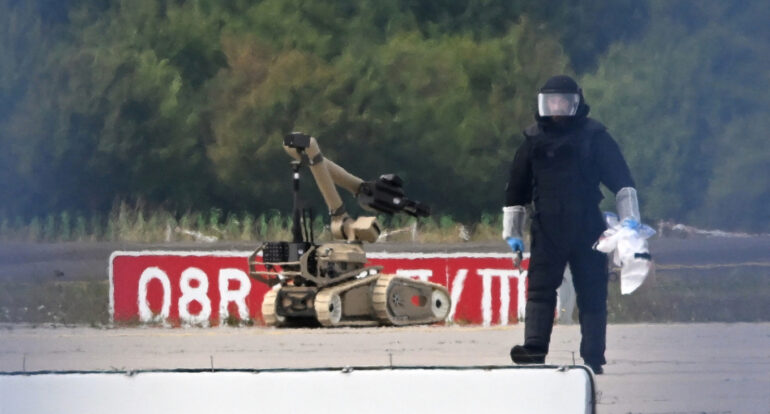
The incident occurred on August 5, 2026, when German authorities discovered a drone near transport aircraft at Leipzig/Halle Airport, about 20 kilometers from the center of Leipzig. According to reports, the drone was carrying more than half a kilogram of high-powered explosives.
The discovery of the drone led to the temporary closure of the airport and the closure of two nearby highways. Bomb disposal experts intervened to neutralize the device, while investigations also discovered two other drones in the airport area. According to the released data, the remote-controlled detonator proved to be defective, averting what authorities considered a potentially catastrophic risk.
Germany: Russia is behind the attack
After weeks of investigation, German authorities said on September 1 that Russia was suspected of being behind the operation. Berlin sees the incident as part of a broader pattern of Russian hybrid activities against European countries. The International Institute for Strategic Studies has documented dozens of incidents involving drones, sabotage, cyberattacks, arson and disinformation operations in various European countries.
Germany is considered one of the main targets due to its role in supporting Ukraine. According to published analyses, the aim of these operations is to test the reaction of Western countries, create uncertainty and weaken support for Kiev.
The message that Berlin attributes to Moscow is clear: the pressure on Germany and other European countries is intended to make them think twice about continuing aid to Ukraine.
German Interior Minister Alexander Dobrindt described the situation with a significant formulation: Germany does not consider itself at war, but is a daily target of hybrid warfare. Following the incident, the German government has taken a series of measures against Russia, while increasing diplomatic pressure and checks on suspected Russian intelligence activities.
Germany is also strengthening its defense capabilities, investing in F-35 fighter jets, air defense systems and drones, while planning a significant increase in military personnel and reservists. At the same time, authorities are also preparing for possible scenarios of a wider crisis in Europe by 2030.
Moscow denies the accusations.
The Kremlin has denied involvement in the incident. Russian President Vladimir Putin has called the allegations baseless, while other Russian officials have accused Germany of using the incident for political purposes. Moscow has also opposed Berlin's punitive measures and warned of retaliation.
For Germany, however, the Leipzig incident is another signal that the clash with Russia is not just taking place on the battlefield. Cyberattacks, sabotage, disinformation and the use of drones are creating a new form of confrontation, where the line between peace and war is becoming increasingly blurred. The attack in Leipzig has thus revived fears that Europe may be entering a new era of confrontation with Moscow, where traditional weapons are increasingly replaced by covert operations, technology and hybrid warfare.