



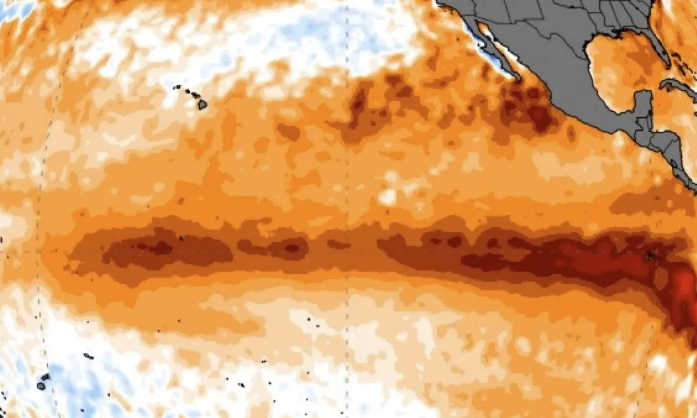



El Niño is strengthening at an alarming rate, and new forecasts have raised fears of severe impacts on climate, agriculture and the global food supply. According to the US Climate Prediction Center, there is a more than 90% chance that El Niño will become a very strong phenomenon during the autumn and winter of 2026-2027 in the Northern Hemisphere.
Meteorologists also estimate that during the period October-December 2026 there is about a 75% probability of recording a historic episode, with greater intensity than previous El Niño events recorded since 1950. "With an event of this magnitude, the chances of El Niño-related impacts increase, but they are not guaranteed. In summary, El Niño is strengthening, with a greater than 90% chance of developing into a very strong event during the autumn and winter of 2026-2027 in the Northern Hemisphere," the meteorologists said.
El Niño is a natural phenomenon that occurs when weakening trade winds allow warmer waters to accumulate in the central and eastern parts of the equatorial Pacific Ocean. It can significantly affect global weather patterns, bringing droughts to some regions and heavy rainfall to others.
The consequences are also starting to be felt in agriculture. Droughts linked to El Niño have damaged bean and corn crops in the so-called “Dry Corridor” of Central America, exacerbating food insecurity and water shortages for rural families. “We are currently seeing drier conditions across Central America and this is expected to continue in the coming months as we are under the influence of El Niño,” said Donald Keeney, agricultural meteorologist at Vaisala Weather.
Concerns about agricultural production have also affected international markets. According to the UN Food and Agriculture Organization (FAO), fears about global supply have contributed to rising prices for several staples, including vegetable oils and sugar. Meanwhile, in the United States, a strong El Niño could bring more rainfall to the southern parts of the country, while it could positively affect winter wheat production in the central and southern plains.
The phenomenon could also cause changes in hurricane activity, increased risk of coastal flooding, and displacement of marine species due to changing water temperatures. Another known consequence is the impact on marine ecosystems, where warmer waters could alter the movement, feeding, survival, and reproduction of many species.
If current predictions are confirmed, the 2026-2027 El Niño could become one of the most powerful episodes ever recorded, with consequences that could range from extreme weather to agricultural production and food prices in global markets.