


Protests that began against a luxury project on the Albanian coast, linked to Jared Kushner, have turned into a broader movement against corruption and the government of Edi Rama.
Students are demanding the resignation of the prime minister, lower tuition fees, and improvements to the education system, while clashes with the police have intensified.
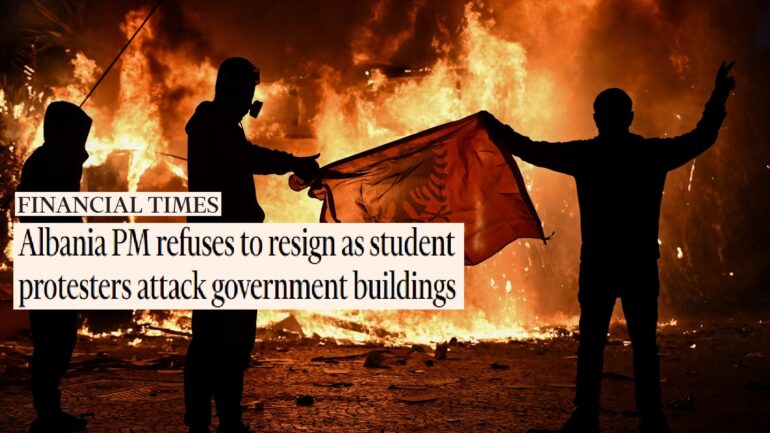
Prime Minister Edi Rama is facing one of the biggest political challenges of his tenure in power, as student and citizen protests in Albania have escalated into violent clashes with the police.
According to reports, the demonstrations, which were initially sparked by opposition to plans for a luxury investment on the coast, have expanded to include demands for the fight against corruption, environmental protection and political change.
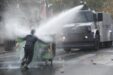
This week, protesters have clashed with police and attacked government buildings, while authorities have used tear gas and water cannons to disperse crowds. High school students have also joined the protests, despite officials' calls for parents to keep teenagers out of the rallies.
Tensions began to rise in May, following opposition to plans to build a luxury resort worth around $4 billion, linked to Jared Kushner, the son-in-law of US President Donald Trump.
The project, planned on the Albanian coast near the island of Sazan, has raised concerns about the potential impact on the environment and a protected natural area, where flamingos also live.
The project developers, on the other hand, have insisted that the investment will respect the environment.
Over time, the protests have expanded beyond opposition to the project, morphing into a movement known as the “Flamingo Revolution.” Citizens have raised concerns about perceived corruption, the quality of education, and the way the country is governed.
Prime Minister Edi Rama has ruled out the possibility of being removed from office, while claiming that the protests are being instigated by "foreign hands" and by forces that, according to him, aim to hinder Albania's development and its integration into the European Union.
In a video published on Facebook, Rama criticized the involvement of minors in protests and condemned acts of violence.
"How can minors be encouraged to wear masks, tear up the sidewalk, and attack the police?" the prime minister is quoted as saying.
He has also argued that the escalation of the protests comes at a time when Albania is making progress in the negotiation process for membership in the European Union.
"Do you think it's a coincidence that, just as Albania gets another green light, just as Albania closes another chapter \(accession\), just as Albania approaches that ambition, that historic objective, the flames are breaking out here? It's no coincidence at all," Rama wrote on Facebook.
The Prime Minister has not specified which forces he claims are instigating the protests.
Despite the intensity of the protests, senior analyst Mario Bikarski, from the risk intelligence company Verisk Maplecroft, estimates that they are unlikely to lead to the overthrow of the Rama government or hinder Albania's European integration process.
According to him, the protests pose a significant challenge for the prime minister, but EU membership continues to enjoy broad support in the country.
Bikarski estimates that Rama may be forced to make concessions to the protesters, including revising or abandoning plans for very large investments on the coast.
He also emphasizes that the prime minister has previously shown resilience in the face of political challenges, while the opposition is not seen by all protesters as a credible governing alternative.
## EU integration, against the backdrop of political crisis
The protests come at a crucial moment in Albania's EU accession process. The country has advanced in membership negotiations, while the rule of law and the fight against corruption remain key issues for meeting European standards.
Beyond street clashes, protesters' demands for better quality education, environmental protection, and the fight against corruption have broadened the movement's objectives.
It remains to be seen whether citizen pressure will force the government to make concrete changes, especially regarding education policies and major coastal development projects.