



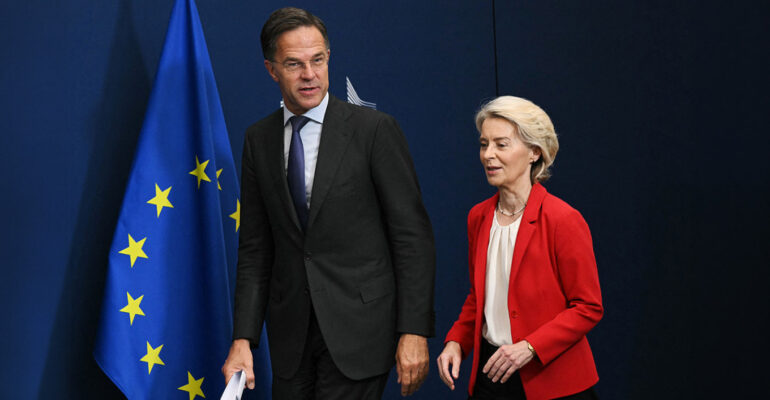



Tensions between Germany and Russia are escalating sharply after an incident involving a drone rigged with explosives near Leipzig airport. Berlin accuses Moscow of involvement in what it calls a hybrid attack, while Russia categorically denies the accusations and demands evidence. The issue is expected to be at the center of discussions between European Commission President Ursula von der Leyen and NATO Secretary General Mark Rutte, as the EU and NATO allies consider new measures against Russia. Germany has demanded that the response also include measures against Russia's so-called "shadow fleet," as well as other sanctions.
Berlin: This is not an isolated incident
German Interior Minister Alexander Dobrindt said authorities have identified a high level of threat related to Russian hybrid operations in Germany and other European countries. According to him, the configuration of the drone, the components used, the type of explosives and the method of operation match previous patterns of Russian activities in Europe. The drone was discovered on August 4 near a Ukrainian transport plane in Leipzig. The explosive device on board did not detonate, as it was suspected to have been jammed.
German authorities are also investigating the possibility that a second drone may have crashed into a nearby cargo plane. Dobrindt described the incident as part of a larger picture. “We are not at war, but we are the daily target of hybrid warfare,” the German minister said, warning that Germany could remain a target of such operations.
Berlin closes "House of Russia"
In response to the developments, Germany announced that it would close the “Russia House” in Berlin and the Russian Consulate in Bonn on September 18. The decision was welcomed by European institutions and Germany’s NATO partners. But Moscow reacted sharply. Russian Foreign Ministry spokeswoman Maria Zakharova said Berlin had escalated bilateral relations on an “unfounded pretext” and accused German authorities of failing to provide convincing evidence of Russian involvement.
"They will receive an appropriate response," Zakharova warned.
Von der Leyen, Macron and Rutte: Hybrid attacks will not go unanswered
European Commission President Ursula von der Leyen has backed Berlin's stance, stressing that hybrid attacks on European countries will not go unchallenged. French President Emmanuel Macron has also warned that these incidents are increasing in Europe and cannot go unanswered.
NATO Secretary General Mark Rutte has also expressed himself in the same vein, according to which Russia's efforts to intimidate allies, weaken their unity, and undermine support for Ukraine will fail.
Support for Germany has also been expressed by Greek Prime Minister Kyriakos Mitsotakis, who said that Greece stands in full solidarity with Berlin and that attempts to intimidate European democracies will not succeed. Great Britain, Italy, Sweden, Finland, Ireland and Ukraine have also lined up in support of Germany. European Commission spokeswoman Paula Pinho confirmed that a meeting of foreign ministers is expected to discuss the situation and strengthen cooperation in the field of defense and security.
At NATO, discussions are expected to focus in particular on deepening cooperation between the alliance and the EU to counter hybrid threats. The EU’s foreign policy chief, Kaja Kallas, has accused Russia of increasing such incidents with the aim of intimidating and discouraging European countries from supporting Ukraine. Meanwhile, Estonian Defense Minister Hanno Pevkur has warned that Europe must prepare for more hybrid attacks. According to him, the incident in Leipzig, the discovery of explosive devices in energy infrastructure in Germany and accusations by other European countries of similar activities show that Russia is “testing the limits” of the West.
Against the backdrop of this escalation, a big question mark remains: the stance of the United States. While Germany, the EU and NATO countries are seeking a common stance towards Moscow, Washington has so far avoided a direct reaction to the incident. This has added to the questions in Europe about whether the US administration will publicly support Berlin and its European allies, or try to avoid a further escalation with Moscow. The answers may become clearer after the meeting between von der Leyen and Rutte, as well as after discussions by European foreign ministers. In anticipation of these developments, Berlin insists that the Leipzig incident is another indicator of a growing hybrid war, while Moscow denies responsibility and warns against new German and European measures.