


After speculation, leaks and information from anonymous sources over the past four years, the world is finally close to hearing public testimony, under oath, in a German court, about how the Nord Stream pipeline was blown up – in a case that could have major political consequences.
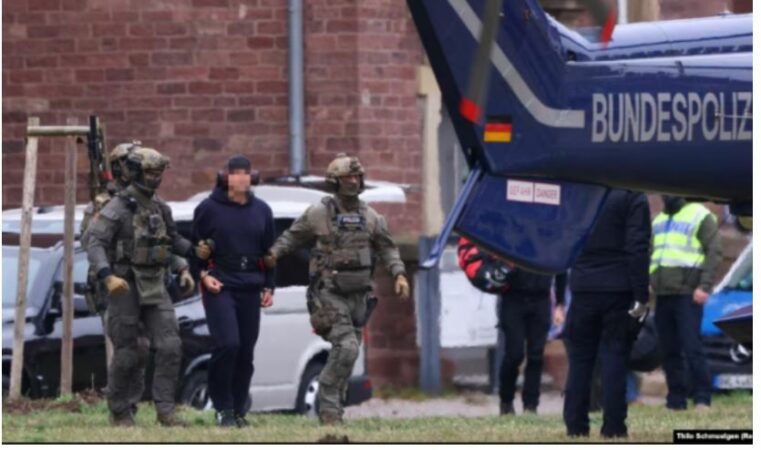
German prosecutors have identified seven Ukrainian suspects, but only one of them will sit in the dock at the trial that begins on October 14. In court documents, he is identified as Serhii K., and is said to be suspected of complicity in the commission of a war crime.
This classification has caused outrage. But German prosecutors have further escalated tensions, stating that the suspects were acting “on behalf of state authorities in Ukraine.”
Kiev has always categorically denied any involvement in the attack, which damaged vital energy infrastructure supplying Germany - one of Ukraine's most important military backers in its war since the launch of Russia's large-scale invasion in February 2022.
Serhii K., identified in other sources as Serhiy Kuznetsov, says he is innocent.
"Two crazy soldiers"
Nord Stream is mostly owned by Gazprom, the Russian state-controlled company, and the pipeline is partly financed by major European energy companies. The pipeline was built to send Russian gas directly to Germany, bypassing transit countries like Ukraine and Poland, which have had tense relations with Moscow.
The suspected sabotage and subsequent gas leaks occurred in September 2022, putting the pipeline out of service.
Initially, Western governments blamed Russia for the explosions, but German investigators began building a case that a group of Ukrainian divers had rented a yacht and planted explosives on the seabed.
According to them, Kuznetsov, a former military man, was the main organizer.
“In late February 2022, he and other military personnel developed the plan on behalf of state authorities in Ukraine,” a summary of the indictment released by prosecutors says. “The goal was to permanently disrupt gas supplies through pipelines and prevent Russia from using revenues from natural gas trade to finance its war effort.”
Prosecutors have not made public all the details of the alleged conspiracy.
The full indictment contains several other details, according to three German media outlets that say they have seen it: public broadcaster ARD, and two well-known newspapers, Sueddeutsche Zeitung and Die Zeit.
All three reported that, while in custody in Italy, Kuznetsov had called his wife in Kiev while investigators were secretly wiretapping him. During the conversation, he said a lawyer had advised him that it was time to admit that this was an “official military operation.” His commander had to declare that they were not just “two crazy military men.”
Kuznetsov's Italian lawyer, Nicola Canestrini, has downplayed the importance of this evidence, saying there was "no decisive evidence" in the case.
"It is hard to believe that, after Russia's aggressive war against Ukraine, a German court would hold a war crimes trial against a Ukrainian serviceman," he added in comments to Radio Free Europe (RFE/RL).
Three German media outlets identified Roman Chervinskiy as Serhii K.’s commander, while his name had also appeared in several previous media reports citing intelligence sources. In July, Chervinskiy told the Ukrainian REL Service that “the Germans, in fact, have no evidence that Serhii participated in this operation, if it took place at all.”
Another suspect, identified by Germany as Vladimir Z., is currently in custody in Croatia, where he is fighting extradition. He was previously detained in Poland but was released after a Polish judge ruled that, if Ukraine was responsible for the attack on Nord Stream, it was a “just” act.
A professional diver and identified by his Polish lawyers as Volodymyr Zhuravlyov, he was working in Croatia as an advisor for a Hollywood film about Nord Stream.
During the trial, the prosecution will have to present evidence of the existence of a conspiracy and explain its full scope.
"The crucial question is this: How much of this plan came from the highest levels of the Ukrainian political system and how much was prepared by a few people within the intelligence service?" Stefan Meister, a specialist for Russia and Eastern Europe at the German Council on Foreign Relations, told REL.
"The main political issue is the role of Zelensky and the presidential administration. And for that we still have no evidence that they were actually involved," he added.
Kuznetsov's German lawyer, Jes Meyer-Lohkamp, said prosecutors "have not presented any direct and conclusive evidence of our client's involvement" and that the German court will have to determine whether Nord Stream was indeed a legitimate military target.
The Hamburg Higher Regional Court has scheduled two hearings per week until at least February, without yet setting a date for the end of the trial.
German support for Ukraine
As the court case unfolds, it is expected to further fuel the fierce debate in Germany over continued support for Ukraine. The main opposition party, the Alternative for Germany (AfD), is highly critical of this support and calls for closer ties with Russia.
Evidence of Ukrainian involvement in the Nord Stream attack “would strengthen the AfD’s argument against supporting Ukraine,” Meister said. “They have all these narratives about corruption in Ukraine, about a failed state… That would resonate with a part of German society as well.”
The AfD has recently won a string of regional elections and is increasing pressure on Chancellor Friedrich Merz's government on issues of Ukraine, immigration and the economy.
Merz has responded by insisting even more strongly on his current policies, including those towards Ukraine. Most recently, on October 4, he was in Kiev, where he announced a new aid package that includes the joint production of interceptor missiles to shoot down Russian jet-powered drones.
Mikhaylo Honchar, head of the Kyiv-based Center for Global Studies – Strategy XXI, told REL that this support is likely to continue, regardless of the trial's conclusions.
"Considering Russia's real policy, which is directed against the EU and NATO, as well as Russia's anti-German rhetoric, I think the German government will avoid steps that would damage bilateral relations" with Ukraine, he said.
Honchar added that the case raised by the prosecution was "absurd", referring to German media reports that the attack may have been a covert Russian operation, organized to blame another party.
However, Honchar said that a guilty verdict would elicit a clear response in Ukraine.
"A lot of people will say: 'If our people did it, then they are heroes.'" /REL