


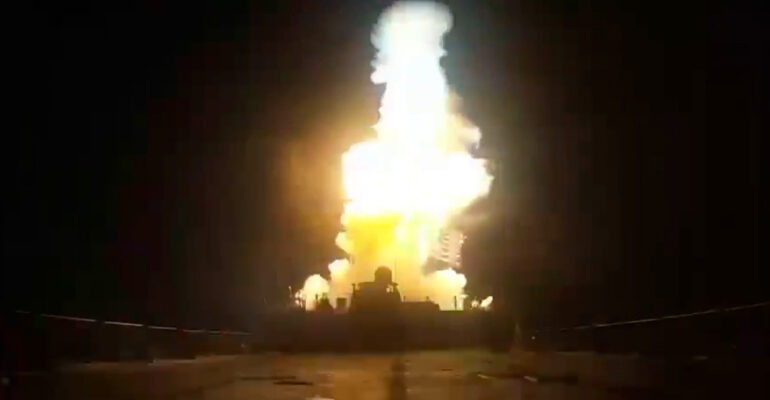



The conflict between the United States and Iran is entering a new and more dangerous phase, after a new wave of American attacks on Iranian targets and Tehran's response to American bases and interests in the Middle East. The US Central Command (CENTCOM) announced that the second wave of attacks within 24 hours on the targets of the Islamic Revolutionary Guard Corps has been completed. According to the Americans, the targets were air defense systems, radars, naval installations and assets, mine laying capabilities and communications infrastructure.
The American attacks were followed by an Iranian response in several countries in the region.
Iran strikes US bases
Iran's Revolutionary Guards announced the launch of a "decisive retaliatory operation" with missiles and drones against US bases and interests. According to Tehran, US targets were attacked in Jordan, Iraq and Bahrain, while Kuwaiti authorities also reported missile and drone attacks. In Jordan, the military said it had intercepted 10 of 13 Iranian ballistic missiles. The other three missiles fell in remote and uninhabited areas. Jordanian authorities said there were no casualties or human consequences.
Meanwhile, air defense sirens were heard in Bahrain and explosions were reported, while Kuwait announced that it had been targeted by missile and drone attacks.
According to a release from US Central Command (CENTCOM), they have completed the wave of strikes against Iran, with air defense sites, radar systems, maritime assets and facilities, mine laying capabilities, and communications sites all being targeted in the strikes. For the… pic.twitter.com/Ls059GwW60
— OSINTdefender (@sentdefender) September 1, 2026
Trump threatens Iran
US President Donald Trump warned Tehran that continued attacks on US forces would bring an even harsher response from Washington. Trump said Iran would be hit “much harder” if it continued to retaliate against the US strikes. On the other hand, the spokesman for Iran’s Central Command, Ebrahim Zolfaghari, warned that Tehran’s response would become “bigger and more destructive” if the US continued the bombing. He also warned any country that cooperates with the US military.
Four victims at a wedding
Meanwhile, Iranian authorities reported casualties from the US bombing. According to the Iranian Red Crescent, a missile attack in southern Iran, near a wedding ceremony, killed four people, including a child, and wounded more than 50. Iran's state news agency IRNA also reported seven more deaths and nine injuries in a missile attack in Khuzestan province. Explosions were also reported near Bandar Abbas and on the island of Qeshm in the Persian Gulf. An airport in Kerman province was also targeted, according to Iranian media.
Escalation after proposal for dialogue
The US strikes came just hours after Iranian President Masoud Pezeshkian proposed a return to diplomacy. Pezeshkian said Iran would be willing to take reciprocal steps if the US respected previous commitments under the Islamabad memorandum of understanding. However, instead of a return to negotiations, the situation escalated with new US strikes and Iranian retaliation. The military escalation is also affecting energy markets.
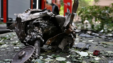
Footage shows the aftermath of a US airstrike on a wedding venue in Bandar Kuhestak, Sirik County, southern Iran.
According to Iranian state media, 35 people sustained serious injuries, while four fatalities have been confirmed, including one child and one woman.
Debris… pic.twitter.com/3qGWlcSyIt
— OSINTWarfare (@OSINTWarfare) September 1, 2026
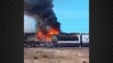
Two large oil tankers were hit by missiles of unknown origin while sailing through the Strait of Hormuz, one of the world's most important oil shipping routes. In this situation, the price of US WTI oil exceeded $ 90 per barrel, while the price of natural gas in Europe reached its highest level in three years. Iran is also considering imposing tariffs on ships passing through Hormuz, while the US has warned of new economic measures against Tehran. Thus, the US-Iran clash is no longer limited to Iranian territory, but is increasingly extending to American bases and strategic infrastructure throughout the Middle East.