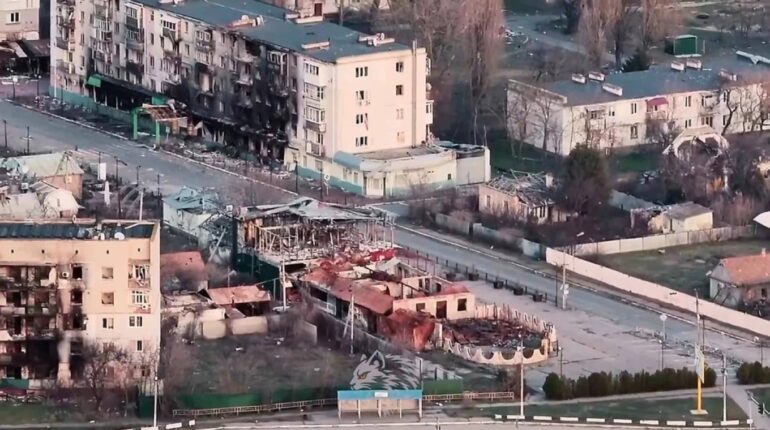



The Ukrainian town of Olesk, about 9 kilometers from Kherson, is on the brink of a humanitarian catastrophe, with the remaining residents in the area facing severe shortages of food, drinking water, medicine and electricity. The town has been under Russian occupation almost since the start of the full-scale invasion of Ukraine in 2022. The situation has worsened significantly after the destruction of the Kakhovka hydroelectric power station in 2023, which caused major flooding and significant damage in the Kherson area.
According to Ukrainian authorities and residents’ accounts, food supplies are running low, and Ukrainian teams are trying to deliver food to the occupied area via drones. A resident of Olesk sent a message to the Ukrainian administration, which has been relocated to another area, describing the food he has left: one beetroot, five potatoes, one onion, one zucchini, one tomato and some barley. “We are preparing our last borscht,” he wrote, while another resident said: “We eat once a day.” “We will definitely die this fall. I am already dying, I am getting weaker every day,” another message said.
Oleski once had about 24 inhabitants, but the war and occupation have caused a massive exodus of the population. According to Ukrainian volunteers, by the end of September, fewer than 2 people remained in the town, including about 50 children. Ukrainian volunteer Iryna-Ester Vrataryeva, who has been involved in evacuating thousands of people from areas occupied by Russia, described the situation in Oleski as “hell.” “The hunger has reached such a point that, at best, a person can eat a thin soup and a few spoonfuls of some kind of porridge in a day,” she said, adding that residents have been left without food, medicine, medical care, firefighting equipment and money. The situation has also been worsened by floods caused by the collapse of the Kakhovka dam. Ukraine has blamed Russia for its destruction, while the dam was under Russian control at the time.
A Ukrainian posted on Instagram that her mom has managed to escape from Oleshky, Kherson region.
Here is what that person wrote:
"A week ago, my 67-year-old mother made the decision to leave the blockaded city of Oleshky on foot.
All these years, she refused to leave because she loved that town—or rather, what was left of it.
Since 2022, she had been taking care of stray animals, sheltering nearly 30 dogs and cats. In recent months, she worried more about what they would eat than about feeding herself.
But the dogs and cats started disappearing right from the yard.
Because people have nothing to eat.During the occupation, my mother:
Lost our apartment due to a direct hit.
Lost her husband's house to the flood caused by the destruction of the Kakhovka Hydroelectric Power Plant (and miraculously survived back then).
Lost my grandmother's second house to a drone strike a week and a half ago (she was inside and miraculously survived again).
Yet months of starvation (everything written about people surviving in Oleshky is an understatement) forced her to choose: fear or life.
She chose life and took the risk.She walked more than 20 km on mined roads, where cars and people are constantly targeted by drones. Then, for a week, using various means, she made her way out of the occupied area and reached Kyiv today.
I still can't quite believe that she made it ❤️"
📹: fata_gorgo/Instagram
— Anton Gerashchenko (@Gerashchenko_en) September 30, 2026
According to residents, they collect rainwater and melt snow for daily needs. There are also reports that some of them have been forced to hunt pheasants or catch pigeons to provide food.
The situation in the city has been further aggravated by the lack of electricity and fuel. The local hospital continues to function, but according to Ukrainian authorities, it has no power and does not have enough fuel for the generator. The hospital's basement, meanwhile, is being used to store the bodies of those who have lost their lives.
Volunteer Ksenia Arkhipova said that last winter, elderly people in Oleski were forced to stay in their homes in temperatures as low as 3 degrees Celsius. According to her, some of them arrived at the hospital exhausted, having no food. Ukrainian Ombudsman Dmytro Lyubinets said that Kiev has been trying since the spring to create a humanitarian corridor to evacuate Oleski residents to areas controlled by Ukraine, but according to him, Moscow has not agreed.
In mid-September, Lyubinets said that at least 358 people in Oleski needed immediate evacuation. Ukrainian Foreign Minister Andriy Sibikha has also called for humanitarian corridors to be opened for the town’s residents. Meanwhile, Ukraine has begun using drones to deliver food and other supplies. According to the Ukrainian military, one of the latest operations managed to deliver aid to about 100 families. Ukrainian authorities claim that Russian forces have been hindering humanitarian efforts and attacking drones carrying aid. Radio Free Europe, which has reported on the situation, notes that some of these allegations cannot be independently verified. The Kremlin has acknowledged that there are problems with the supply of food and medicine to Oleski, but has attributed the situation to the fighting and blamed Ukrainian forces for threatening supply routes.
As the fifth winter of the war approaches, Ukrainian authorities warn that the situation for the remaining residents is becoming increasingly critical. “People are counting the hours and days, hoping that this situation will somehow be resolved,” said the head of the local administration, Tetyana Khasanenko. According to Ukrainian officials and volunteers, Oleski has become an isolated area, surrounded by minefields and exposed to drone attacks. They claim that the town is also used as a staging point by Russian forces for military operations in southern Ukraine.
For this reason, some Ukrainian officials have described the remaining population, especially the elderly, the sick, and those with mobility difficulties, as “human shields.” As the fighting continues, the residents of Olesk face a lack of food and basic survival conditions, while efforts to evacuate them remain limited by the military situation and minefields surrounding the town.