





Bosnia and Herzegovina's Foreign Minister, Elmedin Konakovic, announced on Monday that almost all diplomatic personnel of the Bosnian Embassy in Serbia will be withdrawn, in response to the actions of Serbian officials following the death and burial of convicted war criminal Ratko Mladic.
Konakovic said that only the ambassador and the consul may remain in Belgrade, as their appointment and dismissal are decided by the Presidency of Bosnia, while the rest of the staff will withdraw. According to him, consular services are expected to be transferred to the embassies of Bosnia and Herzegovina in Zagreb and Podgorica. He justified the decision with the developments in Serbia after the death of Mladic, including the funeral, the memorial ceremony and the messages that have appeared in public.
“If I could, I would break off diplomatic relations with Serbia today. What I can do is work to reduce relations to the minimum possible,” Konakovic said. He said he was “not surprised” by the presence of Republika Srpska officials at Mladic’s funeral in Belgrade and warned that he would seek sanctions “at all addresses” against individuals who attended the ceremony, including Bosnian Presidency member Zeljka Cvijanovic.
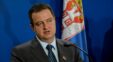
Serbian Foreign Minister Marko Djuric, in a Facebook reaction to Konakovic's warning, accused the head of Bosnia and Herzegovina's diplomacy of "hypocrisy" and said that he should "first mention the names of Serbian victims, condemn the crimes committed against them and explain why convicted commanders continue to be glorified in Sarajevo." The Bosnia and Herzegovina Foreign Minister said that the "final alarm" was the "Towards Potocari" message displayed at the Crvena Zvezda match, assessing that such events constitute a continuation of the glorification of war crimes and their perpetrators.
During the derby between Crvena Zvezda and Partizan on September 6, fans in the northern stand of the “Rajko Mitic” stadium displayed a large portrait of Mladić with the inscription: “Towards Potocari”. His portrait remained on display in the northern stand throughout the match. Konakovic also warned of a diplomatic offensive against the European Union and other international partners. He said that a series of diplomatic notes and letters would be sent, through which a clear reaction to Serbia’s position on war crimes confirmed by court decisions would be demanded.
According to him, Bosnia will no longer respond passively to efforts to review the facts about war crimes and will use diplomatic channels more intensively to present, as he said, the truth about the events of the last war. The funeral ceremony of Mladic in Belgrade was attended by the highest officials of the Bosnian Serb entity, Republika Srpska.
Among them were Bosnian Presidency member Zeljka Cvijanovic; Republika Srpska President Sinisa Karan; Prime Minister Savo Minic; Republika Srpska Assembly Speaker Nenad Stevandic; and several ministers from the entity's government. Tributes to Mladic were also paid by Milorad Dodik, leader of the Alliance of Independent Social Democrats; Banja Luka Mayor Draško Stanivuković; and representatives of the opposition Serbian Democratic Party, Branko Blanuša and Marinko Božović.
The European Union Delegation to Bosnia and Herzegovina warned on September 7 that “any glorification of war criminals, denial of genocide and revisionism is contrary to the most fundamental European values and has no place in either the EU or the candidate countries for membership.”
US senators Jeanne Shaheen, Chuck Grassley and Keith Self had previously reacted to the funeral ceremony with military and state honors, calling on authorities in Serbia and Republika Srpska to distance themselves from the ceremony.
"Ratko Mladic was a war criminal and architect of the genocide in Srebrenica, where more than 8.000 Bosniak men and boys were killed," the senators said in a joint statement.
They warned that glorifying him would constitute a desecration of the memory of the victims and a test of Serbia and Republika Srpska's willingness to break away from the legacy of war crimes.
European Commissioner for Enlargement, Marta Kos, meanwhile canceled a planned visit to Serbia, assessing that the glorification of a person convicted of war crimes and genocide in Bosnia and Herzegovina is incompatible with the values on which the European path is based.
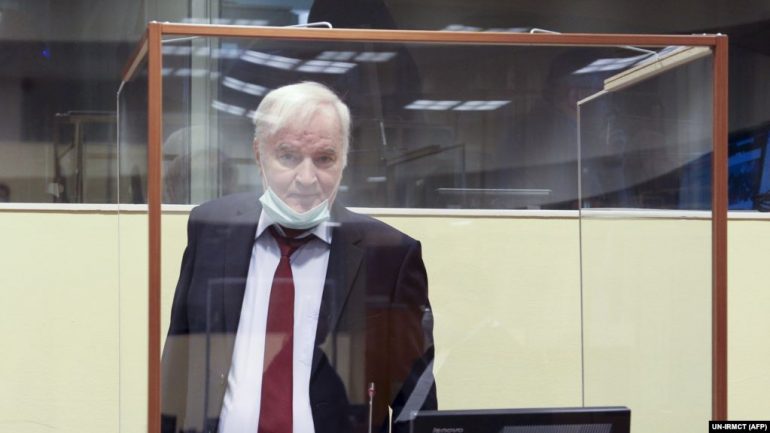
Former commander of the Army of Republika Srpska, Mladic, whom the Hague Tribunal convicted of genocide and other war crimes in Bosnia and Herzegovina, was buried in Belgrade on Monday, September 7th, with military and state honors.
On September 5, at the House of the Serbian Army in Belgrade, a memorial ceremony was held for Mladic, attended by, among others, the Serbian Minister of Justice, Nenad Vujic, and the President of the Republika Srpska, Sinisa Karan.
In the days following Mladic's death, rallies were organized in his memory in several cities in Serbia and the Republika Srpska entity.
The largest rally was held in Banja Luka on September 1. In the narratives of some media outlets in Belgrade and Banja Luka, Mladic is presented as a victim of the Tribunal, which, according to them, did not allow him to receive treatment in Serbia, while the court verdict against him and the victims of the crimes for which he was convicted are almost not mentioned./REL