


Six months after being named Iran's supreme leader, Mojtaba Khamenei remains one of the regime's most mysterious figures in Tehran. The 56-year-old, who succeeded his father, Ayatollah Ali Khamenei, has almost completely avoided public appearances, with Iranian authorities justifying his absences on security grounds.
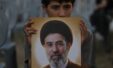
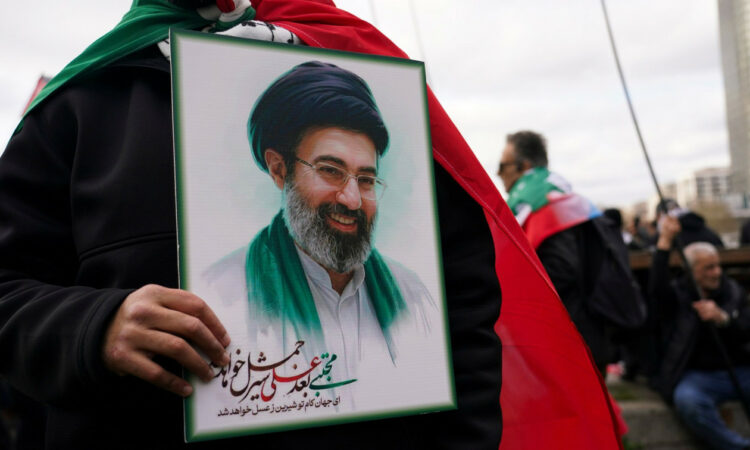
Mojtaba Khamenei assumed the country's highest religious and political post after the death of his father on February 28, the day the joint US-Israeli operation against Iran began. Since March, he has not appeared in public, except for his images on posters placed on the country's streets. Although he has issued 21 announcements regarding religious developments, the war and the economic situation, they have been read mainly by television presenters and then distributed on online platforms.
His absence was particularly noticeable during his father's funeral, which in July lasted six days and was attended by millions of people. Mojtaba did not attend the public ceremonies. This has fueled speculation about his health. Iranian authorities have acknowledged that he suffered injuries during the attack that killed his father, but insist that the injuries were minor and that he has recovered.
Does Mojtaba Khamenei control Iran?
One of the main questions that arises six months after his rise to power is whether Mojtaba Khamenei has the same control over the Iranian system that his father had.
According to analysts quoted by Radio Free Europe, power in Iran appears to have become more collective and less centered on the figure of the supreme leader. Analyst Raffaele Mauriello estimates that the Revolutionary Guard is currently one of the most powerful actors in the Iranian system, although this does not mean that it has absolute control over the country.
Authorities, however, insist that Mojtaba continues to have the final say on important decisions.
One of the most important decisions attributed to him so far is the reorganization of the top military and security structures. He has appointed seven senior officials, including Mohsen Rezaei to the post of secretary of the Supreme National Security Council.
Rezaei is a veteran figure of the Iranian system and led the Revolutionary Guard during the Iran-Iraq war in the 1980s. Another important appointment was that of Hossein Taeb at the head of the Basij militia, a paramilitary force that plays an important role in internal security and in dealing with protests.
Preparation for war and internal control
According to analysts, these appointments may have a dual objective: preparing Iran for a prolonged conflict with the United States and strengthening the regime's control within the country. In this context, Mojtaba Khamenei appears to be relying on powerful military and security structures, while himself staying out of the public eye.
His absence from the scene has not stopped the Iranian regime from portraying him as the country’s highest authority. But six months after taking office, it remains unclear how much personal power he wields and how much of his decisions are made through a collective structure in which the Revolutionary Guard and other regime elites play an increasingly important role. Ultimately, the question that remains is whether Mojtaba Khamenei is truly running Iran from behind the scenes, or whether the position of supreme leader has become just one part of a broader system of power where decisions are made by a few powerful centers.