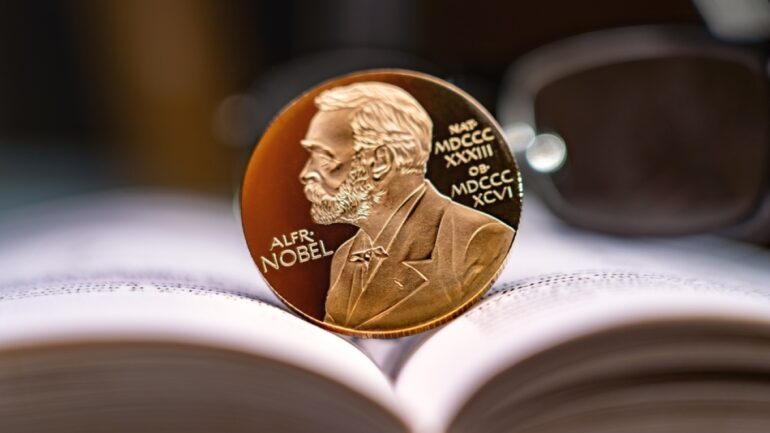



The Nobel Prize in Literature remains one of the most prestigious awards in the world of literature, but also one of the most unpredictable. Since its first award in 1901, it has influenced the way readers have viewed world literature, honoring both well-known authors and writers who were relatively unknown to the general public. The Swedish Academy, based on Alfred Nobel's will, has used various criteria over the years in selecting laureates, including artistic merit, social themes and the ethical dimension of the work.
Among the most famous names awarded the Nobel Prize are Thomas Mann in 1929, Samuel Beckett in 1969 and Gabriel García Márquez in 1982. The list of laureates also includes the Greek poets Giorgos Seferis, winner in 1963, and Odysseas Elytis, awarded in 1979. One of the peculiarities of the prize is that it has brought to international attention writers who were previously known mainly in their own countries or in specialized circles.
Selma Lagerlöf, who won in 1909, was the first woman to receive the Nobel Prize in Literature. Later, Yasunari Kawabata was honored in 1968 for his work connected to Japanese tradition and aesthetics, while Herta Müller won in 2009 for her work influenced by the experience of dictatorship and repression in Romania. In 2021, the prize was awarded to Abdulrazak Gurnah, whose works address colonialism, immigration, and the experience of displaced Africans. The Nobel Prize in Literature has not been immune to controversy. The decision to award the prize to Bob Dylan in 2016 sparked much discussion about the boundaries between literature and music.
The year 2018 also marked an unusual moment, as the prize was not awarded due to the crisis and scandal that engulfed the Swedish Academy. In recent years, the Academy's selections have increasingly reflected a broad panorama of world literature, with attention to identity, migration, language, memory and cultural experiences. This has kept the Nobel Prize in Literature in the spotlight, not only for the authors who are honored, but also for the debates that accompany each of its decisions.