


Citizens in Russia and Ukraine have been gripped by a massive cyberattack that hit emergency warning apps in both countries. Users received false alerts about radiation, nuclear attacks and chemical threats, prompting authorities to issue statements to reassure the public. The first problems were reported in Ukraine, where an app used to report airstrikes displayed alerts about rising radiation levels in Kiev and other areas of the country. The Ukrainian Air Force confirmed that the app had been compromised, stressing that there was no real radiation threat.
“The airstrike warning app appears to have been compromised. There is no radiation threat! Stay calm and follow our updates,” the Air Force announced on Telegram. Its spokesman, Yuriy Ignat, confirmed that it was a cyberattack. For a short period, users received several alarming notifications, including warnings of a nuclear alert across Ukraine, a chemical threat in Kiev, and even fighting in the streets of the capital.
The messages began arriving at around 22:47 p.m. local time on Sunday. One of them warned of a radiation hazard in Kiev, while another mentioned the Russian Oreshnik missile. A little later, citizens were notified that the alerts had ended. The situation also escalated in Russia, where the Emergencies Ministry announced that its app had been hit by a “massive cyberattack” through which false information was being distributed to citizens. In one of the messages, users were warned that Ukrainian drones had launched nuclear warheads towards all regions of Russia. Citizens were asked to secure food for three weeks and take shelter in basements. “Nuclear warheads have been launched with P1-SUN transporters to all regions of Russia! Urgently stock up on food for three weeks and hide in your basement,” the fake notification read.
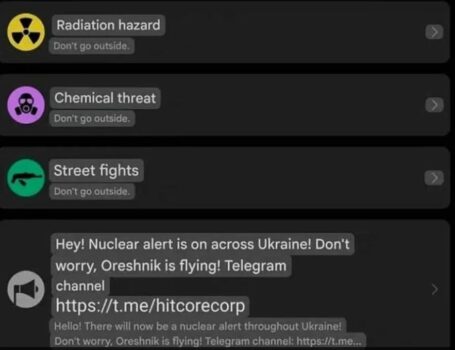
Such messages were reported in Moscow, St. Petersburg, Belgorod, Nizhny Novgorod, Tyumen, Tula, Chelyabinsk and several other regions. The P1-SUN is a Ukrainian interceptor drone, without nuclear capabilities, designed to shoot down Russian drones. The Russian ministry said it was working to restore the app, while assuring citizens that other warning systems, including sirens, loudspeakers, television and radio, were not affected by the attack. It has not been confirmed whether the attacks on Russian and Ukrainian apps are related. Ukraine blamed Russia for the attack on its app, while Moscow did not identify the perpetrators of the attack on the Russian system. The Ukrainian Center for Strategic Communications, SPRAVDI, claimed that one of the fake messages also contained a reference in Russian to the Oreshnik missile.
Cyberattacks after the end of the ceasefire
The incidents occurred at a tense moment, just before the end of a six-day ceasefire in the area of the town of Oleshky, in the Kherson region, which is under Russian occupation. The ceasefire, which came into effect on October 27 and ended on November 1, allowed for a humanitarian operation to evacuate civilians from the town. Hundreds of residents were reportedly able to flee to Ukrainian-controlled territory. Ukraine’s Human Rights Commissioner Dmytro Lubinets called the agreement an important step in the humanitarian efforts between the two countries. Meanwhile, Russia and Ukraine continued to exchange attacks on energy infrastructure. Moscow claimed to have hit a cargo ship carrying supplies for the Ukrainian military south of Odessa, as well as a storage area for Ukrainian missile systems.
Separately, Ukrainian authorities reported Russian attacks on energy infrastructure, which caused power outages in several regions of the country, including the capital Kiev. As the war between the two countries enters its fifth year, the attack on warning systems has raised new concerns about the safety of civilians who rely on these applications to protect themselves from air and missile attacks.