






On the day that it was four months since the last parliamentary elections, it was confirmed that Kosovo would go to the polls again.
A quick return to the ballot boxes, not as a result of a political choice, but as a consequence of a crisis that policymakers failed to resolve.
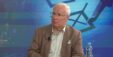
"This is their immaturity, both towards the state and towards the storm of developments that have swept the world," political analyst Ilir Deda told Radio Free Europe.
On June 7th – at the latest – the citizens of Kosovo will go to the polls again in parliamentary elections, for the third time in 16 months.
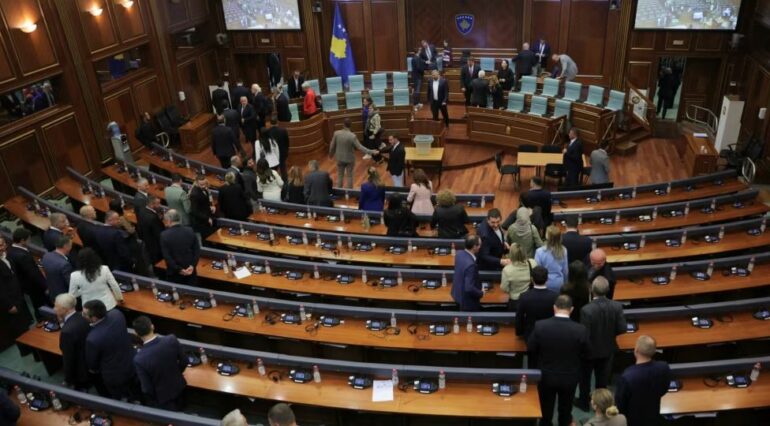
This process became inevitable on April 28, just four months after the December 28 elections, when MPs failed to elect a president, automatically activating the constitutional deadline that takes the country to elections within 45 days.
The ruling party, Vetevendosje Movement, accused the opposition of deliberately boycotting the sessions, while opposition parties blamed the government for a lack of cooperation and for attempts to concentrate power in a single hand.
"In order for Kosovo to have a new president, it must have a new opposition. The opposition is old. This opposition may bring a new face, but its craft and character are old, which is why it is in free fall," declared Prime Minister Albin Kurti, also the leader of the LVV, in the last session of the tenth legislature.
The two main opposition parties, PDK and LDK, welcomed the move to new elections, although, according to the LDK leader, they were imposed by the government, which, with a majority of 51 percent, demanded political "submission".
"Now is the time for the unity of the good people of this country, who want a normal Kosovo, without drama, without propaganda...", Lumir Abdixhiku wrote on Facebook.
A recurring crisis, not a new episode
This situation is not new for Kosovo.
A similar scenario was repeated immediately after the elections of February 9, 2025, when the Assembly remained unconstituted for months and, in the end, the formation of the Government failed.
Even then, responsibility was divided between the parties, with accusations passing from one to the other.
For Deda, the situation is no longer an isolated episode, but a pattern that is taking shape.
He warns that Kosovo is approaching a scenario similar to Bulgaria, which in the last five years has gone through seven consecutive election cycles, without producing institutional stability.
"It was not expected that after the December 28 elections, when the Vetëvendosje Movement won 51 percent of the vote, we would end up in this situation," he says.
In his analysis, the problem lies not with the political system, but with the way it is used.
Kosovo, says Deda, has an advanced institutional framework, but it is becoming an instrument of conflict, rather than serving as a basis for stability.
He attributes the main responsibility to the largest party, which, as he says, has had a real opportunity to build institutional stability.
Deda considers that this crisis was easily avoidable.
"The parties were able to discuss what kind of president they want: a figure who began his political activity in the 90s, reflecting the journey and state-building of Kosovo; a figure linked to the KLA, as a counter-reaction to the process in The Hague; or a figure who looks to the future," says Deda.
Instead, he considers that the debate turned into a political game to point the finger at the guilty and "fabricate alibis" to avoid responsibility.
Deda warns that, being on this trajectory, Kosovo risks remaining outside of important global developments, while the perception of it as a fragile state could have long-term consequences - both in relation to international partners and with civic trust.
"I just hope that after the new elections there will be a maturation of politics and a strengthening of the culture of consensus," says Deda.
Otherwise, according to him, the election cycle may not stop.
Between legitimacy and "lost time"
Radio Free Europe/Radio Liberty requested comment from the US State Department and the European Union on Kosovo's failure to elect a president and going to new elections, as well as the consequences this may have on the country's political stability, but, by the time of publication of this article, it had not received a response.
Toby Vogel, an analyst at the Council for Democratizing Politics in Brussels, says that early elections could be seen as "wasted time," as they are likely to produce a political outcome similar to the previous one.
However, he emphasizes that this is a process foreseen by the Constitution, so it is both legitimate and democratic.
"As a genuine democratic government, the Kurti Government and other authorities, Parliament and so on, are following the constitutional procedure," Vogel told Radio Free Europe.
From a European perspective, he says that the EU and some member states are not showing political will to move Kosovo forward in the integration process, hiding behind the narrative of "internal instability."
“Even when Kosovo enjoyed unprecedented internal stability under Prime Minister Kurti, the EU made no progress in either the dialogue with Serbia or the accession process – which shows that the narrative of instability is a baseless excuse, hiding a lack of political will in Brussels and in key member states,” Vogel adds.
Cost beyond politics
The crisis in Kosovo is not limited to politics. It also directly affects the pace of state decision-making.
According to Naim Jakaj, from the Kosovo Law Institute, the first consequence is the paralysis of the legislative process. In the absence of a functional Assembly, new laws are not adopted and key reforms, including those related to the rule of law and European integration, are slowed down.
Another problem, according to him, is the lack of parliamentary oversight of the Government - an essential element in a democratic system.
This situation, Jakaj emphasizes, significantly reduces the level of accountability and transparency in decision-making.
"The incumbent government has a limited mandate and cannot take long-term strategic decisions, leaving the country in a state of institutional stagnation. Essentially, an institutional vacuum is created, where the state functions minimally, but does not develop," Jakaj tells Radio Free Europe.
He underlines that the lack of a Government with a full mandate is directly reflected on the international level.
According to him, this could cause delays in important processes, such as applying for membership in the Council of Europe or fulfilling obligations under the European Union's Growth Plan.
Election financial bill
And, beyond the political and legal dimension, the crisis also produces an additional burden – the financial one – as each new electoral process implies new expenses for the state budget.
The spokesperson for the Central Election Commission (CEC), Valmir Elezi, tells Radio Free Europe that 2026 is not envisaged as an election year, so no funds have been allocated for early elections in the institution's annual budget.
In such circumstances, the CEC is forced to address the Government of Kosovo with a request for funds, in order to cover the costs of organizing the process.
As a point of comparison, Elezi mentions the last elections on December 28, for which a budget of 11.5 million euros was planned, while actual expenses amounted to around 7 million euros, according to still-inconclusive data.
In those elections, over 2 million Kosovo citizens, both inside and outside the country, were eligible to vote – a figure that is expected to remain similar in future elections.
Turnout was around 45 percent, but such a level is not guaranteed, since, as Jakaj says, frequent elections create "fatigue" among voters.
Unlike him, Deda sees the focus elsewhere: not on the decline in turnout, but on how citizens will read and judge the political situation themselves.
"The test of the elections is the maturity of the people of Kosovo - whether the citizens of Kosovo will punish such behavior of the parties or approve of it," concludes Deda.