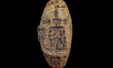



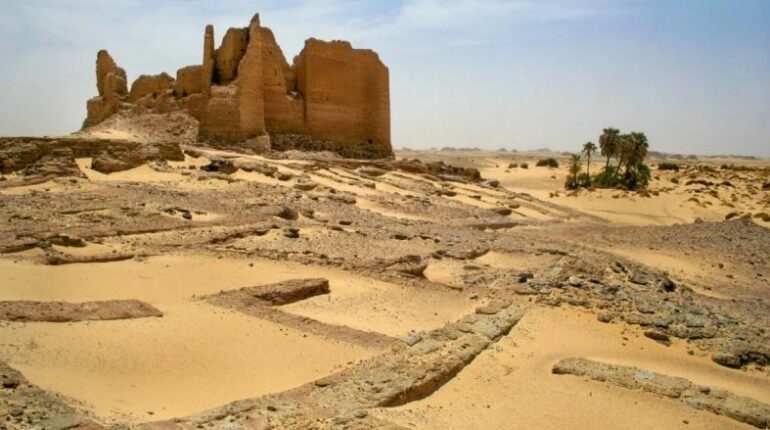



A major paleontological discovery in the Egyptian desert is giving scientists new insights into a world that existed tens of millions of years ago, when large parts of what is now Egypt were covered by sea. A team of paleontologists has discovered 14 fossilized shark teeth in the Abu Tartur Plateau, southwest Egypt, about 650 kilometers from Cairo. The fossils date to the late Cretaceous period, which spans a time interval from about 100.5 to 66 million years ago.
The study was led by Tarek Yassin, from Cairo University. Analysis of the teeth showed that they belonged to at least five different species of prehistoric sharks. The discovery is particularly important to scientists because two of these species had not previously been identified in Egypt. One of them may even represent the first documented evidence of the presence of this species on the African continent.
According to researchers, the fossils offer a clearer picture of the marine biodiversity that existed in that part of North Africa millions of years ago. At that time, the landscape that is now a vast desert was completely different. The area was part of a marine environment and the natural conditions favored the development of a rich ecosystem, where different types of fish and predators coexisted. Scientists believe that the presence of different types of sharks indicates the existence of a developed food chain. At its base were the smallest fish, which served as food for larger predators, while at the top stood the main predators of the ecosystem.
The Abu Tartur Plateau was located near the outer edge of the continental shelf, a position that may have favored a continuous supply of nutrients from the deep ocean waters. The presence of phosphate deposits in the rocks of the area also supports the idea that conditions were favorable for a rich marine ecosystem. One of the reasons why shark teeth are so important to paleontology is related to the way they are constructed. Unlike most bones, teeth are much more resistant and can be fossilized by mineralizing during the process of burial in sediments. Sharks have skeletons composed mainly of cartilage, a material that decomposes much faster than bone, and for this reason complete skeletons of sharks are extremely rare in the fossil record. Teeth, on the other hand, can survive for millions of years and provide important evidence for the existence, size, and distribution of these animals.
One of the most famous examples is Megalodon, one of the largest predators that ever lived in the oceans. Although a complete skeleton of it has not been discovered, scientists have been able to study the species mainly through thousands of fossilized teeth found in different parts of the world. Sharks in general have an extremely long evolutionary history. They have existed on the planet for about 450 million years, long before the appearance of the first trees and long before the continents took the shape we know today. The discovery in the Egyptian desert shows once again that today's landscapes can hide traces of completely different worlds. A territory that is now dominated by sand and arid climate was once part of a marine environment rich in life.
For paleontologists, each tooth discovered is an important piece of this ancient mosaic. Their analysis can help reconstruct extinct ecosystems and better understand how sharks and other marine animals adapted to the vast changes the planet has undergone over millions of years.