


26 years ago, the citizens of Serbia overthrew autocrat Slobodan Milosevic. Now the country faces crucial elections. Aleksandar Vučić wants to avoid a repeat of that history. a repeat of that h
"There come times when all the scum of society, the scum, everything bad that exists in a society comes to the surface," Aleksandar Vučić once said about October 5, 2000. "We have experienced and learned from those events. That is why we will overcome them again."
October 5, 2000 remains the greatest political trauma for Serbia's long-time ruler. That's when citizens took to the streets to force autocrat and warlord Slobodan Milosevic to concede defeat in an election. He was defeated by a diverse coalition of small democratic parties.
In 2000, Vučić was on the other side of the barricade. As a member of the Serbian Radical Party, an ally of Milošević, and as Minister of Information in the Belgrade government, he was largely responsible for censorship.
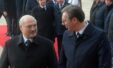
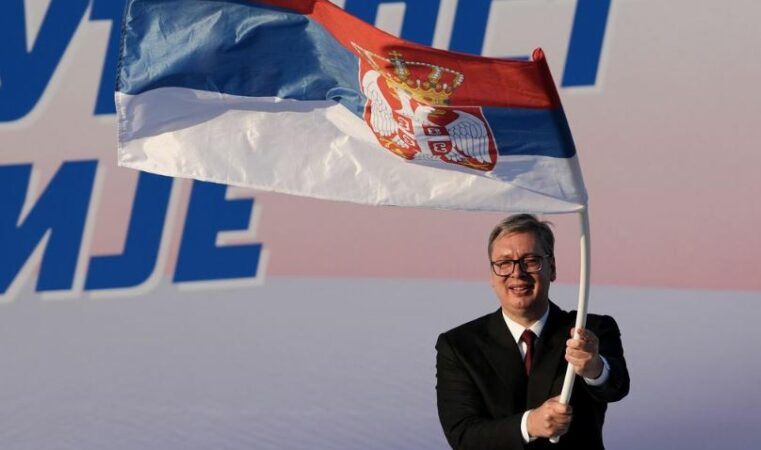
It is no wonder that Serbia's democratic turn 26 years ago remains an open wound for Serbia's strongman today. All the more so because Vučić may now face a situation similar to that of Milošević. He recently resigned from the post of president. In the elections on October 25, he aims to be elected prime minister as the main candidate of the Serbian Progressive Party.
“These elections are a referendum,” says political scientist and public opinion researcher Dušan Lj. Milenkovic. “There are only two paths for Serbia in the coming decades: either liberation from the autocratic rule of Aleksandar Vučić, or decades of repression and dictatorship.”
Students as a new force
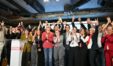
This time, the challenge to Vučić does not come from a united democratic opposition. It comes from the students. The “Student List” was born out of a large protest movement against abuse of power and corruption. For months, students blocked the country’s main universities. The cause was the collapse of the newly renovated railway station building in Novi Sad in late 2024, which killed 16 people.
The students chose respected professors, activists, and well-known public figures as their candidates. There are no professional politicians on this list. After years in which a divided opposition failed to even shake Vučić's grip on power, this strategy seems to be paying off. One of the most recent polls shows the students with 44,4 percent support, while Vučić's camp has 41,7 percent. Meanwhile, most opposition parties have withdrawn from the race and have decided to support the students.
Other polls, conducted by government-affiliated institutes, predict a comfortable victory for Vučić. In Serbia, where trust in institutions and the media has fallen to historic lows, even the polls are viewed with skepticism.
Former Prime Minister Zoran Živković speaks of a “referendum atmosphere.” He was part of the winning coalition in 2000. In 2003, he took office as Serbia’s first democratic prime minister after the assassination of Zoran Đinđić.
"Back then, there was a real and well-organized opposition," Živković told DW. "Unfortunately, the opposition in today's Serbia looks like dinosaurs in the 21st century. It either no longer exists or has been sold out to the regime. In any case, it is not contributing to Serbia becoming a state of honesty and the rule of law again."
The protest movement is bigger than that of 2000
Disappointment with the opposition is one reason for the rise of the student movement. Another reason is related to Vučić himself. The leader, who has steered Serbia between the European Union, Russia and China, faces accusations of media control, exploitation of natural resources and links to organized crime.
Today's protest movement has long surpassed that of 2000. Back then, citizens protested in the streets for just two weeks. Milosevic only admitted defeat after the army and parts of the police refused to obey him. His power apparatus disintegrated.
However, today's Serbia is no longer the Serbia of that time. It is not the Serbia that emerged from a decade of bloody wars during the breakup of Yugoslavia, after war crimes, international sanctions, galloping inflation and NATO bombing in 1999, at the height of the conflict in Kosovo.
Achievements of October 5
Only after October 5, 2000, the then-remaining Yugoslavia, consisting of Serbia and Montenegro, was reinstated as a member of the United Nations. Salaries and pensions began to be paid regularly again. A large part of the country's foreign debts was also forgiven.
"Vučić has always tried to deny all these achievements of October 5," Milenkovic tells DW. "This was politically convenient for him. Like many politicians with great power, he wants to imprint his version of events in the collective memory of Serbs."
However, the memory of October 5 is not only evoked by the government's opponents. Vučić himself has for years used rhetoric reminiscent of the Milošević era. He calls critics "foreign mercenaries," "terrorists," and "fascists." He describes the revolt against him as a "color revolution" imported from the West.
Through the largest tabloids and almost all television channels in Serbia, these terms are constantly repeated and spread to the public.
Liberals and nationalists, left and right
However, traditional nationalist narratives and issues such as Serbia’s orientation towards the East or the West, i.e. towards the European Union or an alliance with the “Orthodox mother”, Russia, do not play a role for the Student List. It unites liberals and nationalists, left and right. The List serves as a tool for the change of power. Its main themes are the fight against crime and respect for the law.
Former Prime Minister Zoran Živković has a piece of advice: “From now on, the members of the new government should be prepared and know what they will do the day after taking power, seven days later and a month after that. Within a year, all reforms should be implemented. After that, truly democratic elections should be held, where everyone presents their own program.”
According to him, the lustration process, i.e. the exclusion from politics of all those who were part of the old regime, is particularly important. "Those who are in power today should not even be allowed to run for the administrative council of the palace where they live," says Živković.
The students are campaigning mainly on social media and by knocking on doors. They are also making no secret of how they imagine Vučić's fate if he wins. One of their viral videos shows a lonely Vučić, while his self-aggrandizing speeches are heard in the background. Then the scene changes: a man, whose face is not visible, is cleaning a prison corridor with a brush.
However, there is still a long way to go before a trial against Aleksandar Vučić. For now, opponents of the Serbian government fear electoral manipulation, and even the open use of violence, such as that which the police and pro-government groups have occasionally used during protests.
Jovo Bakic, a sociology professor in Belgrade and a candidate for the Student List, says he is confident of victory. He is equally confident that Vucic will not accept defeat, as Milosevic once did. But the students, he says, have a plan for this scenario as well. When Vreme magazine asked him what that plan is, Bakic just laughed: “I can’t reveal that.”
It seems that a large part of the government's opponents are already preparing for the post-election period: for the battle over a fair vote count and recognition of the result. The only thing certain at the moment is that Serbia is heading towards the most unpredictable electoral process since 2000./DW