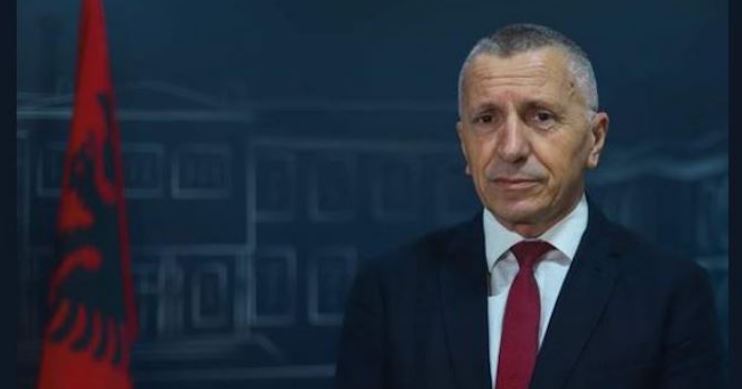



Albanian MP in the Serbian Parliament, Shaip Kamberi, has reacted to statements by Serbian President Aleksandar Vučić regarding the possibility of uniting Albanian parties in a joint parliamentary list. According to Kamberi, the importance of this union is not only related to the number of mandates that Albanians can win, but also to the political influence that a united and independent representation can exert.
In a post, Kamberi emphasizes that the main issue is what Albanian MPs will represent politically and how they will use their mandate.
"The issue is not necessarily how many Albanian MPs will enter Parliament, but what they will represent politically and what they can do with that representation," he wrote.
Kamberi has criticized the language used by Vučić towards the idea of a joint Albanian list, arguing that presenting political opponents as enemies shifts the debate from programs and electoral competition to loyalty to power.
"When a former president and candidate for prime minister presents an electoral list of a national minority as the enemy, he shifts the debate from the program, rights and results to loyalty to himself and the party and the state," the Albanian MP stated.
According to Kamberi, such an approach creates political pressure on parties and candidates who may cooperate with Albanian representatives, while criticism of the Serbian government is presented as actions against the country's interests.
He believes that a united, critical and independent Albanian representation can have more political influence than a larger number of MPs who adapt to the positions of the government.
Kamberi has identified three areas where, according to him, Albanian MPs can exert influence. In Parliament, they can raise issues related to the passivation of addresses, discrimination and underrepresentation of Albanians in the Presevo Valley.
In the international arena, according to him, Albanian representatives can document alleged violations of the community's rights, while in the internal Serbian political debate they can prove that there is an Albanian representation independent of government policy. He has also claimed that through declarations of loyalty to the state, attention is being shifted from the concrete problems of Albanians in the Presevo Valley to the question of whom they serve when they demand their rights.