


By DASHNOR KALOÇI
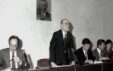
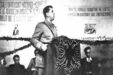
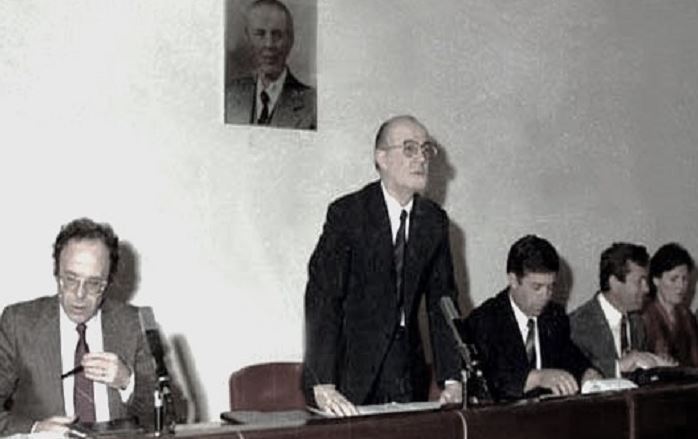
When not even a week had passed since July 2, 1990, when thousands of Albanian citizens climbed over the railings and walls of foreign embassies in Tirana and entered their premises with the intention of leaving Albania, the senior leadership of the Albanian People's Party, headed by Secretary General Ramiz Alia, held the 11th plenum of the Central Committee, which held its proceedings on July 6 and 7. Although the agenda was predetermined in three main points, where the development of education in Albania predominated, almost throughout the proceedings of that plenum (especially in point 4, "Miscellaneous"), the event of those days, otherwise known as "July 2 of the embassies", was discussed and debated. In that plenum, which was attended by all members and candidates of the Central Committee of the Albanian People's Party, the first secretaries of the district party committees, ministers, key cadres of the education, culture, science, economy sectors, leaders of the organization of the Albanian Labor Youth Union, from the apparatus of the Central Committee of the Albanian People's Party, Radio-Television, ATSH, etc., Nimet Cani, Ali Vukatana, Reiz Malile, Shpëtim Çaushi, Zylyftar Ramizi, Qemal Lame, Zef Loka, Pirro Kondi and Hekuran Isai were absent, who had been "in the field" for several days, "managing" the embassy event.
After the opening of the meeting by Ramiz Alia, the floor was given to the Minister of Education, Skënder Gjinushi, who also delivered the relevant report ("On the improvement of the education system and the further strengthening of the quality of the school"), the topic of that plenary session was "the embassy incident", discussing and analyzing in detail how and why it happened ("the role of foreign agencies"), up to the tasks that arose for managing that situation in those hot July days, where over five thousand Albanian citizens from all over the country were in the interiors of some of the main embassies in Tirana, awaiting departure from Albania.
In addition, throughout that meeting, but mainly in item no. 4 of the agenda (which was discussed in the last session), some of the main events that had occurred in different parts of the country during that year were analyzed, such as; the protests in Shkodra in January for the removal of the bust of Stalin; the events in the city of Kavaja where the people of that city clashed with police forces; the mass escapes from the state borders with Yugoslavia and Greece, mass gatherings in religious holy places, such as the Church of Shën-Ndout in Laç i Kurbinit; the legalization of religious beliefs and the opening of cult objects; or other problems that were being addressed, such as; the talks and the international factor for the restoration of diplomatic relations with the USA, the Soviet Union, (talks held with the Deputy Soviet Foreign Minister in Sofia by Sofokli Lazri); the Kosovo problem; international pressure for Albania to open up to the world and its accession to several international conventions; the privileges of the senior leadership of the Albanian People's Party and their families who lived mainly in the "Block"; the rumors circulating among the people about Enver Hoxha's family and Ramiz's relations with Nexhmije; changes in legislation and the penal code; the release of political prisoners; the issuance of passports to citizens who wanted to visit their relatives abroad; the new economic mechanism; the housing and employment of many extras in all districts of the country; the granting of land and livestock to the cooperative peasantry; and even the supply of the population of the cities with basic food products and various industrial goods.
As we will see from the archival documents belonging to the 11th plenum of the Central Committee of the Albanian People's Party, which we emphasize are being published for the first time, in addition to the leadership and some of the senior officials of that time, several other senior figures who continued their political careers after the 90s were also discussed or mentioned at that meeting, such as; Skënder Gjinushi, Fatos Nano, Sali Berisha, Rexhep Mejdani, Gramoz Pashko, Spiro Dede, Dritëro Agolli, Ismail Kadare, Moikom Zeqo, Mehmet Elezi, Lisen Bashkurti, Koço Kokëdhima, Ylli Popa, Aleks Luarasi, etc.
Likewise, in the voluminous file of this plenum, of great interest are also those documents belonging to the secretaries of the Party Committees of the districts or the "Information Group" who have gone to all the districts of the country and have identified all the main issues that have emerged in the meetings of the basic organizations of the party, where "On the letter of the Central Committee" was discussed, documents that constitute the largest and also the most important part of the file in question. It can even be said to be among the most important of the entire period of the communist regime of Enver Hoxha and his successor Ramiz Alia, since that period of time with the events that took place, marked the prologue to the fall of that regime.
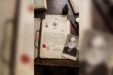
Also of great interest are the documents belonging to the last session of that meeting with item no. 4 of the agenda "Miscellaneous", which constitutes the hottest point of the entire plenum, where the dismissal from duties and retirement of three members of the Politburo (Rita Marko, Manush Muftiu and Prokop Murra) was discussed, even with fierce debates, or the dismissal from ministerial duties or other high functions that they had held for years of several other "leaders", such as Simon Stefani, Pali Miska, Muho Asllani, Lenka Çuko, Vito Kapo, Pirro Kondi, Jovan Bardhi, etc., and the appointment of "new comrades" to the leadership of the high forums of the Party and the State, such as; Xhelil Gjoni, Abdyl Backa, Niko Gjyzari, Kiço Mustaqi, etc. Regarding these, etc., we are familiar with the documents in question, extracted from the Central State Archive (the Fund of the former Central Committee of the Albanian People's Liberation Army), which are published for the first time and with the relevant facsimiles by Memorie.al.
MINUTES OF THE MEETING OF THE 11TH PLENUM OF THE CENTRAL COMMITTEE OF THE ALP, HELD ON JULY 6 AND 7, 1990
VARIOUS
Some issues of today's situations and the political problems that arise from them.
COMRADE THEMIJE THOMAI: We feel responsible for the remarks and criticism that you make, comrade Ramiz, not only as elected comrades in the Central Committee of the Party, but also as leaders of the Party's work in the districts where we work. The situation is difficult, but we must master it, especially now, which is related to the fate of the nation. We must be careful not to remain only in the side problems, but to grasp the main ones and not to confuse what is party with what is not party. I have the impression that sometimes some lack and weakness of the leadership of some, we see as lack of democracy and as mistakes in the Party line.
The people, the people who work in enterprises and cooperatives love the Party, and they completely agree with the measures it is taking to deepen democracy. It seems to me that there are others who are shifting attention from this essential issue by saying that “the workers and peasants have not properly understood the measures that are being taken to deepen democracy”. Those who are interested in doing this to hide their shortcomings are incompetent. There is no room for speculation in this matter, but we must demand more accountability from the leaders, so that they work with a high sense of responsibility. We should think better about how to increase the meetings so that this practice becomes something natural because it is not always implemented.
And something else. There is a lot of talk about the new economic mechanism and it is said that efforts are being made to implement it, but there are more words than concrete work. It is clear that there are difficulties in the material base, etc., but these difficulties are not insurmountable. But the difficulties must first be overcome by the communists and cadres, who, not being in order themselves, confuse things. There are all possibilities that in Tirana, in Lushnja or Fier, in Durrës, or in Shkodra, everywhere, the Party, the communists, have the situation in hand. I wanted to emphasize that this situation, so worrying and of such proportions, is only in Tirana, while in the districts the situation is different, it is healthier.
COMRADE RAMIZ ALIA: Okay. Are there any other comrades to discuss? I would be more interested in a concrete issue, not general words.
COMRADE HALIL LEJLI: I completely agree with the issues you raised, Comrade Ramiz. But I think that the Internal Affairs organs should also increase their investigative power, because after the decisions of the 10th Plenum of the Central Committee of the Party, some employees think that hostile activity has decreased and the class struggle has been softened, and thus the work is reduced. Such carelessness can create unexpected situations, like the current one, so these thoughts must be fought.
COMRADE RAMIZ ALIA: What is your conclusion?
COMRADE HALIL LEJLI: I think that a stance should be taken against people who make such mistakes, and in this plenum some explanation should have been given as to why the security forces allowed this situation to happen.
COMRADE RAMIZ ALIA: Is this the answer you are asking comrade Simon for?
COMRADE HALIL LEJLI: I ask Comrade Simon and the other comrades who the Party has assigned to deal with these matters and who have not known how to manage them properly for the answer. Another issue I wanted to raise is that of removing the incompetent from office. People rightly talk about “removing the incompetent”, because the Party has raised this issue for a long time. Newspapers also write about it every day. Since the 8th Plenum of the Party Central Committee, it was strongly stated that the elderly should retire, but it seems to me that in the departments and below, this work is not being continued. It is the only one that is talked about and written about in the newspaper.
I would say that comrade Marash Hajati is incapable of running the newspaper “Voice of the People”. Even when he was the general director of Radio-Television, there were remarks about him, that he created some unpleasant situation. He has influenced with his tastes, even as if he were the director of some shows that the people did not like and he has spoken about these openly. However, even now that he has become the editor-in-chief, he has influenced the creation of such problems in the Party press, although the press is led by the Party. But the people and grassroots people say that it is not only Marash, as editor-in-chief, who creates these concerns. The writings that have to do with the Party line are approved from above, by the comrades of the apparatus of the Party Central Committee…
COMRADE RAMIZ ALIA: Don't they say they were approved by Comrade Ramiz?!
COMRADE HALIL LEJLI: To be honest, some people think so, otherwise some of these articles should not have been allowed...! However, today, in general, people have an ideological and cultural level and know how to distinguish the mistakes that the editor-in-chief or others may make from the true position of the Party on certain problems. So, I emphasize once again that a position must be taken for comrade Marash.
COMRADE RAMIZ ALIA: Good.
COMRADE SIMON STEFANI: Here, many problems arose for the Security Bodies, which have their own responsibility for all these events. But it is not true that the Security Bodies have not provided data. They have informed the Party and government bodies about this data, from the grassroots to the top, therefore the entire responsibility cannot fall on the State Security Bodies. Even in accordance with the laws that were recently approved, we have discussed and changed all the orders. But we cannot take those persons who are not subject to security by law.
There was also some thought among our employees that “now our work has become easier”. We have criticized these thoughts, we have reported them to the Political Bureau and, rightly, comrade Ramiz has criticized this concept, which we have also explained to our employees. There may still be individuals who have such thoughts, but the work of the Security Bodies is now much more difficult than it was before the changes to some laws that were made recently. Previously, it was easier because it was enough to say a word against the political line and the justice bodies would judge it for agitation and propaganda.
COMRADE ADIL ÇARÇANI: In this situation, it is not only the work of the Security Bodies that has become more difficult, Simon.
COMRADE SIMON STEFANI: All the work of the Party has become more difficult.
COMRADE ADIL ÇARÇANI: That is why the Security Service, despite the difficulties, must do its duty, for which it is responsible. In the moments we are going through, the work of the security bodies must be more agile and more qualified.
COMRADE SIMON STEFANI: Comrade Adil, I said it is difficult, in relation to the opinion that exists among some security workers that the work has now been made easier…!
COMRADE HALIL LEJLI: On July 2, extraordinary events occurred and the Sigurimi knew nothing, although some time ago hooligans had prepared to commit ugly acts in Tirana. These events were prevented by the Party, which took measures as soon as it dictated the situation. Thus, hooligans and enemy elements did not dare to act. Now I think that the Sigurimi not only does not have data on the situation, but specific people may have even become sehirxhins.
COMRADE SIMON STEFANI: No, even now the Security was aware of these problems. In Shkodra there was a greater tendency to organize some kind of riot. Likewise, in Kavaja it was known that something like this would be organized, comrade Halil. But these events cannot be handled by the police and Security organs alone, we all have to deal with them. However, we cannot say that the Security Organs do not have responsibility for this situation.
COMRADE RAMIZ ALIA: Do you accept that in this situation the Security organs were caught by surprise?
COMRADE SIMON STEFANI: We cannot completely accept, Comrade Ramiz, that we had some information that specific people would enter embassies.
COMRADE RAMIZ ALIA: Here we are at the Central Committee meeting and criticism must be accepted, not partially dismissed. Did the Security organs think that there would be such an influx of people into the embassies?
COMRADE SIMON STEFANI: If we come to the issue of the influx into embassies, let's discuss it.
COMRADE RAMIZ ALIA: Since this discussion was opened, it must be brought to the end. If 6 workers from the Valias mine go and enter the Italian embassy by truck, they must have met, at least several times, to come to an agreement with each other, to study the country and to agree. Does the State Security see these actions?! If it doesn't see them, what does it do, shake the chain?! Similarly, 30 people go and enter the German embassy by truck at once, taking the scoundrels with them. What do the Security organs do, when they don't see them and don't inform them in advance about their preparations?! While we are told that they also know what Ixi or Ypsilon is doing at home.
COMRADE SIMON STEFANI: We didn't say that...!
COMRADE RAMIZ ALIA: You have said it before, but now people have created the idea that “the security organs are sleeping”. Do you, the comrades who are here, have this idea? (The comrades approve and affirm that it is so). Everyone must bear their own responsibilities. It has been three months since I gathered you, comrade Hekuran, comrade Prokop, comrade Adil and comrade Kiço and I have told you that you must prepare for new wars. The issue should not be seen simply, only in the avoidance of a demonstration that was being prepared in Shkodra.
There will be other activities, so the situation must be studied well and a whole program must be drawn up, which foresees what the police will do, what the state security will do and what the Ministry of Defense will do. It must also foresee in which case the police forces should be put into action, in which case the security forces should be put in, in which case the army should be put in. I have told you, categorically, that in no case should weapons be used, but the forces of the people should be used, starting from the working class, the communists and all the masses. The state security bears responsibility for the fact that in this situation we found ourselves unprepared to take such measures.
COMRADE SIMON STEFANI: Of course, there is responsibility…!
COMRADE RAMIZ ALIA: This is exactly what Halili is talking about when he criticizes you. / Memorie.al