Translated by Adil N. Biçaku
Part nine
On thee, thou rugged nurse of savage men.
Lord Byron.
In the book "The Orient of Europe", the author of the work is the Swede Sven Aurén. They are impressions of a trip to Albania from the early 30s. His direct experiences without any retouching.
In a word, the translation of the book will bring to the Albanian reader the original value of the knowledge of that history that we have not known and continue to know, even now deformed by the interests of the moment.
Now a little about the person who is addressing these lines to you: My name is Adil Biçaku. I have worked and lived in Sweden for over 50 years, without ever taking my thoughts and feelings away from our Albania.
I am now retired and live with my wife and children here in Stockholm. Having been around for a long time, from the evolution of the Albanian language, which has naturally occurred over these decades, I am aware of the difficulties, not small, that I will encounter, in order to give the Albanian reader the experiences of the original.
Therefore, I would be very grateful if together we could find a practical way to collaborate to translate this book of multifaceted value.
Morally, I would feel very relieved, repaying part of the debt that all of us Albanians have towards our Albania, especially in these times that continue to be so turbulent.
With much respect
Adil Bicaku
Continues from last issue
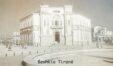
This modest Royal residence also proves a part of the King himself. No doubt he could have built a much more magnificent palace if he had wished, his private fortune being estimated at 20 million gold francs. But he is content with the beautiful residence he has erected on the hill of Durrës and has renovated this, the former Bey's house, for his ordinary residence. A sketch, in fact, exists for a beautiful palace, which would form a natural feature at the end of the recently completed "Bird" Boulevard, but this plan is unlikely to be realized until the state finances improve.
Besides, he seems to be quite content in the old Bey's house, which he has arranged in a simple but cultured manner. The ground floor contains a large drawing room with furniture upholstered in blue floral silk, beautiful Persian carpets and a rich set of Venetian glasses. Adjacent to the drawing room is the Renaissance-style dining room. A curtain separates the drawing room from the King's study, which is very long and, in shape, reminds one of another study, but of international fame: Just as Il Duce, King Zog understood the effect of a room, in this form he also placed the writing desk at the end of the room. The visitor has to walk a long way, which seems a mile, before reaching the writing desk, where the ruler sits in all his grandeur.


The King's writing desk is wide and large, the writing chair, with a high back and crowned with the carved double-headed Albanian eagle. Behind the chair is a display case with beautiful things. On the table is a large machine-made underlay, a beautiful bottle of writing ink, an electric lamp, in the shape of an old-style candlestick, and a bust of Napoleon. But King Zog is not the only European head of state who has Napoleon on his writing desk. He draws inspiration, even from another strategist, who certainly exercises more admiration in him than the French emperor. On the table is a medallion with an engraved photograph of Skanderbeg. Even in the plastic of the machine-made underlay, the characteristic features of the ruler of Kruja and the hero of Albanian freedom are seen.
The King's cars have Skanderbeg's helmet, in miniature, on the fenders. And when His Majesty is dressed in ceremonial uniform, he wears Albania's highest decoration: the "Skanderbeg" Order. Skanderbeg is still a living reality in this modern Albania. When royals sing the praises of their sovereign in poetry and prose, flattering comparisons are always made with the great hero of freedom. When the opposition continues with the wave of satire, they also make comparisons, but less pleasant for the King. In no country in modern times, of course, has the traditional symbol of freedom been actualized in such a grand way, as has happened with Skanderbeg in Albania. Skanderbeg has taken the place of honor, alongside Muhammad and Christ.
I have not had the opportunity to meet King Zog personally. I was promised an audience, but the time of the meeting for this event was postponed, according to oriental custom, every day, and finally I got tired of waiting. In the choice between meeting the King, or making a trip around the country of Albania, I preferred the latter alternative. But a member of the Court gave me a brief summary, which seemed to me to constitute a sufficient completion for the impressions, which the photographs I have at my disposal give. He is of above average height and very well-built, has a wonderful bearing and has the natural dignity of the Albanian.
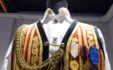
The face is characterized by sharp features, but which gives the impression of being more gentle than harsh. He has blue eyes and yellow hair, combed to the left. He speaks fluent German, a result of the forced stay in Vienna, which I have said before, and good, French and Italian. He almost always appears dressed in the uniform of the Albanian Marshal, a simple brown uniform, which perhaps not entirely coincidentally, reminds one of the clothes of old Austrian officers. He is not married and is very lonely, a loneliness that now, after the death of his mother, has brought him a thread of tragedy.
In faith he is a Mohammedan, the only Mohammedan monarch in Europe. But he is not at all a fanatical Mohammedan. On the contrary. Similar to Mustafa Kemal, although in a more cultured and cautious manner, he has undertaken government decisions, which have hardly aroused any enthusiasm among the Mohammedan clergy. He differs in another respect from European kings and princes: he has no hobbies. At least none that are known and generally mentioned hobbies of the kind that kings usually see as part of the secret of popularity. Apparently he has no time.
The king’s solitude is reminiscent of another important house in Tirana: the palace of the Queen Mother. It is not located within the concrete walls, but on the other side of the mosque and right next to the road, a two-story house, in the semi-Arab style, which previously served as a ministry. After the Queen Mother’s sudden death, in early 1935, black basma was hung in the windows and at the main entrance. The official mourning of the Court actually lasts only six months, but the family mourning according to Muslim custom is even longer. Five of King Zog’s six sisters, who now reside in this Palace, are not expected to go outside for two years. Still, this imprisonment is quite insignificant for them, compared to what can hit the women of very religious families, in the inner circles of the population. A widow, after the death of her husband, is not allowed to leave the house before she marries again, and the prospects for remarriage are quite slim. There is no shortage of women in Albania.
I have already mentioned what role the Queen Mother played in her son's career. She was the dynamic force, the one who helped him to be optimistic, gave him nerve and strength. Her sharp mind and unwavering willpower had cast a legendary glow over him even before her death. After Ahmeti ascended the throne, she continued to influence his son's government measures in a decisive way. Slanderers against the King allude to the fact that it was she who actually governed Albania. It is undeniable that King Zog greatly needed her advice and guidance. In addition to her willpower, she seems to have been endowed with extraordinary psychological insight.
She knew the Albanians inside and out, knew their weaknesses and merits, and she managed to transfer this knowledge to her son. It is this keen insight into the psyche of the Albanian people that explains why he was able to maintain his position despite all the storms and difficulties. But the death of his mother was a severe blow, from which it is said that he never recovered. She was the only family member who lived with him in the villa, and now after her death, he is more alone than ever. Perhaps he is also insecure. It is said that she always tasted the food that was being cooked, because poisoning is not uncommon in oriental countries.
Her death is a small story in itself. She was endowed by nature with a wonderful body and did not know what illness meant. Together with her companions, she was at a performance in one of the two cinemas of the city, during which time she was seized by a sudden weakness, and was soon taken to the Palace. A well-known Albanian doctor was called, but he could do nothing and after an hour, she died. The doctors determined that the cause of death was a heart attack, but the people had a different opinion. At first, the word spread that the Queen Mother had been poisoned, and then another, which alluded to the fact that she died from the doctor's ignorance and incompetence.
This last theory gained acceptance from everyone and the doctor was declared in the blockade and suffered persecution of various forms, although this poor man, certainly, had no fault at all in what happened. On the last day of our stay in Tirana, a strange scene was played out in the city court session. The defendant was the doctor in question and the plaintiff a small dwarf, with the most disgusting appearance, that I have never seen. The dwarf explained as if through smoke and without logical connections in his speech, that the doctor for experimental purposes and against his will, had made some "mystical injections" from which he had become sick and deranged.
This was simply a witch trial that was taking place. The doctor was that dangerous fortune teller, who by all sorts of secret methods spreads fear and misfortune around himself. Not a word was said about the death of the Queen Mother, but the motive was clear and was explained to me at length by a well-informed person in the trial. The trial was just one line in the campaign against the hated doctor. The dwarf, a notorious secret murderer, had been engaged to go to the doctor to consult about his appendix and this very ordinary check-up was then used as a basis for absurd accusations, about "mystical injections". I do not know the outcome of the trial.
Of Zog's six sisters, one is married, one is widowed, and four are unmarried, and the last five, who reside in the black-veiled Palace of the Queen Mother: beautiful and cultured young ladies, who have received a first-class education in Vienna and Paris, are engaged in a certain activity in public life. Sanija, who is the eldest, heads the Albanian women's association, which, without success, works for emancipation. Myzejeni exercises a kind of sports protectorate and Mexhidja the protectorate of the arts. The sister, who was married to Ceno, who was killed in Prague, is the mother of the heir to the throne of the country. Her twelve-year-old son, in fact, has this dignity, as long as King Zog is single and has no children.
He is a handsome boy, who, especially when in uniform, looks straight out of a fairy tale. He has not been given a private tutor, but his education has been entrusted to one of the city's grammar schools, where he studies with the sons of shepherds and shoemakers. I happened to pay an unannounced visit to this grammar school, a beautiful and well-organized school, and among other things I was allowed to attend a lesson in the prince's class. The teacher, who wanted to be polite, ordered the prince to go to the map and show where Sweden is. The boy did not hesitate a minute, but at once pointed it out with his pointing stick. There are probably young European schoolboys in nearby countries who would not have completed the task in the same confident manner.
Apart from Zog's villa and the modest palace of the five princesses, there is no other Royal residence in Tirana. The interest of the citizens is naturally related to the unseen world, within the concrete walls and what seems to happen behind the arches of the windows of the princesses' house. But it is not believed that much happens to the royal ladies. Mourning has isolated them from city life, and the only break from the monotonous life are the Sunday concerts in the city park. In front of their Palace, in fact, lies a small garden complex, with lawned paths, flowerbeds and slender trees planted nearby.
In the middle of the park, they have set up a music stage and there the royal military orchestra plays every Sunday for the zealous inhabitants of Tirana. But a little further on, there is a cafe in the garden and from there one hears music, gramophone music, Turkish music incomprehensible to Western ears, which has a certain pleasure, with its strange instrumentation and suggestive rhythms. And in this way, Strauss and the unknown composers of the Orient meet, in an Albanian dis-harmony, which will certainly irritate the ears of walkers, for many years to come.
Even if the life of the five Muslim princesses is monotonous and suffering from a lack of change, it happens even more so within the concrete walls of King Zog. It is in the King's villa that all the important decisions are made and plans are prepared there. King Zog has succeeded in acquiring the dictatorial powers that are necessary for an Albanian monarch and the ministers and parliament to carry out his order, or the order of his advisor, as the opposition puts it. But no one can rule alone and, even a despot King, must have an advisor at his disposal.
King Zog preferred to deal with the military and his dictatorship is a military dictatorship, which is perhaps the only form of government in Albania at the moment. This is the only possible one for many reasons. The Albanians are an old warlike people, who respect the duty of the warrior, quite differently from countries where long periods of peace have left aside the main obligations of the military. The army is the only support of King Zog, against various political tensions, and therefore it has been an obligatory need, to keep the army behind him. This has resulted in a privileged class of officers, which has caused much jealousy and heartache.
Officers do not pay taxes and are well paid, a civil servant has heavy taxes and a low salary. The king has understood how to exploit this military class in many ways. It has not always been so easy to win the sympathy of the strong bajraktars. High military titles, with good salaries but no compulsory service, have had a wonderful effect. The social status of the military profession has also meant that the sons of the highland chieftains, almost without exception, have been educated or are being educated to be officers. Being an officer is everything, being a civilian is precisely nothing. The king knew what he did when he divided the Albanian people into two social classes, officers and civilians. As long as he has the officers in his hands, his position should be quite secure.
This favoritism of the defense forces has not escaped becoming a characteristic feature of Tirana's physiognomy. Wherever you walk in the city, you meet these royal officers, very elegant gentlemen, in decorative brown and gray uniforms and with patent leather boots. You see more officers than soldiers. They sit in cafes with cups in front, fill the best seats in the cinema at dinner, play cards in the elegant military casino. They are handsome and seem cultured, but they seem to have little to do, because it is difficult to find work for them. The number of soldiers is very small and that of officers is very large.
When I mentioned that the interest of the city's inhabitants is largely related to the activities of the Royal Family, I want to point out that in Albania I have not found any vulgar royalism, which is common in other European monarchies. The interest is not so immense, simply for the private affairs of the king, it is more related to his decisions and measures. The monarchy is still too young for royalist gossip to have taken root. I want to say at one point, of course people are very interested: will Albania never have a Queen? There has been no shortage of rumors. Finally, there was talk of an Italian princess, but King Zog is a very clever man, to get a Queen from Italy. It is enough to get money. A marriage with an Italian could give even more dangerous evidence to the anti-Italian opposition. /Memorie.al/