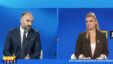
Journalist Osman Stafa has raised concerns about the state of health services in the country, focusing on the lack of medications and medical equipment, but also on cases of corruption that, according to him, occur in hospitals.
Invited to the show "This Week" with Nisida Tufa in News24The staff said that the problems are not limited to Tirana, but appear in hospitals throughout the country.
One of the issues he raised was PETSCAN, for which he said that Albania has had a prolonged shortage of this equipment and that patients who need the examination face difficulties.
"It's a device that has been missing for 20 years, it's very vital. It's extremely overdue. What about those patients who need PETSCAN today, how will they do it? They're fighting cancer," declared Stafa.
He also touched on brachytherapy, arguing that it is a treatment that, according to him, cannot be easily replaced.
"Brachytherapy is for women and it is vital. Nothing can replace it. Either you fight gynecological cancer, or you leave it without brachytherapy and the disease returns with a very high probability," he said, referring to medical protocols and practices.
The staff also criticized the way some services are organized, citing thrombectomy and hospital emergencies. According to him, in some cases the services are not available all the time, while emergencies in the QSUT and other services face overcrowding.
He also brought up the Prrenjas hospital as an example, where according to him laboratory tests are lacking, forcing patients to turn to private services or to other cities.
At the same time, he made a distinction between doctors who, according to him, try to help patients and those he accuses of abusing them.
"There are many doctors who are very humane, they do their job, help people, diagnose them, try their best. I can even say that there are doctors who, out of great shame in their relationship with the patient, even buy their medicines," he said.
The staff claimed that some young doctors have been forced to buy basic medications and materials for patients, such as serums, antibiotics, bandages and plasters, with their own money, due to shortages in hospitals.
"Can they go out and buy medicine for every patient? What do they buy, serum, antibiotics, things like that? They buy bandages, they buy adhesive plasters," declared Staffa.
He said that his public battle is not against doctors in general, but against cases where, according to him, patients are faced with demands for money or directed towards private clinics.
"I say it and divide it into two categories. My battle is not against doctors, in the sense of attacking them. I claim to be helpful to them, for the needs they have, while they cannot say it because there are consequences. And I have a battle against those doctors who torture patients, rob them, do not provide service, but look out of their pockets," he said.
The staff claimed to have received messages from patients and family members denouncing such cases. According to him, some of them claimed to have been asked for money for visits, examinations or interventions, while others were directed towards private clinics.
"I have endless messages about the bargains, about the way they take their money, about the way they intimidate them into taking them to private clinics or to their clinics," declared Stafa.
He also mentioned cases where, according to him, patients have been asked to pay for services in Oncology, while claiming that some technicians who work with diagnostic equipment also receive payments from patients.
The staff then brought up a specific case that, according to him, was told to him by citizens. He said that it involved a patient from central Albania, whose family member had undergone a surgical procedure.
"A citizen from an area of central Albania goes, has a family surgery. She goes after the surgery, leaves an envelope with 500 thousand lek there. 'Thank you'. She goes out and opens the envelope. He sees that it is 500 thousand lek. She goes out, throws it to him. 'Where are you going with this? This is lek for nurses, this is lek for sanitation workers'. Can you say this to a person?", said Stafa.
He said that such cases, according to him, are known to other people within the system, while emphasizing that he does not consider all doctors part of this phenomenon.
"I applaud many doctors for their professionalism. But the moment you force that patient to give you money before you perform that operation, you tell them 'you'll wait, your mother or father is at great risk', but then you force them to give it and they perform the operation, this is dirty, it's unfair, it's inhumane and criminal, because you're committing corruption," said Stafa.