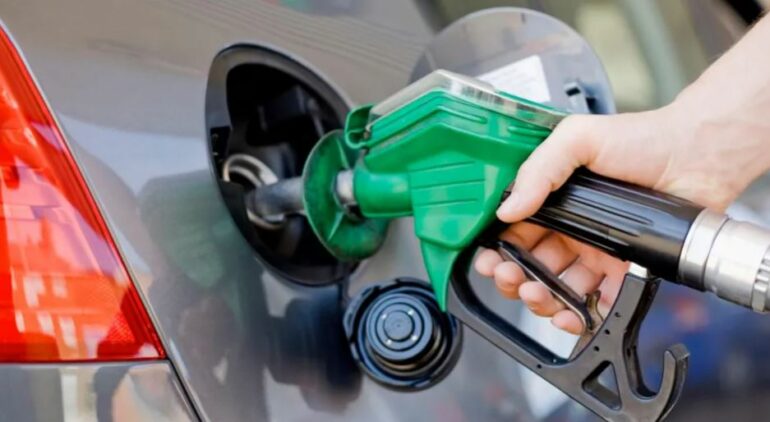



The creation of a safety reserve of crude oil, diesel and gasoline is expected to add up to 6.1 lek per liter to the final selling price of fuels, according to calculations by import and trading operators in the country.
The effect is calculated from the financing for the purchase of the strategic reserve stock of crude oil and the costs of storing its by-products, including diesel and gasoline.
The draft law "On the creation, maintenance and management of minimum security reserves of crude oil and its by-products", approved by the Council of Ministers and sent for review to the Parliament, provides for the gradual creation of a reserve quantity of 238 thousand tons, an amount corresponding to about 90 days of imports.
According to operators, just financing the creation of the strategic crude oil reserve will add about 3.6 lek per liter (including VAT) to the final price of fuel from the tariff of 3 lek per liter that will be paid by operators.
Meanwhile, the costs for the commercial reserve (oil by-products), including purchase, infrastructure, security and maintenance costs, are estimated, according to market operators' calculations, to add another 2.5 lek per liter to the final sales price.
In total, the additional cost is estimated to reach 6.1 lek per liter, which will be reflected in retail diesel and gasoline prices.
The draft law approved by the Council of Ministers, which has been sent for approval to the Albanian Parliament, stipulates the creation of a hydrocarbon reserve with a quantity of 238 thousand tons, which is equivalent to the quantity for 90 days of imports. This reserve is expected to be created for a 5-year period, where it is envisaged that an amount of 43 thousand to 49 thousand tons of products will be purchased each year, including crude oil, gasoline, diesel, jet fuel, etc.
For its purchase and storage, the government plans to cover the financial costs through a tariff with an assumed level of 3 lek per liter that will be paid by companies.
In total, the companies are expected to collect 3.4 to 3.6 billion lek or about 40 million euros per year through the tariff, the value of which is assumed, since its level will be determined by a decision of the Council of Ministers. For 5 years of full creation of the reserve stock, the cost is estimated at about 200 million euros.
The effects on the increase in the final sales price for the consumer from the imposition of the tariff have also been acknowledged by the government.
In the report of the draft law "On the creation, maintenance and management of crude oil and its by-products", it is emphasized that in order to finance the creation, maintenance and management of security reserves of oil and its by-products, the establishment of a tariff for this purpose is also foreseen.
According to the report, the fees for the creation and maintenance of the security reserve, which are applied to the quantities of hydrocarbon energy products, which are subject to the obligation to pay excise tax, in accordance with Law No. 61/2012, dated 24.5.2012, "On excise duties in the Republic of Albania", as amended, and will be determined by decision of the Council of Ministers, each year.
"All these activities will be associated with additional costs for the public sector to cover the costs of creating, storing, maintaining, inspecting safety reserves, as well as for other regular activities of the authority."
"Providing funds will require, among other things, the establishment of a tariff that will be applied to the quantities of hydrocarbon energy products. This will bring an increase in value in the financial burden chain and the final result of the sales price to the consumer," the report states.
In addition to the additional cost it creates, operators continue to consider imposing a hidden unconstitutional tax, as it was proposed without any consultation with interest groups and its level does not pass the Assembly for approval.
Meanwhile, the opposition, through an amendment proposed by MP Enno Bozdo, has requested changes to the draft law. The amendment proposes that the costs for the creation and financing of the reserve be borne by the state budget.
Also, the establishment of the tariff and costs for maintaining the reserve are proposed at the peak of fuel prices, influenced by the increase in prices on the stock exchanges and the heavy fiscal burden that the price has in Albania.
Currently, oil in the country is burdened with several taxes and fees, including VAT, excise duty, sales tax, carbon tax, scanning fee, municipal taxes, and relicensing fee.
In the final price of oil, the tax burden accounts for 53% of it, or in value it is estimated to be 90 to 100 lek of the final price. Compared to the countries in the region, our country has the highest fiscal burden on oil.
In countries like North Macedonia, Serbia, Montenegro and Kosovo, only excise duty and VAT are calculated on the price of most oil./ Monitor