





The new government has embarked on what for years the citizens of this country have only heard as a campaign promise: to find the billions of public money that allegedly ended up with family members of those in power, favored businessmen, companies that won contracts one after another, and people who, from being anonymous, transformed within a few years into owners of villas, hotels, land, and wealth that could not be easily explained by their salary or business.
For years, the scene was the same. Citizens were told about reforms, development, and sacrifices, while new millionaires were born around the government; tenders often ended up in the same hands, public property changed hands, businessmen without any great history of entrepreneurship became the most powerful people in the country, and the media that was supposed to control the government discovered that it was much more profitable to live in peace with it.
In the capital, increasingly expensive buildings were being erected, apartment prices seemed to belong to a much wealthier economy than the one where most people lived, while outside this reality, families were counting bills, pensioners were counting their money, and young people were counting the days until they left the country.
Hospitals needed money, schools needed money, roads needed money, and families needed a better life, but money always seemed to be there when it came to big public contracts. Each scandal produced a few weeks of noise, a few television studios, a few political accusations, and then another scandal replaced the first, while the fortunes remained there and the people who had created them went on with their lives as if nothing had happened.
Now the new government promises that this story will change. A super-institution for asset recovery has been set up, with powers to track money, contracts, properties and companies, to discover who is behind them and to take cases to criminal prosecution; the question will no longer be just “who stole it?”, but “where is the money and how is it returned to the state?”.
The new prime minister spoke during the election campaign about 60 billion euros that may have been stolen or diverted, while other estimates today put the amount several times higher. For citizens, however, the figure almost no longer matters, because for years they have seen the contrast between a state that tells them it has no money and an elite close to power that seemed to not know what to do with the money.
The head of the new institution says that the problem was not simply the corruption of a few officials. According to her, an almost feudal system had been created, where politics, business, public money, the media and loyalty to power were so tightly intertwined that arresting a few people was not enough; the mechanism that produced them must be discovered and dismantled. But first, the money must be returned to the people.
But the public has heard words like “investigation,” “justice,” “reform,” and “independent institutions” many times, so now it demands something much simpler: results. If villas remain villas, millions remain in banks, companies only change their names, and former officials continue their luxurious lives, then citizens care little about how many new institutions have been established. They are not satisfied that an official ends up in prison and the money is in tax havens.
And therein lies the proof of the new government. People didn't vote for him just to remove one prime minister and bring in another; they voted for him in the hope that one day someone would open the files, follow the money, and hold accountable those who for years treated the state as if it were private property.
If throughout this writing, Tirana, oligarchs, tenders, towers, emigration, hospitals, propaganda, businessmen close to power, and the eternal Albanian question "what did they do with all this money?" came to mind, then the trap worked.
Because this story is not happening in Albania. It is happening in Hungary.
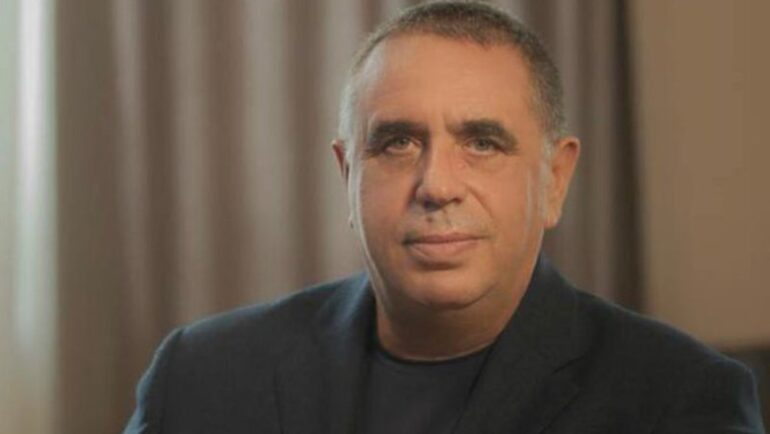
The new prime minister is Peter Magyar, the government that left was that of Viktor Orban, and Hungary is trying something that, to an Albanian reader, sounds almost like science fiction: not to settle for asking who stole the state's money, but to go and get it back.