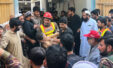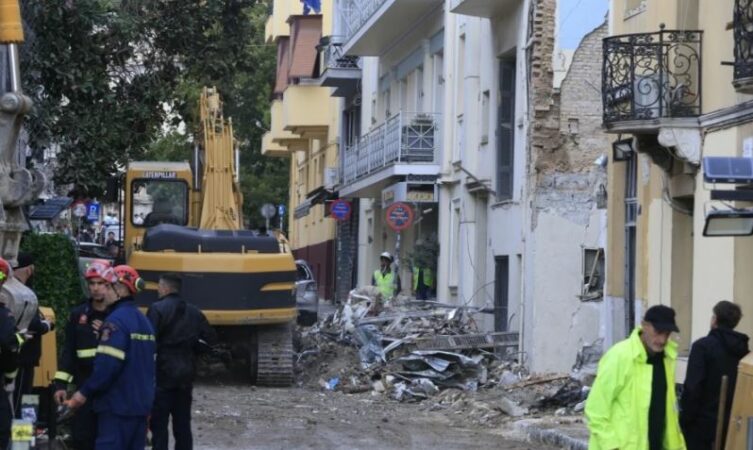



The building permit for the building on Lysikratous Street, in the Plaka area of Athens, which collapsed after the deadly explosion that killed 3 Albanians and 3 others, dates back to 1979. This detail is being examined by the authorities as part of a technical investigation to determine whether the characteristics of the building contributed to the severe consequences of the explosion. According to the data made public, the building was not classified as a monument or a protected object. However, the fact that it was built before 1985 has brought to the fore the issue of the durability of old buildings, especially in the face of strong dynamic loads, such as those that could be caused by an explosion.
Lefteris Avramidis, deputy secretary of the Society of Civil Engineers and member of the Committee on the Regulation of Interventions, told Newsbomb that information on the status of the building is being verified. According to him, buildings built during that period require special attention due to the technical standards that were applied at the time of construction.
Investigation into the explosion
Meanwhile, Greek authorities are continuing their investigation to determine the cause of the explosion. The main focus is on the second-floor apartment, where it is suspected that there may have been a natural gas leak.
However, at this stage there is no definitive conclusion on the exact cause of the explosion or the factors that led to the collapse of the building. Expert Avramidis emphasizes that the characteristics of the structures built in 1979 were different from contemporary standards. He mentions the use of mild and polished steel, rarer fasteners and thinner slabs and columns.
According to his technical assessment, these elements, combined with the building's heavy masonry, may have influenced how the structure reacted to the explosion. However, this is a preliminary assessment and the final responsibility for the causes of the collapse is expected to be determined by the technical investigation and relevant expertise.
Inspection of old buildings required
The Plaka incident has brought the safety of older buildings in dense urban areas back to the forefront of debate. Experts are proposing more systematic checks on the vulnerability of these structures, prioritizing those that pose the greatest risk. Another proposed measure is the installation of gas concentration detectors in buildings that use natural gas, with the aim of identifying leaks early and preventing similar tragedies.
Investigators are expected to analyze the building's complete documentation, its design, the materials used, and the damage caused by the explosion, to determine what caused the collapse and whether the structure had previous weaknesses.