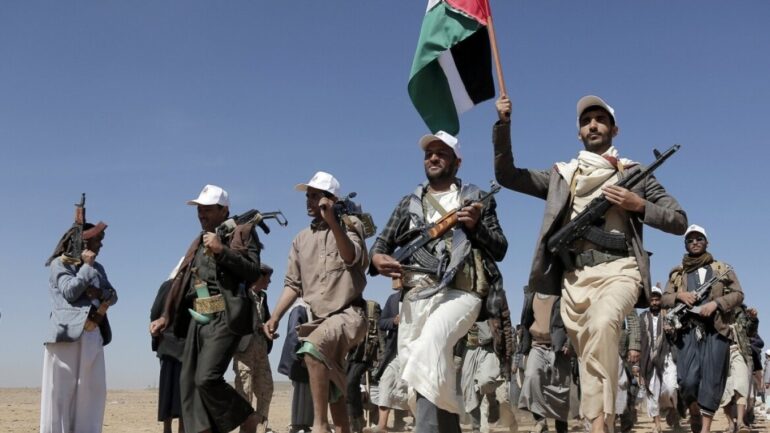



The fighting in Yemen and attacks by Houthi rebels on Saudi Arabia are raising the risk of a new escalation in the Middle East. Attacks on Saudi targets, including civilian infrastructure, have caused casualties and injured hundreds, while Riyadh is seeking regional and international support to counter the Iranian-backed rebels. According to the analysis, there are two main scenarios facing the situation: the creation of a regional military coalition against the Houthis or the prolongation of the conflict in an exhausting war, with no clear winner.
In the first scenario, Saudi Arabia could cooperate with other Gulf states, as well as seek the support of Turkey and Pakistan. A joint offensive would aim to recapture strategic territories on Yemen’s western coast and weaken Houthi control, with the long-term goal of also retaking the capital Sanaa. However, divisions among the opposing rebel forces remain a significant obstacle. The second scenario envisages a prolonged fighting, giving the Houthis the opportunity to maintain their positions and intensify attacks. Such a development would increase civilian casualties, population displacement, and economic pressure on Saudi Arabia and the Gulf states. Iran could benefit from the continuation of the conflict, maintaining regional influence and using the Houthis as a leverage in international negotiations.
A key flashpoint in the conflict is the city of Taiz, where a siege and road blockade have worsened the humanitarian situation. The loss of the city would deal a severe blow to government forces and hamper operations towards the Red Sea coast and the strategic Bab el-Mandab Strait, a vital corridor for international trade. The escalation in Yemen risks spilling over beyond the country’s borders, affecting maritime security and global energy markets. As Saudi Arabia considers options to bolster its military response, it remains unclear whether the conflict will lead to a full-scale offensive or devolve into a protracted war with no lasting solution.