


As student and youth protests have escalated across the country, Prime Minister Edi Rama has blamed the opposition and unidentified foreign actors for the unrest. Communication and governance experts see this rhetoric as an attempt to shift attention away from the causes of the protests and the government’s political responsibility.
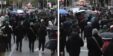
A few meters from the square in front of the Prime Minister's Office, where police and protesters were clashing on Thursday evening, a group of young people were trying to escape tear gas by moving towards the former Blloku area, near the Presidency of the Assembly. BIRN witnessed the moment when two of them were stopped by two people in civilian clothes, who were holding rubber batons in their hands. After putting the young people in a white car, the people left the scene. Two girls who were accompanying the detainees managed to run away. "They also told us: 'Come closer, don't be afraid,' but we ran. Our friends stopped them," said one of them, a second-year Architecture student. Worried, the student tried to call one of the boys, a classmate at the university, but he did not answer. She didn't know if he had been escorted by the police or where he had been taken, and was trying to decide whether to notify his parents, who lived outside Tirana.
A few meters away, several police vans were parked on the side of the road, while officers were escorting other detained young people to their vehicles. Similar scenes were repeated on Thursday night on the streets of the capital. In some cases, the stops were carried out by people in civilian clothes, using vehicles without police identification marks. A video shared on social media, where a person was seen forcibly entering an unmarked vehicle, raised questions about the identity of the people carrying out the stops. The State Police explained that it was an escort carried out by Criminal Police officers, as part of actions to identify people suspected of involvement in illegal acts during the protest.
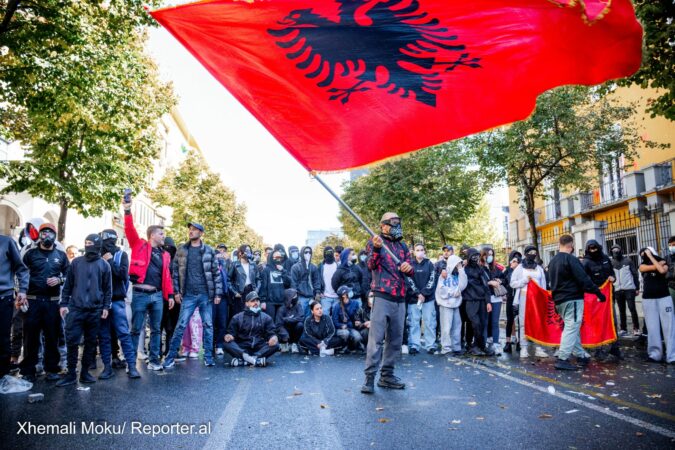
The mass arrests followed an escalation of anti-government protests, which, after about four months of mostly peaceful demonstrations, took a violent turn on Tuesday, with students and high school students involved. With chants of “Rama, resign!” and “Revolution,” thousands of young people took to the streets, as protests spread from Tirana to other cities across the country. Clashes with police were accompanied by the use of tear gas, detentions of protesters, and acts of vandalism against public and private institutions and property.
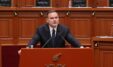
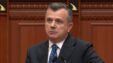
Faced with this wave of discontent, Prime Minister Edi Rama has chosen to blame the opposition and foreign actors for the violence, without publicly identifying the latter or presenting evidence to support the claims of their intervention. “The evil hand, the old hand, the bad hand […] is today supported by other hands, foreign hands, foreign hands that do not want a peaceful Albania,” Rama declared, claiming that the actors behind the unrest aim to hinder Albania’s progress towards the European Union. This is not the first time that Rama has linked the protests against his government to external influences. He used similar rhetoric in June, after the start of protests against a tourism project in the Vjosa-Narta protected area, known as the “Flamingo Revolution.”
But for communication and governance experts, the return of the foreign intervention thesis, at a time when protests have taken on national proportions, risks shifting the public debate from the causes of discontent to allegations of external threats.
“Any attempt to read and propagate this massive expression of youth discontent only as a movement driven by the influence of foreign countries would be a missed opportunity to reflect and bear political responsibility at the right moment and time,” Elvin Luku, a journalism lecturer, told BIRN. “In a democracy, resignation is neither a sin nor a tragedy, but is the noblest act of a politician,” he added. According to Luku, even if the involvement of foreign actors in inciting the unrest were proven, this would not exempt the government from political responsibility.
On the contrary, he argues that the penetration of such influence into society would raise further questions about the capacity of institutions to prevent it, constituting an additional reason to hold the government accountable. Luku notes that claims of foreign interference have been present in government rhetoric both during the months of peaceful protests and after their escalation. According to him, although the influence of external actors is a possibility that cannot be ruled out a priori, it cannot serve as an excuse for avoiding political responsibility. Aranita Brahaj, head of the Albanian Institute of Sciences, AIS, also interprets the prime minister’s rhetoric about “foreign hands” as an attempt to shift attention from the protesters’ demands and the government’s responsibility for the crisis.
According to her, accusations of foreign interference, when not based on public evidence and articulated at a time of facing a civil revolt, risk turning the debate on the country’s problems into a discussion about security and stability. “When a prime minister talks about conspiracies and foreign interference without presenting evidence, and at times when his power is at risk, he risks replacing the debate on the legitimate demands of citizens with a narrative of a threat to the security and stability of the country,” Brahaj told BIRN. She emphasizes that the concern is not only related to the language used by the prime minister, but also to the impact that this rhetoric can have on public perception and the response of institutions to the protests.
“When the narrative of external threat coincides with episodes of violence and institutional negligence, a climate of uncertainty is created that can objectively serve to weaken the protest and increase civil insecurity,” she said. Brahaj places this approach in the broader context of Rama’s political communication towards critics and civic movements. According to her, the prime minister has been trying for months to link the mobilizations against the government to external influences, avoiding confronting the reasons for the dissatisfaction.
As an example, she also mentions Rama's speech at the United Nations General Assembly, where, according to her interpretation, the political mobilization in Albania was linked to the phenomenon of disinformation. Brahaj warns that the rhetoric of external threat can have consequences beyond the political debate, affecting the willingness of citizens to participate in protests. "In my judgment, we are not simply dealing with an attempt to devalue the protest, but with the creation of a climate of fear and uncertainty that can serve to preserve power by weakening civic resistance," she said.
In this context, Brahaj demands that public attention not be limited to the Prime Minister's statements, but also include the actions of the institutions, especially the way the police have managed the protests, detentions and episodes of violence. "Today the question is not only what Rama says, but also what the State Police does and does not do in the face of these developments," she concluded./Reporter.al