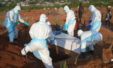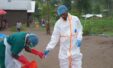



Efforts to contain the spread of Ebola in eastern Congo have yielded some positive results, but the situation remains critical. United Nations officials warn that the epidemic remains large and that it will take months to fully control it. Julien Arnis, the UN special coordinator for Ebola, told a news conference in Geneva that progress had been made in some areas, while cases continued to increase in others. He described the situation as still a massive and deadly epidemic.
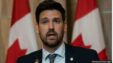
The World Health Organization has also urged caution. Olivier Le Poulin said it was too early to determine with certainty whether the epidemic had passed its peak. Meanwhile, Congo's Health Minister, Samuel Roger Kaba, had earlier said there were encouraging signs, citing a decline in transmission after the peak of the epidemic in mid-August.
According to him, the number of new daily cases has fallen from about 120 at the peak of the epidemic to about 80. Also, 10 of the 62 affected health zones have not reported new cases for more than 22 days. Kaba considered this a positive indicator of the effectiveness of the measures taken on the ground, but warned that the situation requires full mobilization and that the results so far should not lead to a decrease in vigilance. The current epidemic is ranked as the second deadliest Ebola outbreak ever recorded, after the West African epidemic of 2014-2016. According to the latest Congolese government data, published on Tuesday, 7,258 Ebola cases have been confirmed in seven provinces, while 3,510 people have lost their lives.