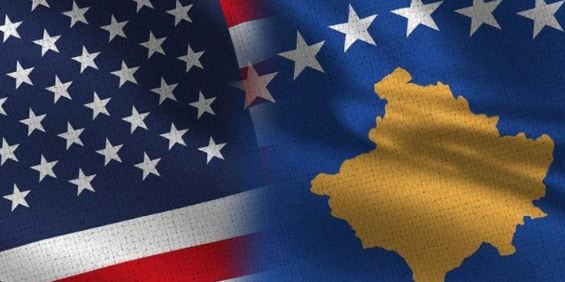



The US Department of State (DASH) has reiterated that the development of the Strategic Dialogue with Kosovo depends on the creation of appropriate conditions, including the fulfillment of Kosovo's commitments to Kosovo Serbs.
In a response to Radio Free Europe on October 13, the State Department reiterated the position expressed in July, without clarifying whether Kosovo has made progress toward meeting the conditions or what concrete steps remain to be taken.
"We remain committed to advancing the shared interests of the United States and the people of Kosovo," a State Department spokesperson told Radio Free Europe.
This position comes after Kosovo President Justina Shiroka Pula called for the resumption of the Strategic Dialogue during her October 12 meeting with US Senators Jeanne Shaheen and Dick Durbin in Pristina. According to the Presidency announcement, she stressed the importance of this dialogue for deepening the partnership and advancing common priorities.
During an interview with Radio Television of Kosovo, Shaheen said that it would be great for the Strategic Dialogue to resume, while citing the changes in the US administration and the State Department as challenges.
The State Department recalled that the US suspended the Strategic Dialogue indefinitely in September 2025, due to concerns about the actions of the then-incumbent government. The decision came after Kosovo authorities took action against parallel Serbian institutions operating in Kosovo.
Radio Free Europe has addressed the Government of Kosovo about the steps it is taking to resume the Strategic Dialogue.
Saturday: Attitude doesn't just change over time
Washington-based security and foreign policy expert Adrian Shtuni says that a change in the American stance depends on addressing the causes that led to the suspension.
"Currently, the position remains the same as Kosovo has remained in a state of flux in many respects for almost two years."
He considers the political compromise that enabled the election of President Shiroka Pula to be hopeful, but emphasizes that other actions are needed to resume the Strategic Dialogue.
"Without concrete and rapid steps to create appropriate circumstances, address US demands, and fulfill previously made commitments, I do not see the expectation of resuming the strategic dialogue as realistic," Shtuni tells REL.
According to him, Kosovo should also increase its diplomatic engagement in Washington.
He believes that the visits and engagement of senators help keep Kosovo in the American spotlight, but the decision on the Strategic Dialogue is the competence of the executive.
"The decisive factor remains the taking of concrete steps by the Kosovo authorities to address the issues that led to the suspension of the dialogue."
What is expected from Kosovo in relation to the Serbs?
In its latest response, the State Department did not specify the commitments it expects to be fulfilled. But for years, the United States and the European Union have been urging Kosovo to implement the agreements reached in the EU-mediated dialogue with Serbia. These include, above all, ensuring a level of self-governance for the Serb community in Kosovo, which implies the establishment of the Association of Serb-majority Municipalities, in accordance with the 2023 Basic Agreement and the Ohrid Annex.
After President Justina Shiroka Pula requested the resumption of the Strategic Dialogue, Radio Free Europe/Radio Liberty reached out to the Presidency of Kosovo to request its position on the establishment of the Association of Serb-majority Municipalities, one of the commitments that the State Department is seeking to fulfill, but as of the publication of this article, it had not received a response.
Meanwhile, the West also demands that Kosovo resolve disputes with the Serbian Orthodox Church, protect religious freedoms, and avoid unilateral actions in the north of the country, which, according to Washington, have increased tensions with the Serbian community.
The implementation of the agreements was also among the issues that the representatives of the Serbian List raised during the meeting with Shaheen and Durbin at the US Embassy in Pristina.
According to the party's statement, the leader of the Serbian List, Zlatan Elek, and the head of the parliamentary group, Igor Simić, expressed concerns about the rights and security of Serbs, highlighting in particular the failure to establish the Association and the issue of Serb representation in institutions. The statement did not disclose the senators' positions on these issues.
Kosovo argues that implementation of obligations from the dialogue with Serbia should be reciprocal, while its actions in the north – from removing the Serbian dinar from use to closing most parallel Serbian institutions – have been aimed at extending the rule of law.
Pristina also demands that Serbia sign the Basic Agreement, which Belgrade has rejected.
To continue the dialogue with Serbia, Kosovo authorities are demanding the extradition of the former deputy leader of the Serbian List, Milan Radoićić, who has claimed responsibility for the armed attack in Banjska in September 2023.
Radoicic is under United States sanctions for involvement in corruption and organized crime activities, while he has been indicted in Kosovo for terrorism and other criminal offenses.
What does the suspension of the Strategic Dialogue mean in practice?
Shtuni describes the suspension as a "political and diplomatic punishment" that has practical consequences for Kosovo, as it "freezes a planned framework of high-level cooperation."
According to him, Kosovo particularly needs American political and diplomatic support to secure new recognitions and membership in international organizations, especially NATO.
"Without strong support from the US in all these areas, Kosovo unfortunately remains in the red," he tells REL.
Shtuni estimates that the missed opportunities also extend to the economy.
"As long as the dialogue remains suspended, Kosovo misses the opportunity to systematically deepen economic cooperation, trade, investment facilitation, and broader diplomatic coordination with the US."
According to him, this delays new joint initiatives in vital areas for Kosovo such as energy, infrastructure and trade ties, while also "limiting Kosovo's ability to strengthen its international positioning and to use the partnership to advance Euro-Atlantic strategic goals."
Shtuni emphasizes that the suspension of this mechanism does not mean the cessation of all cooperation. According to him, essential cooperation continues in security and in building Kosovo's military capacities, while the suspension mainly affects the high-level framework for expanding the partnership.
Kosovo aims to further deepen cooperation in the field of security, requesting that Camp Bondsteel become a permanent American base. Senator Dick Durbin said that this proposal should be seriously considered and that the Government of Kosovo has also proposed a financial agreement for this purpose.
Radio Free Europe has reached out to the Pentagon and the Kosovo Government for details of the proposal, but has not received a response by the time of publication of this article.
Shtuni estimates that Kosovo's financial proposal to transform Camp Bondsteel into a permanent American base is not negligible, but that Washington's decision will depend mainly on strategic and military interests, at a time when the US is considering reducing its military presence in Europe.
"The chances are low that it will receive a positive response from the current administration, which is already seriously considering reducing the military presence in Europe," Shtuni tells REL./REL