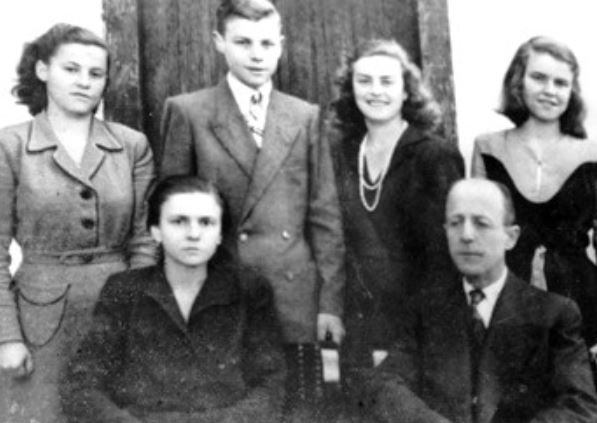



“… I worked in cotton thinning… a job that I had no difficulty learning, because I had skillful finger movements on the piano…”, is a sentence taken from the account of an elderly woman, Suzana Hoxha, about a difficult time in her life. The time when she was interned in Savër in Lushnja. She had been a Solfeggio teacher at the Tirana Lyceum and due to the persecution of her family, together with her two sisters, mother and father, they were forcibly deported to the village of Lushnja, where the families of “enemies of the people” were confined. At that very time, when Suzana was forcibly forced to live in exile in Savër and pick cotton, a distinguished cotton picker, comrade Lenka Çuko, was transferred to Tirana and appointed a leader at the highest level of the dictatorial communist state.
There are two parallel destinies that accurately tell the history of Albania in the past century. It shows us why Albania is a country without democracy, where the time of dictatorship has left almost irreparable consequences, where freedom of speech does not exist, where elites come precisely as a result of vote theft, it shows us why in our country the role of intellectuals in the development of society is completely lacking. We will tell below the journey of Suzana from the Lyceum to the cotton fields and that of "comrade Lenka" from the cotton fields to the highest offices of the communist state, to the Politburo and the Central Committee.
When Suzana was sentenced to live in Savër, Lushnja, she forgot the piano forever and adapted to the cotton leaves. Her sister, Handani, forgot the tennis courts, where she had passionately practiced the elite game, as the first Albanian woman on the tennis court… the youngest, Nermini, also forgot the beautiful lessons in foreign languages to also adapt to the cotton, the muddy canals in Savër, Lushnja. In an interview conducted in 2013, by journalist Ani Jaupaj, Suzana and her two sisters, recount the painful story and the 30 years of internment in Savër, Lushnja.
deportation
It was the end of 1959 when a military-colored truck appeared in front of Ali Bege's house in Tirana. In the basement of that house, the family of Vehip Hoxha, a prominent Tirana banker, had been living for several years. Vehip Hoxha had been director of the State Bank of Tirana.
Educated in Istanbul and knowledgeable in 4 foreign languages. He was also known as one of the most beloved teachers in Gjirokastra. The policemen were furiously released from the truck at the door of the house and began to forcefully remove Vehipi, his wife Ane and three daughters, Handa, Suzana and Nermin Hoxha. The car was loaded with the clothes that the family had left, due to the confiscation of all property.
Then he set off on a long journey to a village in Lushnja. It was the village of Savër, the place where the families of the enemies of the popular power had gathered, as the dictator called all the intellectuals of Albania. Vehip Hoxha's family was being exiled for many reasons, first of all because they were among the richest people in Albania at that time, intellectuals as well, but also because Vehip's son, Asafi, had fled outside Albania.
Asaf's escape would make life even more difficult for Vehip, his wife Ane, and their three daughters. Vehip Hoxha had been a bank director in Korça when the dictator was studying at the French high school in that city. He had known the dictator since he was a child because he had given him language lessons. Even during his stay in Korça, he had supported him because he was also a member of his clan. Later, Vehip Hoxha was transferred to Tirana as a senior official at the National Bank.
It was one of the most developed and richest families in the capital. Vehip's three daughters received private lessons in foreign languages, and also received private lessons in sports and music. Handani had been trained since childhood in the sport of tennis, quite rare for the time, and even today, after 70 years, it continues to remain a sport for a very small part of society. Handani was the first Albanian woman to practice this sport.
Suzana graduated from the Lyceum in piano. After graduating, she started working as a professor at the Lyceum where she managed to produce the first book of solfeggio lessons in Albania. While Nermini, the youngest, had a passion for foreign languages. She has practiced her passion for teaching foreign languages, English, French and Russian, all her life. She taught children for free, most of the time secretly, when it was still a dictatorship.
After the fall of the dictatorship, foreign language courses became a source of income. The Hoxha family lived amidst difficulties in the village where they were exiled. Meanwhile, the family's son Asafi had arrived in the US to his uncle. "The uncle sent coded letters and we understood him. For example, the announcement of Asafi's arrival was: "Drita gave birth to a boy, he is healthy."
"We also received money along with the pieces of paper, which meant that we did not suffer the same internment as the others, but lived relatively well. With what we heard later or even at the time about the Tepelena or Porto Palermo camps, we say that we would have probably died," Suzana recounts.
After seven years in exile, Vehip Hoxha passed away, there in Savër. The four women were left alone and continued in exile until 1990, when the communist dictatorship was overthrown. They returned to Tirana and took an apartment in a palace that had been built on the land where their villa in Tirana had been. In 1994, the mother of the three girls, Ane, passed away.
Meanwhile, brother Asafi returned to Albania to meet them and they continued their eternal bond. Suzana, Handani and Nermini were unable to build a family, they spent their entire lives together, a life without youth, without dreams, without happiness.
They were condemned like all the children of Albanian intellectuals from the early years of the dictatorship. The killing of their fathers through bullets, prison or exile would continue with the condemned children without education, stigmatized, despised and abused.
They were sentenced to work, for example, like Suzana, with cotton thinning... it's so ironic to hear this expression: "I worked in cotton thinning, a job that I didn't find difficult, because I had skillful finger movements from the piano...".
On the contrary
When the Solfeggio professor was learning to gin cotton in the fields of Lushnja, a distinguished cooperator from the villages of this district was shining in the eyes of the leadership. Lenka Çuko was the distinguished tobacco picker in Lushnja. Her merit was that she ginned cotton with both hands and achieved double the norm compared to other women. Thanks to this “success”, comrade Lenka was appointed first secretary of the Party Committee in Lushnja and then in 1971, she came to Tirana as a member of the Central Committee and the Political Bureau of the Albanian People’s Party.
All this thanks to the success in the cotton fields in Lushnja. The media of the time considered her a new star of leadership and wrote endless pages about the launch of her friend Lenka's political career in the cotton fields. Picking cotton with two hands would be the beginning of the brilliance in Lenka's career. It is one of those stories that prove how ignorance ruled Albania through communist propaganda methods such as this one of "picking cotton with two hands".
"Within a week of harvesting every day according to Baslla Bagirova's method, Lenka managed to harvest 45 kg. of cotton, instead of the 25 kg. she had as a daily norm. But she didn't stop there, she tried to reach 60 kg. of cotton within 8 hours, and this goal was also successfully achieved by the cooperative worker Lenka Çuko," it is written in the magazine "Socialist Agriculture".
Now you can laugh at this communist propaganda, but the painful truth is that comrade Lenka and thousands of her friends and comrades throughout Albania, ruled through ignorance the entire rest of Albanian society. They mercilessly killed and imprisoned numerous generations of the Albanian intellectual elite and finally installed ignorance at the head of the country./ Memorie.al