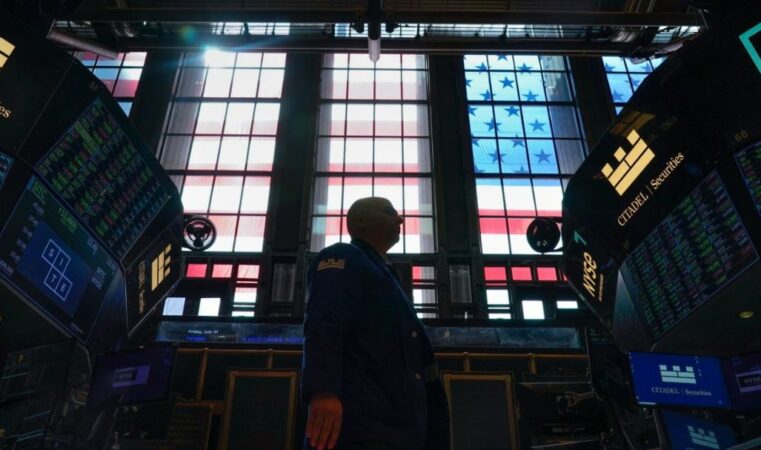



For the third time in as many weeks, technology stocks have fallen, adding to concerns that the boom in artificial intelligence investment could be creating a new financial bubble. Investors are increasingly questioning whether the sector's sky-high valuations are justified by the profits they could generate in the future.
In an analysis, the Financial Times warns that the consequences of a severe market correction could extend beyond the technology industry. While artificial intelligence has proven its potential to transform the economy, that doesn't mean every company investing billions in the sector will be able to turn those investments into profits. A similar situation was seen during the dot-com boom of the late 1990s, when the rise of the Internet failed to prevent the collapse of stock valuations in 2000.
Nasdaq's biggest drop in 19 months
Thursday's session, November 5, brought significant losses on Wall Street. The Nasdaq index fell nearly 5%, recording its biggest daily drop in 19 months.
Companies involved in building infrastructure for artificial intelligence were hit hardest. CoreWeave shares fell 10% in one day, down 70% from their May highs. Meanwhile, Sandisk fell 22% and Micron fell 17%.
Investors' main concern is related to companies that are spending large sums on capacity expansion, without yet being certain when and to what extent these investments will bring in revenue.
Investments circulate between companies in the same industry
Another worrying element is the way the sector's expansion is being financed. Building data centers, purchasing expensive equipment, and securing computing power require billions of dollars, while a large part of these projects rely on borrowing and complex financial arrangements.
The Bank for International Settlements (BIS) has also highlighted the interdependence between companies in the sector. According to its data, about 29% of the value of investment deals involving artificial intelligence companies ended up with other businesses in the same industry. On the other hand, more than 55% of the investments these companies received came precisely from other AI entities.
This creates a chain of dependency that can become problematic in the event of a funding shortage. A company's financial difficulties can simultaneously affect its investors, suppliers and partners, spreading the consequences throughout the sector.
Data centers face opposition from residents
Pressure on tech companies doesn't just come from financial markets. In the US, the construction of new data centers is increasingly facing opposition from local communities.
These facilities require large amounts of electricity and water, straining local networks and fueling residents' fears that utility costs for households could rise. During the midterm elections, limiting or imposing stricter conditions on their construction became part of the debate in some areas, where voters supported restrictive measures.
For companies, this means more bureaucracy, additional costs and delays in project implementation. Frank Flight of Citadel Securities notes that some investments may be shifted to countries with more favorable conditions, but finding new sites, securing energy and obtaining permits takes time.
Delays are particularly problematic for businesses that have taken out large loans, counting on their data centers to be completed and operational by a certain schedule.
The $200 billion loss scenario
The consequences of a potential collapse in AI investment could also affect the broader financial market. Dario Perkins, of research firm TS Lombard, presented a worst-case scenario in October, according to which a sharp decline in investment in the sector could cause losses of at least 30% for US stocks and credit losses of up to $200 billion.
In such a situation, the possibility of a wave of defaults on loan obligations by companies that have invested large sums in artificial intelligence infrastructure is not ruled out.
Perkins emphasizes that this is a negative scenario and not a prediction of what will happen. However, his assessment shows the degree of exposure that the US market has created to this sector.
Will the billions invested in AI be justified?
For investors, the key question is no longer just how much progress artificial intelligence will make, but whether companies will manage to generate revenues and profits commensurate with the billions they have invested.
Businesses that are building the infrastructure needed for AI must justify high valuations at a time when they face higher financing costs, energy constraints, and delays in project implementation.
The Financial Times notes that the recent market turmoil may be temporary, but warns that the possibility of a deeper downturn cannot be ruled out. Such a crisis would affect not only technology stocks, but also other sectors of the economy.
The comparison with the dot-com bubble remains a warning: a technological revolution may be real and fundamentally change the economy, but that does not guarantee that the valuations of the companies behind it will be sustainable.