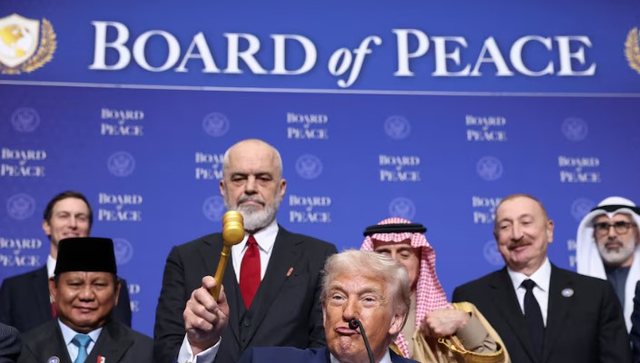



The Peace Board, created and led by US President Donald Trump to oversee the plan aimed at ending the war in Gaza, has criticized both Israel and Hamas for failing to honor commitments made under the ceasefire.
According to a 12-page report published by this body and reported by Reuters, the implementation of the agreement has encountered serious obstacles, while the parties continue to fail to fulfill their obligations to end hostilities.
The report, the second that the Peace Board has presented to the United Nations Security Council since the ceasefire came into effect, highlights the gap between the commitments made and the situation on the ground.
"The distance between what has been agreed and what is happening on the ground remains, however, the main risk to the process," the report says, warning that a ceasefire that does not bring concrete improvements to people's lives cannot last indefinitely.
Trump's plan calls for the disarmament of Hamas, the withdrawal of Israeli troops from Gaza, and the start of the process of rebuilding Palestinian territory. However, its implementation has remained stalled since the ceasefire took effect.
According to the report, Hamas agreed in July to an action plan that would see it hand over its weapons and transfer Gaza's administration to a transitional civilian authority. Israel, on the other hand, has opposed the plan, insisting it will not withdraw troops before Hamas disbands.
Despite the ceasefire, attacks on Gaza have continued. The report notes that Israel has carried out almost daily strikes, while Hamas fighters have also continued attacks on Israeli troops.
Senior Hamas official Basem Naim called the report "pure disinformation," accusing the Peace Board of providing protection to Israel to evade its responsibilities and continue military operations in Gaza.
Meanwhile, Israeli Prime Minister Benjamin Netanyahu's office did not immediately respond to Reuters' request for comment on the report.
The document also raises concerns about the humanitarian situation in Gaza. Over two million Palestinians continue to live in difficult conditions, mostly in makeshift camps and damaged buildings, while a large part of the territory remains under Israeli control.
Another point of criticism is the lack of decisions by the Israeli government on the training and deployment of a Palestinian civilian police force, which would replace Hamas in maintaining public order. According to the report, this delay is hindering the full implementation of the plan.
The Peace Board also raised concerns about Israeli restrictions on the entry of supplies and equipment into Gaza, as well as a lack of funding. These factors, according to the document, have made it difficult to prepare for seasonal flooding.
Heavy rains have flooded several camps housing displaced Palestinians over the past week, with more rainfall expected for the rest of the month.
The Peace Board is expected to present its findings to a Security Council meeting in New York in late November. The report questions the progress of the US plan, while the prospects for a lasting solution to the conflict remain uncertain.