


The European Court of Human Rights (ECHR) ruled on Tuesday that the authorities of Poland and Latvia violated the rights of several migrants from Afghanistan and Iraq who attempted to enter their territory from Belarus. According to the court, in some cases they were subjected to inhuman or degrading treatment after being apprehended at the border and immediately returned to Belarus.
The decision involves two separate cases dating back to 2021, when Belarusian authorities used the movement of migrants as an instrument of political pressure on neighboring European Union countries.
This is the first ECtHR decision to specifically address the protection of persons involved in what is known as the “instrumentalization of migration.” For this reason, it may serve as a precedent for similar cases where migration is used as a tool of pressure by states, including in other situations at the borders of Europe.
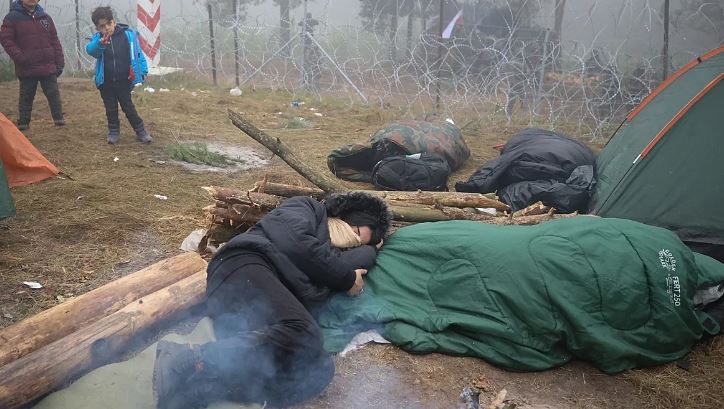
The first case concerned two Afghan nationals who illegally crossed the border from Belarus into Poland and remained trapped in a makeshift camp on Polish territory from August to October 2021. In the end, they were forced to return across the border to Belarus.
The second case involved 19 Iraqi citizens of Kurdish origin, including six children, who accused Latvian authorities of forcibly returning them to Belarus after irregularly crossing the border in August 2021.
Both cases occurred during a period when Belarusian authorities encouraged, facilitated, or forced migrants to cross borders to EU member states, with the aim of creating instability in neighboring states.
In its ruling, the ECtHR stressed that states have the right to control the entry of foreign nationals into their territory. Furthermore, the return of irregular migrants to a state that uses migration as an instrument of pressure does not automatically constitute a violation of Article 3 of the European Convention on Human Rights, which prohibits torture and inhuman or degrading treatment.
However, the court stressed that authorities must identify particularly vulnerable persons who may face a risk of ill-treatment. This category includes the elderly, the disabled, the sick, as well as individuals facing a clear and immediate risk.
For this reason, the ECHR found a violation in the case of one of the Afghan citizens and all the children who crossed into Latvia, as well as the family members who accompanied them.
The Court particularly emphasized that children constitute an extremely vulnerable category and have specific needs for protection, which cannot be ignored even in cases where a state is faced with the instrumentalization of migration.
Meanwhile, another case against Lithuania, concerning four Cuban nationals who crossed the Lithuanian-Belarusian border several times during 2022, was dismissed. The ECHR found no violation of Article 3 in this case.
The decisions of the European Court of Human Rights are legally binding on the states parties to the Convention. Their implementation is supervised by the Council of Europe, an international organization separate from the European Union, which includes 46 European countries.