





By DASHNOR KALOÇI
Second part
Although he was the main leader of communist Albania for 40 years, governing his country with an iron fist from 1945 until his death on April 11, 85, and even after his death and until the collapse of the communist regime in early 1991, no full official biography of Enver Hoxha was ever published, although he himself wrote a series of works in about 80 volumes.
Even after the 90s, a biography of the former communist dictator Enver Hoxha has not yet been published, one that is based on archival documents that shed light on the early origins of the family, with its genealogical tree, as well as a biography of him, from the day he was born until the day he died...!
This is apparently due to the fact that throughout his life, there were many lights and shadows, even many dark spots, which made him never give his approval for the publication of a biography of himself in a separate book, even though those biographies actually existed. Even three of them and with different authors, which are still found today in Enver Hoxha's personal collection, in the Central State Archives in Tirana.
The first official biography of Enver Hoxha was made public in 1946, in the context of the “popularization” of his figure, as “the main leader and first secretary of the Communist Party of Albania, commander-in-chief of the National Liberation Army with the rank of colonel-general, chairman of the presidency of the Democratic Front of Albania, prime minister of the Albanian government, minister of People’s Defense and minister of Foreign Affairs”. As can be seen in the relevant facsimiles attached to this article, this biography, which is a small booklet with 58 pages, published by the “Rinia” Printing House (former “Gutenberg” printing house), on the first page (after the dark cherry-colored cover and the photo of Enver Hoxha in the general’s military uniform and medals on his chest), is written in capital letters: “ENVER HOXHA, A SHORT BIOGRAPHY”. That first official biography of Enver Hoxha was prepared for publication by employees of the Agjit-Propit (Propaganda Agitation) sector of the apparatus of the Central Committee of the Albanian People's Liberation Army, but in reality its drafter and author was the first captain, Ndreçi Plasari, whose name does not appear in the book in question, but is found written in his handwriting on the first sheet of typewritten material that was sent to print.
The book, or rather the booklet "ENVER HOXHA, A SHORT BIOGRAPHY", begins with a description of the city of Gjirokastra where Enver was born on October 16, 1908 and continues with several paragraphs on the history of the Hoxha family, (which only takes up the first two pages), while the entire rest is dedicated to his (Enver's) role during the period of the "Anti-Fascist National Liberation War" with some of its main events (the founding of the AKP, the Peza Conference, the Labinot Meeting and the creation of the General Staff of the National Liberation Army on July 10, 1943, the Mukje Agreement, the Përmet Congress, etc.), ending on January 11, 1946, with the event of the proclamation of the Republic. Even today, it is not known exactly why that brochure with the first official biography of Enver Hoxha (which almost completely lacks a biography of him during the period of Zog's Monarchy), which glorifies his figure and role (or the Hoxha family), from his childhood until the time it was published, was immediately removed from circulation (it is said after two or three months) and was never used again, even for references, in books, albums, or other works dedicated to his figure.
Because from that time on, Enver Hoxha began eliminating his close associates (members of the Politburo, ministers, deputies, etc.), imprisoning, interning or executing them, and the book in question with his biography could no longer circulate with the names of "enemies of the people." The second biography of Enver Hoxha was written in 1950 (15.VI.1950) and its author is Misto Treska, a close and very trusted person of Enver Hoxha, since the period of the French Lyceum of Korça and the Communist Group of that city where he was a member, who during the War was the political commissar of the "Reshit Çollaku" Partisan Battalion and after 1944, was promoted to major, being appointed as a prosecutor and member of the trial panel in the Special Court of 1945, which sentenced former Prime Minister Maliq Bushati and members of the Regency, Lef Nosi and Father Anton Harapi, to death.
Like the biography written by Ndreçi Plasari in 1946, Misto Treska's, which has 238 handwritten pages and the same title (“Enver Hoxha, a short biography”), excessively glorifies the figure and role of Enver Hoxha, in all the time periods covered therein. Perhaps this was also the main reason that the biography written by Misto Treska of Enver Hoxha was not only never published, but was not even typewritten, like Ndreç Plasari's 1946 biography, or the one that was written later. Likewise, it is not known exactly whether this "service" that Misto Treska rendered to the main leader of Albania, Enver Hoxha (with whom he had also known since his studies in France), influenced his later career, where he served as a lawyer, translator, book author, diplomat, ambassador of Albania to France, Belgium, etc., as well as chairman of the Committee for Friendly and Cultural Relations with the Foreign World, where he retired in 1981.
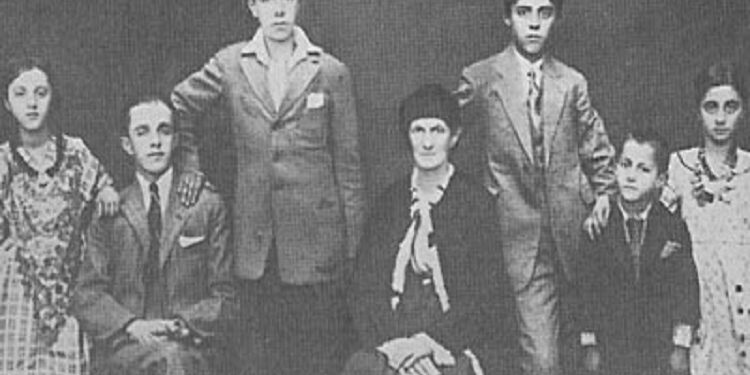
The same goes for Professor Ndreçi Plasari, a historian and researcher who held important academic and political positions during the communist regime, being for a long time also deputy director of the Institute of Marxist-Leninist Studies in Tirana, directed by Nexhmije Hoxha. In those positions, Professor Plasari served until 1982, when he was struck by the Party, accused of being “Mehmet Shehu’s man, who had been sent by him to the British archives to inflate his (Mehmet’s) cult and had hidden documents that proved that Mehmet Shehu had been an agent of the Intelligence Service”! The third biography of Enver Hoxha was written in 1969 and its author is Aqif Selfon, a close childhood and youth friend of Enver and his neighbor in the city of Gjirokastra and, later, at the French Lyceum of Korça, where they studied together and Selfon also served for some time as a dormitory caretaker at that lyceum. On the first page of that biography, it is written; "Memories from the life of the Hoxha family, its origins and a biography of comrade Enver Hoxha, for the period 1908-1930 and 1931-1939, 6.1.1969, by Aqif Selfo".
That biography, or more precisely a biography, as its author himself has titled it, (it has 124 handwritten pages, while 82 are typewritten), like those of Ndreçi Plasari and Misto Treska, from beginning to end, glorifies the figure and role of Enver Hoxha, even with distortions and falsifications of historical events and facts. (For example, on page 46 of his memoirs, Aqif Selfo writes, among other things, that: “Enver left for Belgium, settled in Brussels and began his duties as secretary of the Consulate. He stayed here partly in 1934, the whole of 1935 and partly in 1936. In addition to his duties as secretary of the Albanian Consulate in Brussels, Enver continued his studies at the Faculty of Law and passed his second-year exams.” While in another archival document that is also in Enver Hoxha’s personal collection, the Albanian diplomat Nos Qosja, who served at our embassy in Paris, writes, among other things: “During my visit to Belgium with comrade Harrilla Kola, we went to the University of Brussels (Faculty of Law) and asked and found out: Comrade Enver was registered at the Faculty of Law for the academic year 1934-1935. In the archive of that faculty, there is a file with this data;
HOXHA Enver
Academic year 1934-1935
Date of birth: October 3, 1908 (Gjirokaster)
Registration number; 2821
His address; "Legation of Albania 155 Rue de la Loi, Brussels".
"The card is blank, it doesn't appear that he has taken any exams."
Paris, February 22, 1969 Nos Qosja
From what is said in the archival document in question (which coincides with the period when Enver's biography by Aqif Selfo was written), it turns out that Enver Hoxha did not take any exams at the Faculty of Law in Brussels, which refutes what Aqif Selfo writes, that "Enver took the second year exams"! Perhaps this was also the main reason that those "Memoirs" were never published as a book, since in the period in which they were written, many of Enver and Selfo's friends and peers were still alive (in political prisons or free), both from the period of their childhood in the city of Gjirokastra, that of the Korça Lyceum, or their studies in France. But even though those "Memories" never saw the light of day, they most likely served their author, Aqif Selfo, as a shield for a quiet life (he worked as a teacher in Tirana at the "Qemal Stafa" gymnasium until he retired), unlike his two cousins, Riza and Syrja Selfo, whom Enver arrested and shot, even though they and the entire Selfo family had helped him with money during the War, 1939-1944.
Based on these three biographies, in 1978, a book or more precisely a type of brochure was published with the title: “Enver Hoxha, beloved leader of the Albanian people” - (Material for conversations, on the occasion of the 70th anniversary of his birth), where on the first page behind the cover, it is written: “Prepared by the Marxist-Leninist education sector, near the Central Committee of the Albanian People's Party. - In aid of agitators and propagandists”. The book in question was published by the “8-Nëntori” Publishing House at the “Mihal Duri” Printing House in Tirana. The fact that these three biographies of Enver Hoxha are in his personal collection, even with interventions and corrections by other people, if they were not made at his request, most likely they were written with Enver's approval. However, these remain within the framework of hypotheses where there is room for further investigation, but in this article we are initially publishing the biography of Enver Hoxha, which was written by Aqif Selfo, which is published for the first time and with the relevant facsimiles in several issues, by Memorie.al.
In this meeting, which aimed to create the club, many Gjirokastra residents who were known as indomitable fighters for the Albanian cause, such as Bajo Topulli, Çerçiz Topulli, Kapo Topulli, Sali Bixho, Petro Poga, Hysen Hoxha, Elmas Baçe, Fuat Nano, Musa Xhiku, etc. participated. Many patriots spoke at the meeting, such as Bajo Topulli, etc. The meeting decided to create the Gjirokastra club with the name “Drita”. It also elected the chairmanship or elders of the club.
The club's leadership was composed of people known for their progressive ideas and ardent patriots: Petro Poga was elected as the club's chairman, Hysen Hoxha as vice chairman, and Elmas Baçe, Idriz Gurri, Kapo Topulli, Musa Xhiku, Sali Bixho, etc. were elected as board members. In addition, the treasurer, the caretaker, and the collector of dues were also elected. The board also drafted the club's regulations: the canon of the "Drita" club. One of the club's main tasks was to open Albanian schools. The first Albanian school was opened in the fall of 1908 in the city of Gjirokastra, under the name "Lirija". Its first teacher was Andrea Konomi, later Thoma Papapano.
The “Drita” Club sent its delegate Bajo Topulli to the Congress of Manastir, in November 1908. The activity of the “Drita” Club, in the field of education, was great both in the progress and equipment of the “Lirija” school in Gjirokastër, as well as in opening other Albanian schools, especially in the villages. Such a school was opened after many efforts, even facing the de-churching of the reactionary clergy, in 1910 in the village of Labovë e Madhe, or Labovë e Zhapës, with teachers Nane Panajoti and Vasil Konomi. Hysen Hoxha played an important role in opening the schools and in their equipment.
This is what the old teacher Thoma Papapano says in the article – The first Albanian school “Lirija” in Gjirokastra (1908-16.III.1913) -. He says that after 1909, Petro Poga did not interfere with the affairs of the club. The presidency was held by others who were keen on reading and writing in the Albanian language and were determined. And from 1910 until 17.III.1913, the day when Gjirokastra was occupied by the Greek army, the presidency of the club was held by Hysen Hoxha eff. Hoxha, who also headed the city municipality.
So Hysen Hoxha was not only one of the most courageous patriots and constantly worked for the national idea, but he was also one of the patrons and pillars of the “Drita” club and the “Lirija” school of Gjirokastra. He was also the main supporter of the opening of the Albanian school in Labova e Madhe. On his initiative, an Albanian school was opened in this village, in the building designated for the school, but with the intervention of the authorities and especially the despot of Gjirokastra, the school was closed; Hysen Hoxha’s efforts led to the school being opened again, in another building.
Hysen Hoxha was also an ardent supporter of the Latin alphabet against the Turko-Arabic one and fought with all his might against the Young Turk agents who sought to establish an alphabet with Turko-Arabic letters. The reactionary policy of the Young Turks towards the peoples of Turkey, non-Turkish peoples and especially towards the Albanians, caused uprisings to break out throughout Albania in the years 1909–1912. They became more powerful in 1912, especially in Kosovo. The Turkish government in this period began with furious persecutions against our provinces.
Against this terror, Albanian patriots fought to defend their rights. The Turkish Empire, from the Italo-Turkish war of 1911-1912 and especially from the great movement of Albanians, was weakening more and more. At the height of the Albanian uprising of 1912, which was almost general, the alliance of the Balkan states was also formed. The Balkan states, seeing the weakening of the Turkish empire, accelerated their military preparations and in October 1912, declared war on Turkey: first Montenegro and a few days later the other allies, i.e. Serbia, Greece and Bulgaria.
Turkey, from the beginning of the war, suffered one defeat after another. In this new situation, created by the Balkan war, Albanian patriots declared the independence of Albania and the Albanian state on November 28, 1912 in Vlora. The provisional government headed by Ismail Qemali immediately announced this significant event to the various provinces of Albania, as well as to the countries of Europe.
Hysen Hoxha delegate to the Vlora Assembly 1912 and participant in the Vlora government delegation
Hysen Hoxha was a delegate from Gjirokastra to the National Assembly of Vlora in 1912, under the name Hysen Ef. Gjirokastra. Some of the delegates from Gjirokastra, including Hysen Hoxha, arrived in Vlora a little late. The minutes of the fourth meeting of the National Assembly of Vlora, on December 3, 1912, published in the newspaper “Përlindja e Shqipniës”, an organ for the protection of national rights, Vlora, second year, No. 9 dated February 11, page 4, among other things, announce:
Today the delegates of Gjirokastra arrived, whose names are: Myfit Bey, P. Poga, Jan Papadhopulli, Hysen Ef. Gjirokastra and Veli Bey Klisura. In addition, Hysen Hoxha was also a member of the delegation that was sent by the Government of Vlora to Janina. Regarding the composition of the delegation, Musa Demi says: “At the end of December 1912, a delegation consisting of Hysen Hoxha, Mid'hat Frashëri and me was sent by the Government of Vlora to the commander of Janina, Esat Pasha Janina”.
Regarding the mission of this delegation, in the second volume of the History of Albania, published by the State University of Tirana – Institute of History and Linguistics – Tirana in 1965, pages 375-376, it is stated: Now that the autonomy of Albania had been recognized by the great powers, it (the government of Vlora) decided to give up the strict neutrality it had maintained until then and to take an active part in organizing the resistance in Ioannina, where a good part of the Turkish forces were made up of Albanian soldiers. But the government of I. Qemali was interested in this resistance, which had attracted the attention of European public opinion, continuing under the flag of Albania.
For this purpose, at the end of December, he sent a delegation to Ioannina to propose to the Turkish commander, Esat Pasha of Ioannina, to raise the Albanian flag in the castle, while the Albanian government, for its part, undertook to stop the mass desertion that had begun in the ranks of the Albanian army. In the event that resistance in Ioannina could not continue, the Albanian delegation asked the Turkish command to enter into negotiations with the Greek government, proposing to it the Kalamas River as the demarcation line in the south, which had been determined at the Congress of Berlin in 1878.
The Turkish commander did not accept the proposals of the Vlora government. In Gjirokastra, patriots were mobilized and raised the flag in the Gjirokastra castle. But Mytesarifi (the prefect of the city), upon learning of this event, summoned some of the city's leaders to the prefecture to warn them about the act committed (raising the flag). At this meeting, one of the city's leaders, to please Mytesarifi, said that this act had been committed by some immature people, from the Kalamaj. This statement greatly angered Hysen Hoxha and, addressing the one who expressed this opinion and all those present, including Mytesarifi, he said: the Kalamaj did not raise the flag, we raised it, because that is how our good wills it.
After this, all the participants in this meeting left, while the flag remained raised on the fortress until March 1913, when Greece arrived in Gjirokastra. Meanwhile, the military operations of the Balkan states were making progress on the various fronts of the war. The Greek armies were also making progress on their front: they occupied southeastern Albania, the province of Korça, and after the fall of Ioannina, the siege of which lasted several months, the Greek armies advanced towards (southwestern) Albania and occupied, one after the other, the various provinces as well as the province of Gjirokastra and the city of Gjirokastra itself on March 16, 1913.
A few days after the Greek occupation, Jorgji Kristaq Zografi, the son of Kristaq Zografi, from the Qestorati, arrived in Gjirokastër. He immediately summoned Hysen Hoxha, the mayor of the municipality, to his office in the Metropolitanate and ordered him to inform the people to gather that he would give a speech. At this meeting, Jorgji Zografi, among other things, said that the provinces of Korça and Gjirokastër belong to Greece and that the Kingdom of Greece would take care of everything from now on.
This speech of Zografo greatly angered the meeting, so Hysen Hoxha, without considering anything and expressing the opinion and desire of everyone, rejected these claims expressed by the representative of Greece. In this case, Jorgji Zografo threatened both the meeting and Hysen Hoxha that measures of internment would be taken against anyone who would oppose. But despite all this, the people were not afraid. The manly attitude of the people of Gjirokastra forced Jorgji Zografo to inform the authorities of Ioannina about what had happened. They immediately sent Governor Foresti with a special mission.
Forest, upon arriving in Gjirokastra, called the mayor, Hysen Hoxha, again and gave him a telegram in seven copies, which said: we the people of Gjirokastra fully declare our desire and ask to be under the protection of the Greek kingdom and ordered that these seven copies, after being signed, be returned to him again, as they will be sent to the great powers. Hysen Hoxha took the copies of the telegram, called a meeting in the mosque of the tekke (near the bazaar), where a majority of men participated. He informed the members of the meeting. The meeting unanimously declared that they would never sign a telegram with this content.
She, right there, compiled another copy of the telegram, with this content: we as Albanians cannot say that we do not love Albania. Hysen Hoxha took this copy of the telegram, compiled by the meeting, to Governor Foresti's office. As soon as he read it, he tore it up and threw it away with great anger. Despite all this, after a few moments, he took a softer and more polite stance. At these moments, when he was talking to Hysen Hoxha and in the middle of the conversation he asked him this question: won't you tell me the truth, do you love us or not?! Hysen Hoxha, without being afraid at all, answered: to tell you the truth, we don't love you at all.
At this fair and courageous response, the governor became very angry and ordered him to tell the people that he would burn and reduce Gjirokastra to ashes; at this moment Hysen Hoxha got up to leave and said: well, do as you wish. Hysen Hoxha immediately went and informed the people waiting in the mosque about what had happened. As a result of this resistance of the people, the Greek authorities, around the month of August, prepared a list of several dozen people from the people and deported them to Greece, to Patros.
The chauvinistic and predatory intentions of Greece towards our country and especially towards Southern Albania, became more frequent and more powerful. At the end of 1913, the Great Powers recognized the borders of Albania and also decided that the lands occupied by foreign powers and located within these borders should be liberated. The Great Powers also announced this decision to Greece. The Greek government showed itself, as if it were ready to implement the decision in question, i.e. to withdraw its armies from Southern Albania. It began to withdraw its armies from the province of Korça, which was taken over by the Albanian armed forces.
But the Greek government postponed the withdrawal of the Greek army from the Gjirokastra region day by day: this was intended to implement its diabolical tricks. At the beginning of 1914, Greece pretended to withdraw its regular forces from the Gjirokastra region, but at the same time organized a movement orchestrated, under the leadership of the Greek government, by the Greek sympathizers. This movement aimed to create an autonomy in the Gjirokastra region. In February 1914, in Gjirokastra, a kind of assembly was convened, where the creation of the Gjirokastra region as an autonomous country was decided and the so-called “Autonomy of Northern Epirus” was proclaimed./ Memorie.al