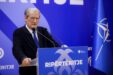
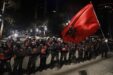
Democratic Party MP, Jorida Tabaku, has commented on the calls of protesters against the leader of the Democratic Party, Sali Berisha, who are demanding his arrest, just like Prime Minister Edi Rama.
In an interview for News24Tabaku stated that not all of these calls are spontaneous and that some of them may be stimulated by small political parties that, according to her, seek protagonism.
"Not all of these calls are organic. There are small political forces that stimulate it. There may be citizens, they may not like me either," Tabaku said.
She emphasized that the election of the leader of a political party is made by the membership and not by protesters in the square, adding that the debate over the leadership of the DP has already been consumed within the party.
Tabaku underlined that the main demands of the protest were not related to the Democratic Party, but to the annulment of four laws, the creation of a caretaker government, the change of the electoral system and the resignation of Prime Minister Edi Rama.
"Not all of these calls are organic. There are small political forces that stimulate it. There may be citizens, they may not like me either. Sometimes we are with members of the DP and I see them getting upset and angry, I try to tell them that we have Rama as our target. In a political party, it is not the people who choose who the leader is, but the members. But I think we have exhausted this debate in the DP. It has been 4 years since the leader of the DP has been elected twice, it is an internal debate. When they ask for him from outside, they should look at his political offer.
I think that even those calls that may be stimulated, isolated, have a main demand. And if you listen to the official demands of how the protest started, there was no demand for the DP. It started for the annulment of 4 laws, which was addressed to the government, a demand for a technical government, to change the electoral system and for Rama's resignation, which are also demands of the DP.
All of Rama's opponents can be united by Edi Rama. Each of the parties, starting with the DP as the largest, at this moment may perhaps lose a little of itself by reaching out for non-traditional coalitions, with parties that we have not thought the same way. At this moment, everyone must lower their ego, and in the public sphere, to offer what the people are looking for. Rama's departure can only be achieved with the unity of every opposition factor," she added.