


Russia has launched an ambitious scientific project, investing billions of rubles in research to extend human life and combat aging, with the aim of overcoming human biological limits in the future.
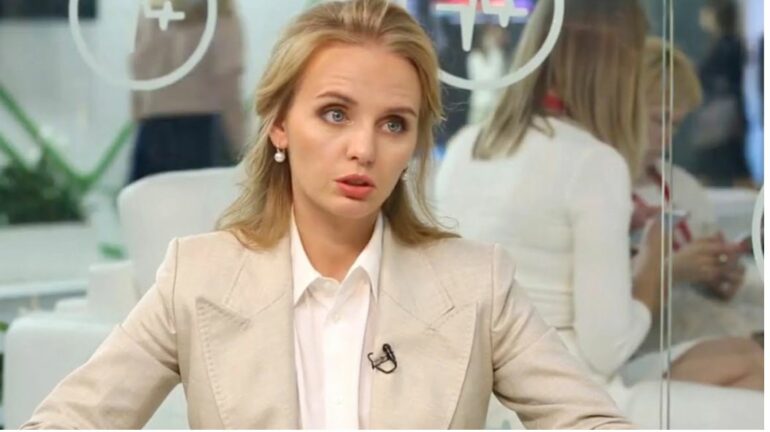
The initiative is being spearheaded by Maria Vorontsova, the eldest daughter of Russian President Vladimir Putin, an endocrinologist and head of the Institute of Medical Research and Education at Moscow State University. At a forum in Moscow, she presented a two-stage strategy that would first aim to get people to 85-90 years old and then to overcome natural life span limits, in what she described as an attempt to “cheat God or nature.”
To achieve this goal, Russian scientists are also working on developing an experimental anti-aging vaccine, which aims to block a gene linked to cellular changes that occur with age. The program, personally promoted by Putin, foresees investments of more than 2 trillion rubles and also includes research into tissue regeneration.
Researchers claim to have managed to print human cartilage and a mouse thyroid gland, while the goal is to make it possible to replace human organs by 2030. Russian authorities aim to save 175 lives by 2030 through these programs, while Putin has set a goal of increasing the average life expectancy to 78 years by 2030 and 81 years by 2036.
However, the project has been met with skepticism from some in the scientific community, as few genuine scientific studies have been published to date to prove the results of this research. Meanwhile, the initiative also raises questions about the paradox between the billions invested to save lives and the huge human losses that Russia is suffering in the war against Ukraine.
According to estimates cited in the report, Russian casualties from the war have reached hundreds of thousands, while independent experts warn that ambitions to defeat aging may be more political promises than concrete scientific results.