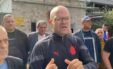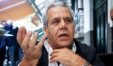







This is a political portrait of Edi Rama, of the incredible trajectory of an individual who began his public life as an athlete and artist. He continued as an inspiration to the students of December 90, who appreciated the anti-conformist and anti-communist rebel, it is the journey of the man who created numerous admirers with his piercing journalistic style in post-pluralism, who entered politics with a chance invitation, which coincided with an early personal ambition, who knew how to maneuver with surprising skill between the four prime ministers Nano, Meta, Majko and Berisha, imposing themselves on all four in different ways, who won four consecutive governing mandates like no other before and who is now faced with angry protesters demanding his removal. His story is a surprising combination of his controversial personality, his personal psychology dominated by deep narcissism, Machiavellianism, populism, the conviction that he was given to Albanians as a lone missionary to lead them towards progress, and the dark charisma with which he dominates the public scene. Able to appear humble under the weight of modesty when he feels in difficulty and extremely contemptuous of everyone on his good days, this is the story of the man who personalized the Socialist Party, the most democratic and almost liberal party in Albania, who transformed institutions into extensions of his will, who replaced the magic of democracy with the balance and control of powers, but who is now completely alone in the face of the revenge of the system itself.
-I- How did it start?
The earliest evidence of Edi Rama's relationship with power dates back to the late 80s. His university colleagues still remember his early joke about taking Ramiz Ali's place. "Why don't I become president of the Republic," he would tell more than one of his colleagues, the former professor of the Academy of Arts, when he walked next to the neighboring building of the former communist leader. He had to wait exactly ten years to enter the corridors of power. Completely atypical and different compared to the improvised political class of post-pluralism that protected itself from the cold with wool sweaters and articulated with wool in its mouth, he received by a lucky coincidence exactly what he had always wanted. An invitation to officially enter politics. Initially in the modest post of minister of culture, where he marked the first difference with his charisma. Then came the municipality and then the party and the government.
Earlier, in December 1990, he had made a personal attempt to take control of the student movement, but lost to his equal in the bloodlust for power, Sali Berisha. The cardiologist, driven by instinct, expelled him from there, convinced that the DP ceiling was too low for two stubborn roosters at the top. The same dark charisma, but more framed and sponsored by Berisha, defeated the rebellious professor who was given a hand by Student City to start a second life in the public space. The other early evidence, now also public, is an audio recording from the first week of January 1990, when, in front of Sali Berisha and Azem Hajdari, the voice of Edi Rama could be heard in the recording. The only one among them and the absolutely clearest who spoke about the need to seize power from the communists. Rama was significantly more concrete than Hajdar's folklorism and Berisha's noisy project that began and ended with the need for people in the squares.
-II- Invitation to "Raise the mud from Albania!".
The invitation came from Fatos Nano, who actually used a different and more serious word than the word mud that needed to be cleaned from Albania. The lazy prime minister probably believed that he would leave Rama in charge of the tools of war with Berisha, while he himself would live the idyll of a spoiled prince of a people traumatized by poverty, the wounds of the almost civil war of 97 and the lack of hope. But more than Nano, it was Meta who replaced him, who gave Rama the most precious political gift. He ran for mayor of Tirana, putting the SP behind him as an electoral machine, ready to support anyone its leadership brought to it.
With a sensational victory, Rama used that new power, completely invisible before, in several directions. First as a maneuver between the two dominant socialists Ilir Meta and Fatos Nano and secondly to create the core of followers of his emerging cult. Rama, with a deep sensitivity for the media, created a strong personal alliance with him, the owners of the emerging television stations and traditional newspapers. All of them, in addition to the pragmatic interest as a center of economic benefits, saw in his extravagant figure, a different model from the traditional figures of politics, who, although they had started to wear silk ties, still carried the scent of communist chests in style, expression and behavior. Rama himself came from a publicist background, where he had also created a strong difference with the traditional way of journalism with a strong polemical and accusatory style. A little older than the former constellation of journalists of the 90s who considered him one of them, he was able to include almost everyone in his circle. Today, the vast majority of them are also his harshest critics.
All these vectors culminated in the display and self-promotion as similar to Berisha, but in the costume of a liberal citizen and as such, he was considered the only proposal that could stand up to him. In those years, seriously wounded, but not yet definitively killed, as the socialist revenge measure dreamed of, Berisha still remained both the curse and the blessing of the socialists. He was the notary of their power, which was suffering from internal power struggles and which fluctuated from Nano's delayed adolescence, to Majko's lack of weight and Meta's authoritarianism.
During this period, Rama was able to create a new center of power linked to his economic interests, mainly construction in the capital. His critics also add to the menu the beginning of inappropriate contacts with people from the underworld.
The enigma remains the influence that Soros and his fluid political project in Eastern Europe and beyond have had on Rama's career, but it is a verified fact that almost everyone in Tirana who has entered politics thanks to Rama, strangely enough, has had connections precisely with this mysterious and much discussed foundation not only in Tirana, but also in Washington and elsewhere. They have entered the doors of politics only thanks to the will of Rama himself, who fished for their like-minded people from the human reserve he created in 11 years of running the Tirana municipality.
-III- The homeland of the one, the tribe and the leader
Dancing with his soul in the salon of fluid alliances between Meta and Nano, sometimes with one against the other and vice versa, he challenged Fatos Nano at the 2003 congress. Sometimes the mentor and sometimes the clown of his prime ministers, sometimes their friend and sometimes their enemy, Rama has been unique in his special ability to adapt to circumstances, when the time comes, he would make fun of Majko when he had him as his boss in the government and take him seriously years later when he had him as a subordinate in the cabinet. Rama lost then in that congress, but had the clarity to mark his name as an alternative for power. This was his most important move, it was the moment when it was not yet convenient for him to win the party, but he needed the party to lose in the next elections and to come out in opposition. It is impossible to determine the weight that his will had, mainly as a secretly expressed desire and open actions with Mjaft in the defeat of the socialists, but the fact remains that in 2005, he remained the only offer of the SP to lick the wounds of going into opposition. The vacuum left behind by a former leader who was living a delayed and jocular adolescence was filled by the new leader who promised a quick return to power to the socialists traumatized by the triumphant and revengeful return of Gogol Berisha.
At that time, Rama offered friendship and trust to the old socialists who still viewed him with distrust as an outsider, but who naively believed that they could keep his energy under control. Rama knew like few others that the path to central power passed through party control and his strategy was focused precisely in this direction. For four consecutive years, until 2009, he had to coexist with the parliamentary group structured by his predecessor, which narrowed his space for action. Everything changed with an unexpected gift given to him by his fiercest enemy. An occult agreement with Sali Berisha brought about constitutional changes in 2008, which gave both of them a monopoly over the two main parties and at the same time, over all their human resources and all the powers that would flow from them.
The homeland of the one, the tribe and the leader was now a constitutional reality. Albania, which had been separated from a dictator Hoxha for less than two decades, now had two new “prophets” of the new religion of its hybrid democracy. It was either with them, or it was beyond all reckoning.
Control over the party and its lists of MPs and the result of the lost 2009 elections gave the loser Rama a complete triumph over the parliamentary group, the core of the party. Forced coexistence with islands of socialists still left over from the past did not necessarily mean sharing power. The transition to the right-wing government of Ilir Meta, a socialist angry with Nano and his former sponsor, made this project much easier. The Socialists had lost another mandate, but they had won the right to chant: The King is dead, long live the King!
-IV- Like Lenin, all power to the Soviets
In 2013, with Meta's rapprochement, he shared power with him, but mainly waiting for the moment of the final divorce. Divided and controlled power was not yet his humiliating goal. It was not the goal. It was the beginning. He wanted its full exercise for himself. Without conditions. Without compromises. Without debates, but only by imposition. Another alliance would replace, displace and frustrate Meta, the talented socialist, the master of victories in small battles and the absolute architect of defeat in the final war. The SP group, together with a generation of young socialist "veterans", would have that legislature and deputies burned by the decriminalization law and down at the base, other of their brothers in local government and administration. Small local beylers, influential figures in small areas, often linked to the underworld or businessmen with a dubious past, would become his electoral fuel to achieve the ultimate goal, once proclaimed by Lenin's Bolsheviks: All power to the Soviets. He achieved this in 2017, largely due to the confirmation of the fatal axiom: when you have stupid opponents, you don't need smart friends.
The tactical idiocies of the opposition of the time, its internal quarrels, the mood swings and paranoia of Ilir Meta, the unbearable lightness of Lulzim Basha, created that absurd coalition that gave victory to Edi Rama on a baking sheet. And along with the baking sheet, the steering wheel.
Alone in power after the 2017 elections, Rama carried out two simultaneous operations. The first, the disempowerment of the opposition. By corrupting it and narrowing the spaces for movement to the maximum. Helped by its political suicide, known as the burning of mandates and the boycott of local elections two years later, Rama could now move forward with his political project. With the final collapse of the magic of the system, the balance and control of powers and the absolute control over his winning party, the institutions were finally transformed into extensions of his will. Just like Zogu, Hoxha and Berisha, he became an excellent manager of human weaknesses.
Especially since 2017, Rama became the only source of certification of everyone's success, career, entry and exit from the corridors of power in a capillary manner. More and more, his personal choices narrowed down to the identity of the official he saw as an idol, the increasingly incompetent, increasingly corrupt and corrupt functionary, but always a player in the competition for servility in the eyes of the prime minister. The rebel artist had already suffered the greatest human fracture. Although he seemed to despise them, Rama became addicted to the drug of servility that raised the pedestal of the superman ever higher.
With the tenacity of an ant and the zeal of a communist cadre chief, the anti-communist Rama created an army of captors who served as clowns at parties, without remembering that on days of battle, necessity only calls for generals. In a government reshuffle in the winter of 2018-2019 after the first student protests, he removed the last layer of socialist politicians and replaced them with a series of technocrats. The socialists once again accepted such decision-making. The magic of power could no longer refuse even the gravedigger's shovel. Because those acts were collective graves where the traditional socialist party was being buried and from where his totally personal project was being created. Rilindja rose above a party that had died, but had invited no one to its funeral. And the funeral itself looked like a celebration.
Paradoxically, Rama has no idea that even among the people he recruited from nothing and who still take notes when he speaks, there is a silent majority that hates him. Even those he pulled out of emotional and intellectual emptiness and nothingness, even among the illiterate people he sold as academics, even among his many scoundrels who have been rubbing their backs against the scythe made by power for years. The ridiculous captains he promoted to generals are now seeking distance from him. They now see him not as the propeller that could lift them up, but as a walking cannon that could sink them far below.
At the same time, along with the concentration of political power in his hands, Rama also became the authoritarian CEO of a limited number of large businesses, initially not politically connected to him. Most of them were born during Berisha's two mandates. Year after year, under Rama's government, the 30 largest corporations concentrated up to 40 percent of the country's GDP, serving Rama as a showcase for the success of capitalist Albania.
Thus, year after year, his dark charisma, egocentrism, extreme centralization of power, lack of empathy, sense of grandeur, violation of conventional decency norms, as well as endemic corruption and increasingly strong ties with elements of the criminal world, made Rama an undisputed figure in a society that has never managed to separate itself from the cult of the individual. Institutions were replaced by the leader's ego, the leader himself treated himself as a good that was often misunderstood by society. Convinced of his intellectual, moral, political and cultural superiority, Rama became the unfortunate patient of the political and psychological transformation that long-term power brings. With monologue as a means of communication instead of dialogue, with orders instead of legal frameworks, with absolute narcissism and unbridled selfishness, with authoritarianism as a religion and the personalization of power as a tool, Rama paradoxically became weaker, more fragile and more vulnerable precisely where many saw him as stronger. Even with the declaration of Sali Berisha as Non Grata.
Hostage of polls, which separate him from the real flavor of life, captive of the new toy with AI and Algorithm, Rama increasingly sees the world through the eyes of others. The Albania of television and traditional media is completely different from what it seems from within the international salons of politics, where Rama has long since displaced himself and his personal priorities.
-V- Revenge of the system
After the 2025 elections, with a qualified majority in parliament, Rama was publicly warned that only a completely different administration of the power he took in his fourth mandate could give him a chance for tomorrow. On the contrary, Rama was self-governing due to his arrogance. The senseless interventions in Theth, the madness of the tent war in the capital, the absurd tour of the country's municipalities in the summer, the attempt to centralize control over the municipality of Tirana as well, and above all, the photocopying of the new government with the same old faces with problems with justice, proved that he himself had misread the election results. That result, which he had seen as a personal triumph and license to become an Emir like his brothers in the Middle East, was the final moment that proved him wrong in two ways: In his misunderstanding that the strongest power is divided and balanced power, and in the proof that he was no longer a free man and that somewhere, a complicated system of hostage-takers, had taken hostage his freedom, his will, and his reason.
His attempts to take control of another center of power, SPAK, over which he had significant influence, had the opposite effect. Like a man who has fallen into a fisherman's net and every attempt to free himself entangles him even worse.
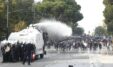
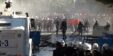
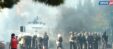
This would be the moment of revenge for the system that he himself has so severely wounded. Under pressure from the protests that began in June and culminated in the October protests that have been mixed with genuine guerrilla warfare, Rama still does not understand that just as in his relationship with the power that he exercises alone, he is also alone in managing the crisis.
He does not have a functioning parliament to debate.
There is no credible opposition that is part of the political solutions.
There are no political authorities who are able to deliver messages acceptable to the majority of the population.
There is no civil society with a moral credo.
And what is more important, in this multi-layered institutional and socialist crisis, there are no moral authorities to come up with credible compromise formulas. There are no social strata that see Rama as a factor of stability.
Ironically, the protesters are symmetrically demanding prison for both the prime minister and the opposition leader.
Alone in front of everyone, Rama, filled only with himself, continues to sincerely believe that even in those human moments, when he has to squeeze himself into the toilet, he brings champagne closer to the environment when he shakes it, deposits diamonds and gold when he secretes and leaves behind only the scent of perfume when he goes out. Convinced that he is the victim of an alliance that includes international conspiracy, official politics in Pristina, Russia, Iran, anti-Trumpists, Antifa, organized crime, Rama still hopes that they will also see him as a victim of his success out of the envy of everyone else. And he hopes to continue to share his fate with two European leaders, Macron and Meloni, whose countries are under attack by Antifa.
-VI- The Angry Poor
The creation of criminal inequality in the distribution of income coming from Albania as the common property of Albanians, the lack of hope, uncontrolled emigration, population shrinkage, the decline of the moral hierarchy in society, the acceptance of poverty as the only unforgivable crime in the country, his proclamation as king of the Republic of ZeqiLand, are the main fuel that fuels the anti-Rama anger. With one hundred euros from emigration, a pensioner could buy goods and services worth 12 thousand lek in 2022, today, due to inflation and price increases, he has only eight thousand lek in his pocket to spend for the same purpose. An extremely vulnerable group like pensioners, their survival with bread and medicine for the body is really threatened, suffering also the highest VAT rate for basket goods in the region.
Over the past 6-7 years, housing prices per square meter have increased on average from 95 to 115 percent in Tirana and 70 to 100 percent in Durrës. Rents have increased from 80 to 100 percent in Tirana and 50 to 70 percent in Durrës. In contrast, the average salary has increased from 75 to 80 percent, an increase that is consumed by inflation and price increases. And beyond the average figures, the poor have an answer: today, even with more money in nominal value, they buy fewer services than yesterday.
The tourism hailed as a success has been totally such only the orgy of numbers and a handful of owners, often people from the underworld and criminal businesses connected to them, but it has been the fate in a chain reaction that has made life more expensive for the vast majority of society. That part that is told that the cost of living has as a solution walking under the heavy shadow of the towers promised as urban development. Just like trying to cure the illness of a human face with a make-up color operation. Just like drawing an empty glass with colors and pretending that it is full of milk. With the same style of mayor, passion and mindset, from which Rama has not separated even when he had to govern the country as prime minister.
And as if all these elements were not enough, the endemic corruption exposed with the portraits of his closest people, now also brought to light by the investigations of another center of power that he influences but cannot control, such as SPAK, make the room even narrower where on one side he must not be crushed by the elephant he has brought inside and on the other side the ever more ferocious embrace of centralized power awaits him.
-VII- International partners, but where are the partners?
The monopolization of foreign policy by a flying prime minister and a series of Rama's moves in international politics have their impact on creating the perfect storm. In 13 years, Rama has wanted to take a prominent role in foreign policy. Taking advantage of his charisma, the ease of identification due to his stature and training as an artist and athlete, during the "galata" era, Rama was for a long time the perfect guest in the salons of European politics. Rama was able, like no other in Albania before him, to create a network of personal friendships among his colleagues. His significant relationship with Vučić, for example, had as its product only a note in the European and American chancelleries, tired of the Russian salad from the Balkans: the right Albanians and Serbs in power can pacify the entire region!
Rama himself considered long ago that "...now that I'm grown up, others want to take pictures with me", pointing out a significant role for himself in international politics. But just like the old rich who always look down on the young rich, his weight was greatly re-dimensioned, especially with the outbreak of the Ukraine-Russia war. In times of trouble and drama, jokes, jokes and theatrical gestures are not heard with the same pleasure. On the contrary, they become annoying. Rama's weight began to shrink in proportion to the completely modest weight of the country he represents. Just as has happened with all the other leaders of the Albanian state, who have believed that they deserve to govern much more than 28 thousand square kilometers of stubborn rock and soil. And much more than a few million proud Albanians and typical Balkans who are like steel springs. They endure a foot that presses them down from above, but the moment the foot moves a little, they jump up in every direction. This is what happened to other ancestors, to the many Albanians who governed entire territories many times larger than Albania under the flag of the Ottoman Empire and under the shadow of the successive Sultans, but without ever remembering this lost edge of the former empire.
Conspiracy theories, but which at the moment cannot have official confirmation, also mark weak relations with the administration of President Trump. Tirana has no contact with the Republican administration that is entering its second year. Obsessed with the idea that Trump must accept and bless him, Rama still tries to atone for his fatal blunder for the insults he made to him on CNN during the presidential race in the US. The vast majority of Rama's mistakes domestically, but also seemingly incomprehensible moves in foreign policy, are due precisely to this obsession. Even the project in Zvërnec and the attempts to approach President Trump through the family, from where the protests started, was also an extraordinary project, but poisoned by politics. The story with the former FBI director is still unknown how much the bill has been and may be. What is certain is that this is a bill that has not yet been paid.
With European countries, mainly Great Britain, Belgium and the Netherlands and to a lesser extent Germany, there is the problem of organized crime and drug trafficking. It is estimated from Britain alone that the drug money that reaches Albania is in the order of several billion pounds per year. The former empire, already a financial center for years, is unable to silently accept the river of money that flows from its borders for a supposed cleaning in luxury towers in a poor country like Albania.
The Turkey of the former strongman Erdogan seems to have been hurt by the former prodigal son. Rama's identification with the Bibi of Jerusalem and the project for the Bektashi state in Tirana are the two moments when the personal relations between two strongmen from the Balkans are broken precisely for a typical Balkan reason: The friend of my enemy is my enemy!
The services of several countries in Western Europe, their justice systems and even their media, have begun to understand the increasingly strong role and weight of Albanian organized crime. And especially its significant influence on drug trafficking, which starts from the countries of origin and ends in the Albania of the towers, to be cleaned and stored for redistribution back to Europe.
It doesn't end here. Reports not only domestic, but also from the other side of the Atlantic mention Antifa as Rama's enemy at these moments and note serious suspicions of interference from countries unfriendly to Albania, mainly Iran and Russia.
A wild core, probably a product of Antifa, as if out of nowhere, set Tirana ablaze, romanticizing the memory of the Flamingos in the square clearing the boulevard of debris after demanding prison for Rama and Berisha.
With a traditional alternative that is completely bent either by the weight of the past, or by being in opposition for so long and internal strife, with the lack of a new alternative, it seems that local means are not enough to remove Rama from office. Most likely, and this is expected to be verified, there will be no direct international intervention in resolving the crisis. At least not in the foreseeable near future. It is difficult to expect a peacekeeping mission of the OSCE type by the end of the fall, neither from the US nor the EU, which will make the anxiety in Tirana, incapable of self-government even deeper.
Rama's response is propaganda and support for the police. By creating a parallel between guaranteeing order and his power. Obsessed with aesthetics and hating criticism, Rama has not yet gotten to the heart of the causes that have ignited this anger against him and the entire political class in the country. He is still convinced that the conspiracy is being sustained by the joint conspiracy between the opposition and crime from within and by Iranian or Russian "mercenaries" with Albanian passports from without. The measures he is taking are at the limits of formal implementation of the law. Instead of an increasingly limited political response for maneuvering, he gives a police response by equating his political fate with guaranteeing the stability of the country. And he tries to shift the anger to his senior administration. He demands the resignation of the entire hierarchy of important directors in the country, who, if not with his blessing, then under his indifference, have been declaring another parallel government in Tirana for years. Unelected, but with a lot of power: the Republic of Directors where they act like prime ministers.
Still no political reflection. Just like when the Flamingos painted a different portrait of society and he responded by holding up his own mirror. His request for dialogue is not being met with a partner, so Rama is continuing with the same monologue communication style.
Longevity in power, the exercise of power as a whim of personal humor, have made Rama believe in his identification with the state and stability. And to honestly connect his departure, which the protesters are demanding, with the violation of the state and stability. His rejection of a political project as a response to the crisis also has this vector.
Rama's government has guaranteed stability, but has violated democratic standards. The enigma of his future lies precisely in this ratio: with violated stability, there can be no talk of democratic standards at all. And likewise, it also lies in the ratio of numbers in parliament, which are an undeniable reality.
Police forces are very inadequate to hold the fragile test tube of this power, attacked with hatred, especially when it appears from that layer of society that the prime minister hardly knows at all and among whom he has lost his former charm: generation Z, which now sees him not as a problem solver, but as a problem to be solved. These are the sons of his former students whom he himself inspired with his rebellion in the distant December of the 90s.
-VIII- The trajectory of fate as whim or necessity
It is very difficult to assess whether Rama is truly at the end of his term, but it is one thing to stay in office and another to govern. The flames can be extinguished, the windows of businesses, banks, traffic lights, garbage cans can be easily repaired. But the management of this hatred that has erupted in the streets is impossible to repackage with empathy and return home peacefully.
The magic with which Rama once convinced friends and enemies that he was completely different in politics has now fallen. He behaved in the form of a European and with Europe in his mouth, convinced that he was a missionary that a great fate had bestowed on Albania. In 13 years, Rama was ready to use society and Albania as paint and canvas for his aesthetic vision, but he is consuming his fourth mandate as a typical Balkanist who, like the only cry from God, sees only his departure from office. Without being able to understand that in this world, the only thing eternal is being temporary!