


A young Albanian man, identified as Artjol Ramaj, was allegedly brutally murdered by the man he lived with in Spain after a dispute over just 5 euros. His body was dismembered and scattered in a wooded area near his apartment, while his remains were discovered about a month and a half later by a person walking his dog. After several years of investigation, the case is expected to go to a jury trial in Spain.
The incident dates back to the night of March 2, 2023, when the young Albanian disappeared without a trace. Since the end of 2022, he had been living in a house in the Riudarenes area of Girona, together with a 52-year-old man known by the nickname “El Seco” (The Dry One). The two took care of and guarded a cannabis plantation located on the property.
A few days after the disappearance, an acquaintance of the young man turned to the Catalan police, Mossos d'Esquadra, after not having received any information about him. He told the officers that the relationship between the Albanian and the 52-year-old had deteriorated and that they had had several conflicts.
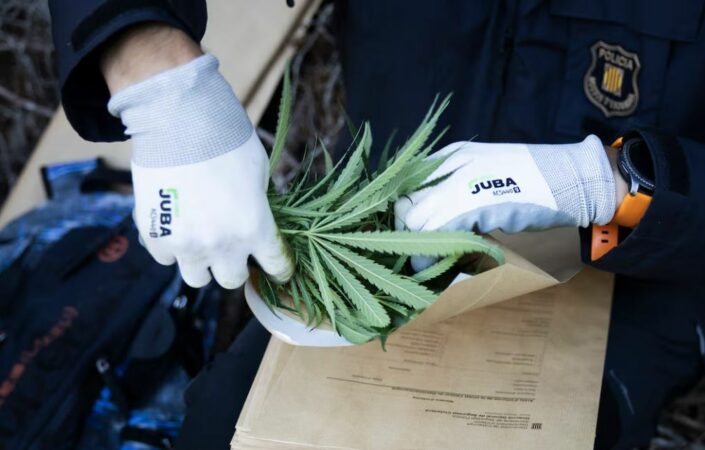
When they arrived at the apartment, police arrested the 52-year-old property owner for a criminal offense related to cannabis cultivation. The drug operation was dismantled, but no trace of the Albanian was found.
After several years of investigation, the court in Santa Coloma de Farners has decided to close the preliminary phase and move the case to a jury trial. The prosecution is seeking 22 years and 5 months in prison for the accused, while the two private lawsuits are seeking even higher sentences.
According to the suspicions of the investigating judge, "El Seco" attacked the young man while he was lying in bed and did not suspect anything. The cause of the latest conflict is suspected to have been a sum of 5 euros, which the 52-year-old claimed that the Albanian had taken from him.
The prosecution claims that the attack was extremely brutal and that a traumatic brain injury was among the injuries that caused the young man's death.
On April 17, 2023, about a month and a half after the disappearance, a person walking their dog discovered skeletal remains in a wooded area near the Can Fornaca residential complex, not far from the apartment where the two people lived.
The body was not found complete. According to investigators, the remains had been scattered and damaged by wild animals, including wild boars and dogs that frequented the area. The condition of the bones did not allow for the determination of all the injuries the victim might have suffered. A knife was also found next to them.
Investigators uncovered several pieces of evidence that, according to the prosecution, link the 52-year-old to the suspected crime.
A towel, a duvet cover, a pillow and a rug, all stained with blood, were also discovered in the same area where the Albanian's remains were found. Traces of blood were also found in the victim's bedroom, where the accused allegedly tried to clean up the evidence.
Police also discovered traces of blood on the van that is suspected of being used to transport the body to the wooded area. Bloodstained pants were also found inside the apartment's washing machine, which investigators believe belonged to the accused.
The prosecution suspects that the body was left in that area with the intention of wild animals dismembering it and making it more difficult to identify it, as well as to discover evidence.
Despite the evidence collected, "El Seco" denies having committed the murder. His lawyer claims that the accusation is based mainly on circumstantial evidence and a chain of suspicion, without direct evidence proving authorship.
According to the defense, the fact that there was blood in the room does not prove that the death occurred there, just as cohabitation with the victim is not enough to attribute the murder to the accused. It also disputes the interpretation of blood stains on the trousers and in the van as direct evidence of the attack and transportation of the body.
The lawyer has requested that the case be dismissed, arguing that the investigation's conclusions are built on assumptions that support each other, but which, according to her, do not prove beyond a doubt the involvement of her client.
Another element of the case relates to the footage from the security cameras in the residential complex. The judge has asked the Municipality of Riudarenes to make the recordings available to identify the possible movements of the accused in the hours after the crime.
However, the municipality's initial response was that recordings were automatically deleted six months after they were made, which makes it difficult to secure this material for the investigation.
The case also has a procedural peculiarity: the lawyer representing the victim's father, Jonathan Juiz, has been included in the witness list, as he was among the first people to communicate with the accused to seek explanations about the Albanian's disappearance. However, he is not expected to testify in court, while two expert reports he contributed to during the investigation have been included in the court file.
In addition to the murder charge, the 52-year-old is also charged with desecration of a corpse, for which the prosecution is seeking five months in prison.
As for compensation, the prosecution is seeking 140 euros for the victim's parents and 35 euros for the sister. In one of its arguments, it points out that the family was only able to bury the part of their son's skeletal remains that was found in the area, making the pain of loss even more severe.