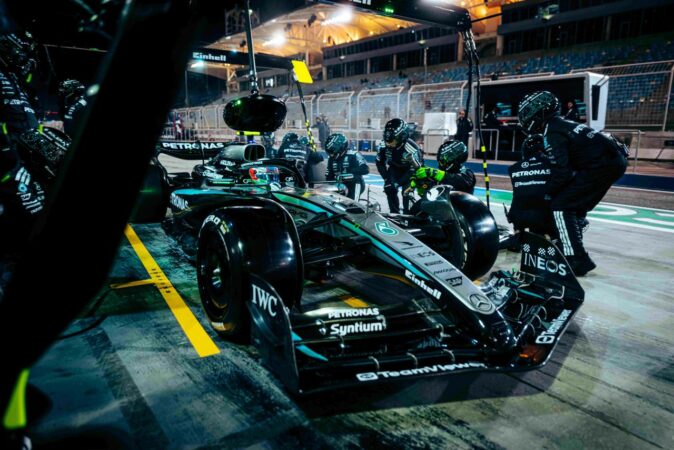



Mercedes' Constructors' Championship title is the fruit of a long-term strategy by Toto Wolff, built on early preparation for the change in technical regulations. The dominance in the first half of the season proved decisive. On the other hand, the Brazilian Grand Prix has further exacerbated Ferrari's problems, between the tensions between the two drivers and repeated difficulties in rainy conditions and low temperatures. It was a triumph that seemed destined, but its officialization always remains the culmination of a season.
Mercedes have been crowned world constructors' champions, completing an extraordinary season, following Kimi Antonelli's success in the drivers' championship. A triumph built on a dominant first half of the season, when the German team built a significant advantage that proved decisive in the race for the title. Even as McLaren and Red Bull grew significantly, becoming worthy rivals for the lead, Mercedes never appeared helpless, regardless of the track or the conditions of the race.
This success is no coincidence. It is the result of a long-term strategy, launched more than two years ago, with the aim of preparing the team as best as possible for the new technical era of Formula 1, which is expected to last at least until 2030. All teams had oriented their work towards changing the regulations, but Mercedes managed to do this better than others, laying the foundations for success at the right time.
THE UNIT OF POWER, THE FOUNDATION OF SUCCESS
Beyond the political weight that Toto Wolff has gained over the years in relations with the International Automobile Federation, Mercedes understood earlier than its rivals that the decisive factor in the new era would not only be active aerodynamics, but above all the power unit, where the internal combustion engine and the electrical system are combined.
The British-German team benefited significantly from its long and successful experience in Formula E, especially in the management and use of electric power. An advantage that also proved decisive in relation to Mercedes' customer teams. None of them managed to exploit the electric potential of the engine with the same efficiency as the official team this season. But the success is not only related to the engine. Mercedes built a competitive car in mechanical and aerodynamic terms, with a remarkable ability to adapt to the characteristics of the tracks and the different racing conditions.
CHEMISTRY FACTOR
Another decisive element in this triumph was Kimi Antonelli. The Italian's talent created the ideal combination between the potential of the car and the skills of the driver. It is true that the "W17" proved to be the best car throughout the season, but it is equally true that a driver with the experience and qualities of George Russell often had difficulty interpreting and fully exploiting its potential. Even in the development process, several rivals, especially Red Bull, managed to make significant strides forward. Antonelli, however, made the difference.
Especially in the first half of the championship, the Italian left his rivals and, in many cases, even his teammate behind. In this way, a project that Toto Wolff had been building for a long time was completed: a competitive car, a young driver with extraordinary potential and a structure that is already reaping the fruits of investment and long-term planning.