


By DASHNOR KALOÇI
Although it was widely promoted that; "unlike capitalist countries, in Socialist Albania the health service was free for all citizens:, throughout the entire period of the communist regime of Enver Hoxha and his successor, Ramiz Alia, it left much to be desired. Even in many aspects, such as the equipment and equipment of hospitals and other health facilities with various modern medicines and medications, it was a problem that remained unresolved until the collapse of that regime. But one of the biggest wounds of health care before the '90s, is said to have been that of the high number of deaths of children aged 0 to 1 year, or as it was otherwise known in the medical term; "infant mortality".
Among other things, this is also known from some archival documents of the Ministry of Health of that time, where its correspondence with some of the highest party and state institutions and bodies of that time is located, in which it is known that during 1971 alone, in all districts of the country, out of 72.771 births, 7027 deaths were recorded in children aged 0 to 1 year.
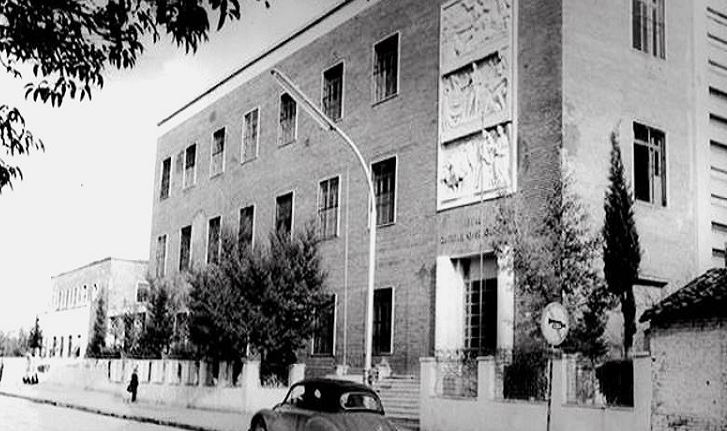
But what shocked Tirana and alarmed the top party and state leadership of that time was the death of 27 babies in the Tirana Maternity Hospital (today the “Nana Mbretereshë” Maternity Hospital) in just a few days at the end of September and the beginning of October 1972, which forced the relevant bodies of that time to close the Tirana Maternity Hospital altogether. But why did such a high number of deaths occur in that maternity hospital at that time and what were the reasons for the decision to close that Birthing Center? What is said in the report-information of the Minister of Health of that time, Dr. Llambi Ziçishti, sent to the highest instances of the state and what was the reaction and response of the top leadership of that time, starting from Prime Minister Mehmet Shehu, the secretary of the Central Committee of the Albanian People's Party, Hysni Kapo, the first secretary of the Tirana Party Committee and the member of the Politburo, Manush Muftiu, etc.?
The following archival documents, published for the first time, provide a detailed overview of the alarming state of infant mortality in Albania in 1971, as well as the efforts of the state apparatus to bring this tragic phenomenon under control. Through the report of the Deputy Minister of Health, Dr. Kleo Miho, as well as official reports signed by Dr. Bukurije Maçi at the Directorate of Mother and Child, the true picture of medical service in districts and villages during the communist regime is revealed.
These official documents from early 1972 reveal not only the high infant mortality rates, where respiratory diseases such as bronchopneumonia accounted for up to 60% of cases, but also the deep infrastructural backwardness in rural areas. The documents reveal the failure of the plan to build maternity homes and clinics, the lack of maternity permits and medical check-ups for children aged 0-3, as well as the scandalous food conditions in village nurseries, where even the most basic items such as wheat bread and milk were lacking. Through an administrative self-criticism, the reports also attack the bureaucracy of local health departments and the superficial or fictitious presentation of demographic data from districts. Regarding this, etc., we are familiar with the documents in question, extracted from the Central State Archive (the fund of the former Central Committee of the Albanian People's Liberation Army), which are published for the first time and with the relevant facsimiles by Memorie.al.
Continues from last issue
LETTER FROM PRIME MINISTER MEHMET SEHU, ON THE SERIOUS EVENT OF THE DEATH OF 27 INFANTS IN THE TIRANA MATERNITY IN OCTOBER 1972 AND MEASURES AGAINST THE STAFF
About Maternity and Ministry
I am not a doctor. But logic tells me that the source is the personnel serving in the maternity ward (doctors, nurses, attendants), and the unclean conditions there. That is, there is a lack of hygiene DISCIPLINE. From whom do doctors demand hygienic discipline, when they themselves violate it, without the appropriate degree of responsibility and respect for human life?
Not only should the maternity ward be closed and transferred, but all of this personnel, abusively, must pass “through the eye of a needle”, by the control to find the bacteria and to be disinfected, since as you yourself say, “even after the temporary closure of the Obstetrics Corps, returning to this ward creates guarantees, only if the hygienic rules of asepsis are strictly implemented”. Then, you are the first to implement these rules! Act according to the principle: “do as I do”, and not according to the principle: “do as I say, but don’t do as I do”!
This case should serve as a general shake-up, not only in the maternity sector, but also in all other sectors, health and everywhere, in the city and in the countryside. And take responsibility for yourself, and not throw it at the mothers, claiming that they are the carriers of the germ! How do you know? Where did you get this theory?! Don't you have hygiene cards for all the mothers who enter the maternity hospitals! If you had control, you would have discovered the source in time. Therefore, take all responsibility for yourself.
Note: In the new temporary birth center, none of the current nursing staff should serve until their hygiene is ensured and there are no bacteria, returning to the maternity ward only when you are sure that everything is in order.
October 1972 Mehmet Shehu
REPORT – INFORMATION FROM THE MINISTER OF HEALTH, DR. LLAMBI ZIÇISHTI, REGARDING THE SERIOUS EVENT OF THE DEATH OF 27 INFANTS IN THE TIRANA MATERNITY IN OCTOBER 1972
: INFORMATION
Following our most recent reports on the situation at the Birthing Center in Tirana, we were informed of the following: The sick children are recovering and no suspicious cases have been reported from contacts.
Since November 3, 1972, there have been no new cases either in the maternity ward or in the city. The children have been born so far in the Birthing House of the Combine.
The current situation is such that with the capacity and conditions of that House, this practice should not continue. The personnel serving there have been brought from other districts. It is anticipated that on 15.XI.1972 the Birth House in Tirana will reopen. For its reopening and functioning, a series of measures have been taken in order to avoid the spread of any such infection as much as possible in the future. These structural measures have not been available in maternity hospitals in the past.
A special ward for newborns was created. This ward will have 6 separate rooms to avoid crowding of children, and a larger room divided into four parts, where a system of boxes or half boxes will be installed to prevent the transmission of infections.
An isolation ward was created in the form of two separate boxes to house sick children. If necessary, it is planned to add another separate annex to the first one and in communication with it.
Oxygenation systems were installed everywhere, so that the children would not feel the need to move.
The material to be used for children will be sterilized in an autoclave. The equipment has been provided and a centralized sterilization system has been created.
The linen used by doctors, blouses and aprons will be autoclaved every day. To separate these, measures have been taken to create a special wardrobe separate from that of gynecology and abortion.
Continuous sterilization of all premises, equipment, furnishings, etc. has been carried out.
All employees have undergone bacteriological examination. Suspicious ones will not be accepted into service.
Measures have been taken to sterilize and maintain hand hygiene before any contact and manipulation with children.
To implement these measures, material resources such as linen, furniture, equipment, etc. have been added.
A special sanitary inspectorate service has been established.
With these measures, infections will certainly be avoided. Continuous work will be done to educate people. The fact that only one violation caused several new cases to appear on 30.X.1972, as stated in the first report, makes one believe that strengthening hygienic discipline is the main factor and we must all insist on this.
We have worked on the remarks of Comrade Prime Minister and again, before the activity in the obstetric corps resumes, we will provoke another meeting to insist even more on the measures that have been taken and on the responsibilities that arise for us.
These days we will gather obstetricians from the districts and directors of institutions to familiarize ourselves with this issue and to determine the measures that need to be taken for each institution. We have also done this with the heads of Health in Korça.
Tirana, 15.XI.1972
ministry
Lamp Ziçishti
REPORT-INFORMATION OF THE DEPUTY MINISTER OF HEALTH DR. KLEO MIHO, SENT TO THE EXECUTIVE COMMITTEE OF TIRANA, ON THE SERIOUS SITUATION OF INFANT DEATH IN OCTOBER 1972
PEOPLE'S REPUBLIC OF ALBANIA Secret
MINISTRY OF HEALTH Tirana on 4-XII-1972
Mother and Child Directorate
No. 54/177 Prot.
Subject: Information on infant mortality for the month of October 1972.
DISTRICT KP EXECUTIVE COMMITTEE
(Health Section)
In the analysis of infant mortality for the 6th and 9th months of 1972 that we sent you, we drew attention to the increase in this mortality in the third quarter.
October of the current year is much higher (9.5%) than the previous months and October of last year. Particularly worrying is the increase in infant mortality in the districts of Berat, Fier, Korçë, Lushnje, Saranda, Skrapar and Tirana, which have consistently remained below the average of the Republic, while for the month of October of this year they are well above the average of the Republic and above their usual level. But also the other districts, with the exception of Gjirokastra, Përmet, Kolonjë, Tepelena, Vlorë and Lezha, have very high infant mortality for the month of October.
During the months of June-July-August and until mid-September, the Viral epidemic of the 'ECHO' group passed in most districts, from which many children of young ages and those under one year old were affected. In Tirana during the month of October there was a nosocomial infection in the neonatal ward of the Birth House which caused many deaths. Also, a bacterial infection appeared in the city of Burrel and in several villages around in the first days of October, from which several children under one year old died.
Apart from these, we do not know and do not have any other signals to explain the increase in infant mortality in October. Some districts try to justify this increase with premature atmospheric changes (premature cold), which caused many respiratory diseases in children.
We think that this is not the main reason, since even near these districts with high infant mortality, there are districts that had the same atmospheric conditions and have had low infant mortality for the last 2-3 months, such as: Gramshi, Mirdita, Kolonja, Tepelena, Vlora, etc.
However, based on the partial data we have on this in recent months, it turns out that there are many negative factors that influence the health and lives of children:
1 – In some districts there have been many premature births, from which a large proportion of the children have died.
2 – There have been many accidental deaths (asphyxia, etc.)
3 – There are numerous deaths within the first 24 hours of hospitalization.
4 – There are still many deaths of children without being visited and without receiving any medical assistance, as well as births without medical assistance.
We mentioned some worrying factors that with a lot of work can be reduced to a minimum in a very short time. Therefore, for all of these, I recommend:
a)- Health authorities and workers, at the center and at the grassroots level, should continuously monitor and study the causes of premature births, focus attention on implementing the law on the rights of pregnant women, cooperate more with government bodies, mass organizations, especially women's organizations, and seek their assistance to prevent possible violations.
b)- To minimize accidental deaths in infants, health workers should do more work with parents in terms of raising and caring for children, and in some cases, a medico-legal autopsy should be requested.
c)- For the numerous deaths within the first 24 hours of hospitalization, in addition to convincing parents for timely and regular treatment of children, their timely hospitalization in hospitals, the directorates of health institutions (hospitals and maternity homes) and the section should review the means and measures needed for emergency and resuscitation in these institutions.
d)- With the completion of all villages of the Republic with midwives this month, births with full medical assistance should be carried out close to one hundred percent. At the same time, regular home or consultation follow-up of children should be carried out, especially in the first months of life. For this, midwives should be monitored and assisted in their work more by the section and the people's councils of the villages, as well as by mass organizations.
e)- Deaths without medical assistance should be of great concern to all health authorities and workers. Health departments, doctors at regional hospitals and health centers should do their utmost to reduce these cases as much as possible, and now the medical capabilities and forces are greater for such a purpose.
Regarding the increase in infant mortality in recent months, especially in October, the Ministry of Health draws the attention of sections and all health workers, who must mobilize more in this direction, strengthen and not weaken organizational measures due to any decrease in infant mortality.
Health sections should urgently study and draw conclusions about the increase in infant mortality in October, exchange experiences with neighboring districts and those with low mortality, and take all necessary measures for the spreading 'A-2' influenza epidemic, which should not harm and cause numerous deaths in children.
We request once again that the previously sent material on 6 and 9 month mortality be worked on with all demography commissions and pediatricians and obstetricians. Also, the material we are sending you is immediately worked on in these commissions, with the directors of the institutions, the Presidency of the Executive Committee and the Party Committee are informed and for the difficulties you will have, you should seek the help of these bodies./ Memorie.al