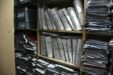



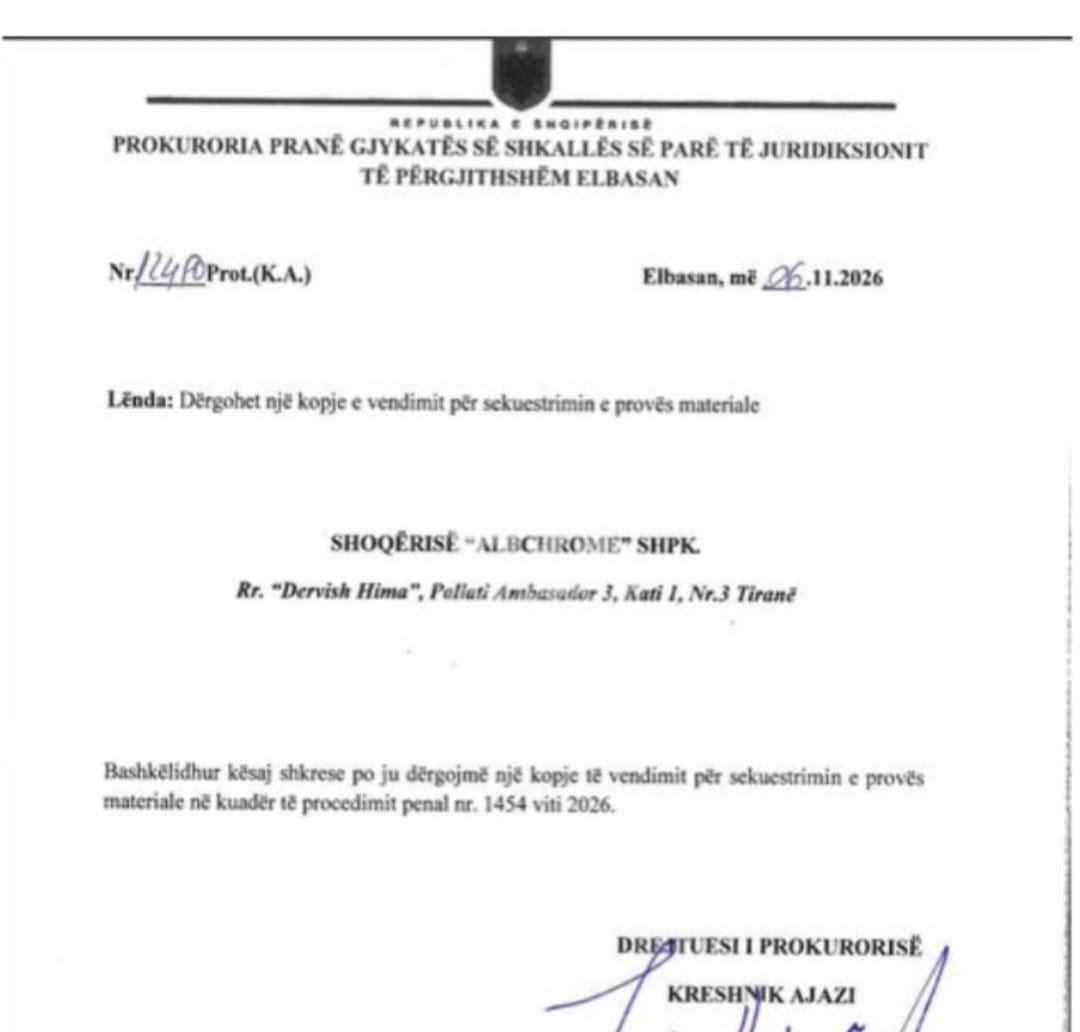
The Elbasan Prosecution Office has seized over 300 tons of industrial dust extracted from the Ferrochrom Plant, owned by the Albchrome concessionaire company. The waste, obtained from the dust capture system during the industrial process, has been taken as material evidence, as it is considered important for documenting the facts being investigated by the prosecution.
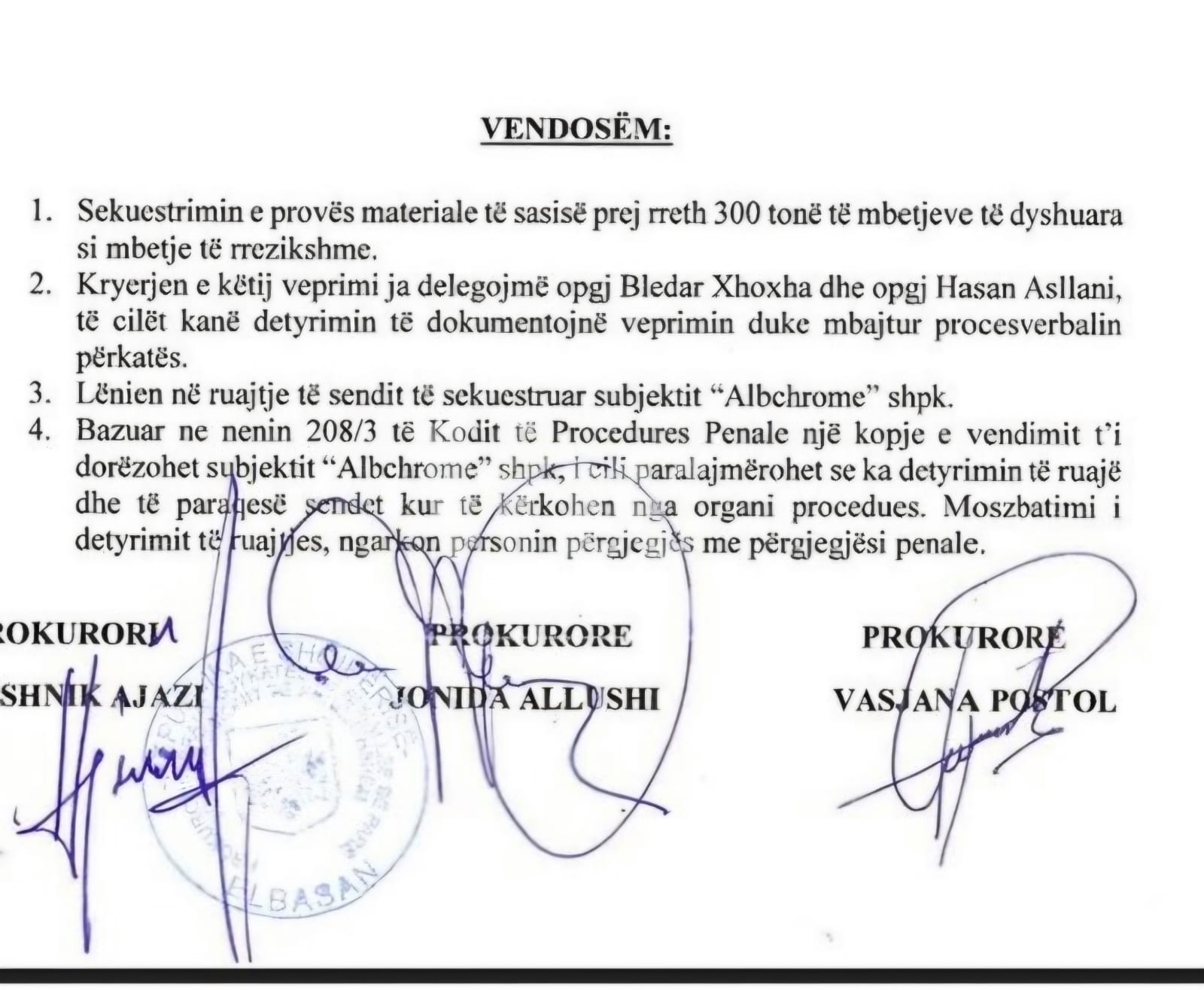
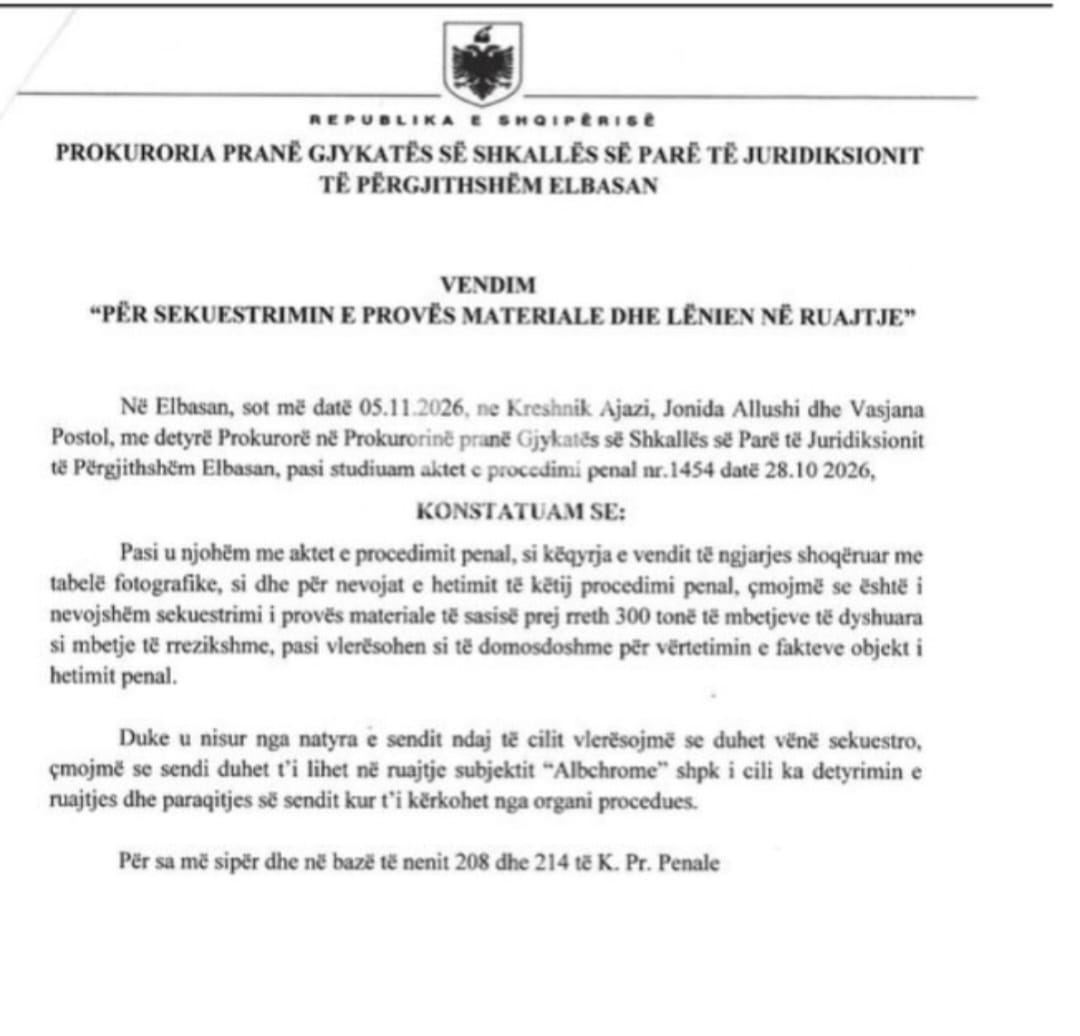
According to official documents from the Elbasan Prosecutor's Office, the seizure was carried out for a considerable amount of around 300 tons of waste, which will serve to confirm the circumstances and facts subject to the criminal investigation.
However, due to the nature and quantity of the seized material, prosecutors have decided that the remains will remain in storage with the entity Albchrome sh.pk, which already has the legal obligation to maintain and preserve them, as well as to make them available to the proceeding body whenever requested.
318 tons of waste, the reason for the suspension of activity
The matter became public on May 28, when the National Inspectorate for Territorial Protection suspended Albchrome's activity, after during inspections it found the storage of 318 tons of hazardous waste, which, according to the authorities, was stored without meeting the necessary safety conditions.
Another worrying element identified during the inspections was the fact that the company did not have contracts for the transfer, disposal, disposal or processing of this amount of waste.
KTA: Waste poses a high risk
The National Environmental Agency (NEA) has also paid special attention to the issue, which, based on its report, has described this waste as very dangerous.
This concerns dust collected by the special emissions capture system in the ferrochrome production process, a material for which the environmental assessment has raised serious concerns regarding its hazardousness.
The seizure of over 300 tons by the Elbasan Prosecutor's Office constitutes another development in the investigation into the issue of industrial waste at the Ferrokrom plant.
The investigations are expected to shed light on the manner of administration, storage and treatment of this waste, the respective responsibilities, as well as compliance with legal obligations for the protection of the environment and public health.