



The use of illegal drugs is a serious problem for 79% of Albanians, while almost two in three citizens think that their consumption has increased over the last five years.
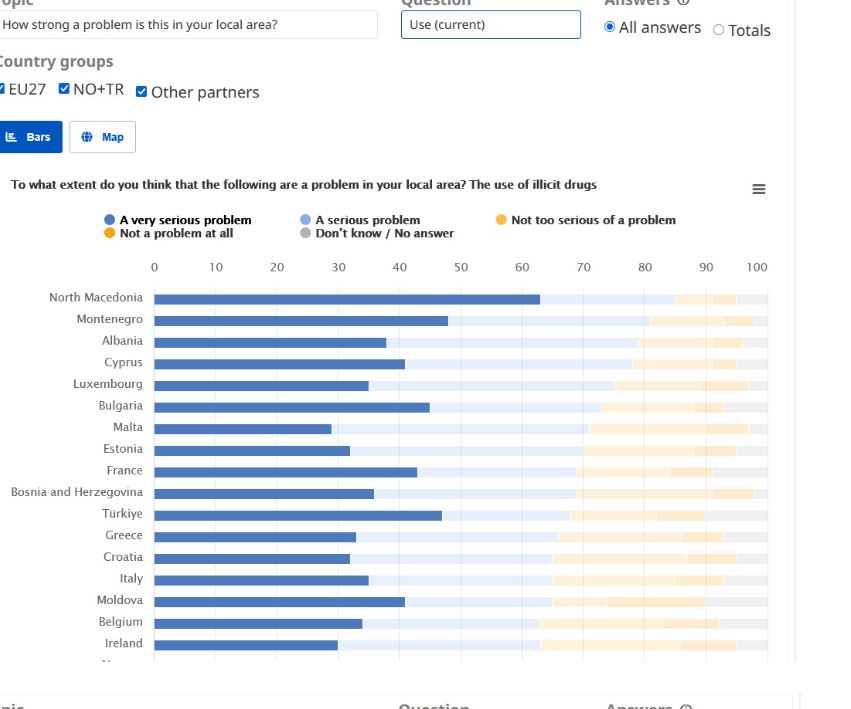
According to the latest survey by the European Union Drugs Agency (EUDA), published in November 2026, 38% of respondents in Albania consider drug use a very serious problem in the area where they live, while 41% consider it a serious problem.
Only 12% think it is not a very serious problem and 5% that it is not a problem at all.
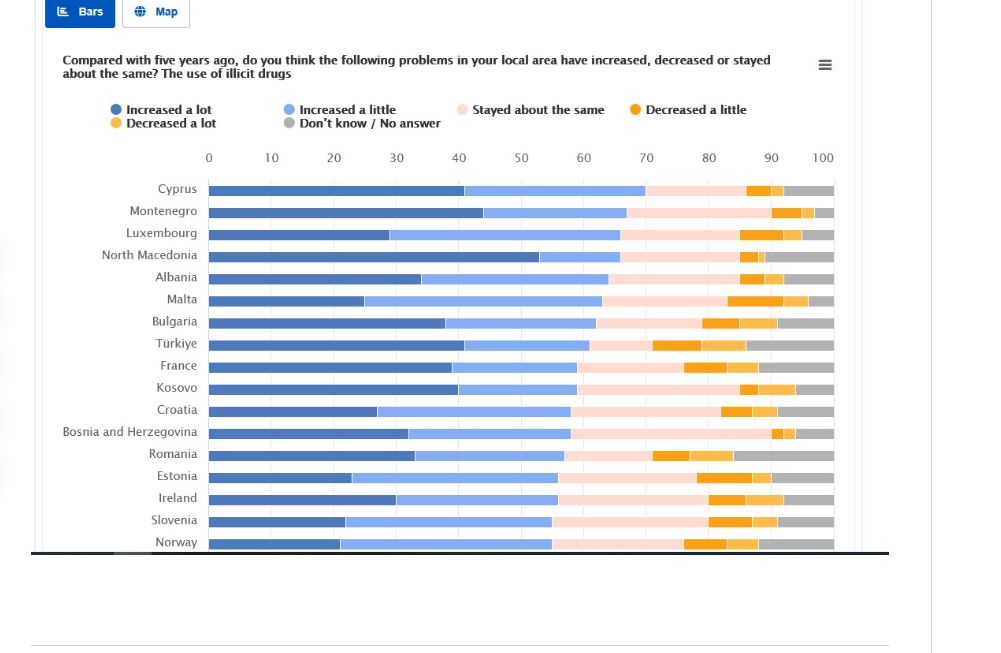
The high concern is also associated with the perception that drug use has become more widespread in recent years. Around 34% of Albanians believe that drug consumption in their area has increased significantly compared to five years ago, while 30% estimate that it has increased somewhat.
In total, 64% of respondents perceive an increase in drug use, compared to 21% who think the situation has remained unchanged. Only 7% estimate that use has decreased, while 8% did not provide an answer.
The data reflects a widespread concern about drug use in Albanian communities. However, the survey measures citizens' perceptions and not the actual number of users or the quantities of drugs consumed.
Albania is among the countries with the highest level of concern about drug use in Europe. By comparison, an average of six in ten European Union citizens consider drug use a serious problem in the area where they live, compared to almost eight in ten in Albania.
Drug trafficking is also seen as a serious problem in Albania. Around 79% of citizens surveyed consider drug trafficking a serious or very serious problem in their community, significantly above the European Union average of 60%.
Europe
According to EUDA, the differences between European countries are considerable. In the European Union, the percentage of citizens who consider drug use a serious problem ranges from 44% in Denmark to 78% in Cyprus.
Among non-EU countries included in the survey, North Macedonia has an even higher level of concern, at 85%.
At the European level, concerns about the use and distribution of drugs are particularly related to the consequences for public health and safety.
Around 39% of EU citizens list mental health problems, including psychosis and suicide, among the main drug-related health concerns.
Another 30% worry about the consequences of new, powerful synthetic drugs.
For public safety, the main concern is the involvement of children and adolescents in drug trafficking, mentioned by 30% of Europeans, followed by drug-related violence and crime, with 27%, and driving under the influence of narcotics, with 26%.
The survey also highlights the perception that drugs are relatively easy to obtain.
In the European Union, 48% of citizens think they can obtain cannabis within 24 hours, while for cocaine and MDMA this percentage is around a third.
Young people aged 15–24 report a higher perception of availability than older age groups.
Regarding measures to limit problems related to drug use, 45% of European citizens support strengthening police interventions against trafficking and distribution, while 43% call for more support for the reintegration into work and daily life of people with addiction.
The EUDA survey was conducted from June 24 to July 16, 2026, with 95,883 respondents aged 15 and over in 36 European countries, including Albania.
It aims to identify citizens' perceptions of drug use and trafficking, the consequences for communities and ways of dealing with the problem./Monitor.al/