





In the municipalities of Dimal and Poliçan, residents and local leaders are trying to convince the government from afar that the project to merge their units with Berat will lead to their further paralysis and depopulation. Kristaq Tumani, a retired former teacher from Dimal, is spending this summer worrying about what will happen to his community if the municipality merges with Berat. “Like every citizen of Dimal, I have followed the project to merge the Dimal Municipality with great concern,” Tumani told BIRN.
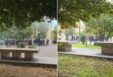
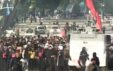
The proposal submitted by the Socialist Party to the Assembly at the end of July envisages reducing the number of municipalities in the country from 61 to 46. Among the 15 municipalities proposed for merger are Dimali and Poliçani, which could join the Municipality of Berat. The proposal is still in the consultation phase and the final decision belongs to the Assembly, but the mere possibility of changing the map has been enough to spark opposition in both municipalities of the Berat District. In early August, dozens of residents, including the elderly, women and children, protested against the proposal with banners reading “Don’t touch Dimali”. Now, the discussions have moved from institutions to streets, localities and families. Tumani believes that the loss of the municipality would be felt directly in the lives of residents, especially in villages located far from urban centers.
“This merger would remove services, increase the costs of obtaining basic services, paralyze city life and consequently lead to the depopulation of the area,” he argues. The former teacher counts the approximately 38 villages and four administrative units of the Dimal municipality as one more reason for decision-making to stay close to the community. “The Dimal municipality has its own unique history, it has a high population, it has high economic potential,” he claimed.
An identity beyond the map
In Dimal, opposition to the merger with Berat is built on two pillars that are repeated in the reactions this summer: The identity of the area and the claim that the municipality has the economic capacity to function on its own. Vilson Shehu, leader of the organization “The Youth of Ura” and one of the voices of civil society in the area, had articulated the importance of this identity even before the debate on the new territorial map reached Dimal. “The municipality of Dimal is not a transitory municipality, but a municipality that has a past, a present and a future,” says Shehu. Along the same lines, the mayor of Dimal, Juliana Memaj, also evoked the ancient history of the area to oppose the socialist proposal for merger.
“Dimal has existed since the 5th century BC. At that site, in the beautiful hills of Cukalati, around the 2nd century BC, life, agriculture and trade were thriving,” Memaj wrote on August 1. The municipality was named Dimal in 2021, replacing the name Ura Vajgurore, after a long consultation process. But the historical argument is only part of the argument. Local leaders have turned to figures to argue that the municipality should not be considered an entity that cannot stand on its own financially. The local economy relies heavily on agriculture and trade. According to data presented by the Dimal Municipality, agricultural exports amount to around 50 million euros per year, while businesses related to agriculture, processing and other sectors of the economy operate in the territory. In this debate, one of the reform arguments that merging with a larger entity can increase financial and investment capacities has become the main point of conflict. "The merger will not bring increased investment capacity to Dimal; the opposite may happen in conditions where decision-making is separated from the unit being merged towards the anchor unit," the mayor previously argued.
The civic opposition then took on an institutional form. On August 10, the Municipal Council of Dimal discussed the proposal for unification with Berat, and out of the 21 participating councilors, 20 voted against. The meeting also discussed financial indicators. According to data presented by local representatives, over the past ten years Dimal had realized an average of 38% of investments with its own budget, compared to 7% reported for Berat. The councilors used this data to refute the argument that unification with Berat would automatically bring Dimal greater investment capacities.
Policeman at protest
On the other side of the county, the town of Poliçan with a very different history is also opposing the project to merge with Berat. The end of August brings more movement to the Poliçan area every year. The days of pilgrimage to Mount Tomorr fill the streets of the area with believers and visitors, but this summer, among the residents of Poliçan another issue has competed with the pace of the pilgrimage: the possibility that their town will no longer have its own municipality. In late July, residents of Poliçan protested against the proposal, with some participants publicly burning Socialist Party cards. Organizers insisted that the opposition was not the protest of a party or individual, but the reaction of a community seeking to preserve the city’s institutions and identity.
In August, the protest was followed by public hearings. At one of them, a citizen present described the project as “exterminative and denigrating,” raising concerns that the removal of services could deepen impoverishment and depopulation. The strong language used in the hearing is part of an opposition that in Poliçan is also fueled by the city’s unique history. If Dimali traces its identity back to antiquity, Poliçan finds part of its identity in a much more recent history: the military industry. The city developed during the communist period around the Mechanical Plant and military production, which for decades provided jobs and determined the economic rhythm of the area. After the 90s, the weakening of industry and emigration changed the city, but the memory of the plant continues to be present in the arguments of those who oppose the unification with Berat.
In Poliçan, as in Dimal, the opposition moved from citizens to local institutions. After public hearings, a commission set up by the Municipal Council prepared a report with the community’s positions. On 21 August, the Municipal Council met in extraordinary session to discuss the proposal. All 15 members voted against the merger of the Municipality of Poliçan and the merger with Berat. The councilors also warned that they would resign if the Assembly approved the merger. The Municipal Councils do not have the power to determine the final map of the country, and their votes do not stop the parliamentary process. But they formalize an opposition that until early August was mainly expressed through protests and public reactions./BIRN