


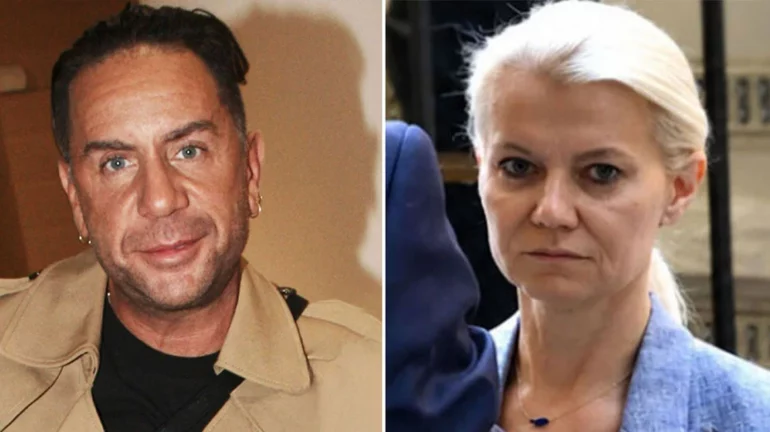



The investigation into the death of Giorgos Mazonakis is taking another turn, as Greek authorities are focusing on seized digital evidence, particularly one of two photos that Ioanna Gaka had taken with Mazonakis and then sent to a still unidentified recipient.
According to digital forensics data, Gaka had taken two photos and a video on September 9. All three files turned out to have been deleted before she appeared at the Kypseli Police Station to give her statement.
The first photo was taken at 14:43:36 and the file was created 43 seconds later. It was deleted at 19:09:09. In the image, Mazonakis is seen lying on a hospital bed while the machine is running. He is wearing a yellow T-shirt and is covered from the waist down with a blanket.
Medical equipment is visible in his hands, while an important element for investigators is the location data stored in the photo's metadata. The coordinates match a point on Karneadou Street in Athens, in the area where the clinic is located.
Digital traces of distribution have also been identified in connection with this photograph. According to the investigation, the photograph was sent to an unknown recipient, whose identity has not yet been determined. So far, there is no evidence that the photograph was sent to Elias Theodoropoulos.
The second photo was taken at 14:45:22 and the file was created four seconds later. This photo also appears to have been deleted, with the deletion time being 19:09:13, just a few seconds after the first image was deleted. The second photo also contains the same geographic coordinates.
A deleted video was also found on Gaka's phone, taken at 14:43:55, between the two photos. According to forensic data, this video was also deleted at 19:09:13.
For investigators, recovering deleted data is now considered a key element. They aim to determine who the photo was sent to, through which application it was distributed, whether there were accompanying messages, and whether the material was forwarded further.
Identifying the recipient could give a new direction to the investigation, especially if the communication matches the chronology of events within the clinic.
Authorities are also focusing on the cell phones of three clinic employees. Investigators are expected to analyze communications, messages, phone calls, photos, videos and any other digital traces that could help reconstruct the events.
Another possibility being considered is that Mazonakis was administered a substance before or during the plasmapheresis. No specific substance has been identified so far, and authorities are awaiting the results of toxicology tests.
The investigation is trying to determine whether any substance was administered in circumstances that required the presence and supervision of specialized medical personnel. The results of digital and toxicological examinations are expected to be crucial in shedding light on the circumstances of Mazonakis' death.