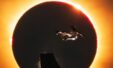
On October 25, 2022, the solar eclipse arrives, where the Moon will stand between the Sun and the Earth, hosting one of the most spectacular astronomical events ever. It will also be visible to us (although it will be partial), with a percentage of the solar diameter covered that will vary from about 29% to about 22%. Not being total, we won't see night fall suddenly, but we'll certainly be able to appreciate a significant decrease in sunlight.
In order to perceive the beginning of the eclipse without looking directly at the Sun, some precautions can be taken, for example, by taking a reference point, such as a building, and looking at it at regular intervals from the beginning of the eclipse to dedicate attention to the change in lighting. If you are unable to follow the event from a vantage point, you can connect to the Virtual Telescope website, which will follow the eclipse live with commentary by astrophysicist Gianluca Masi.
Viewing the Solar Eclipse with the naked eye is not recommended, as light radiation (even invisible) can cause permanent damage to vision even if the star is partially obscured. Therefore, it should be absolutely avoided. Do well to buy filters and special glasses, also available online at a low price, Alternatively, you can also use welding glasses.