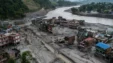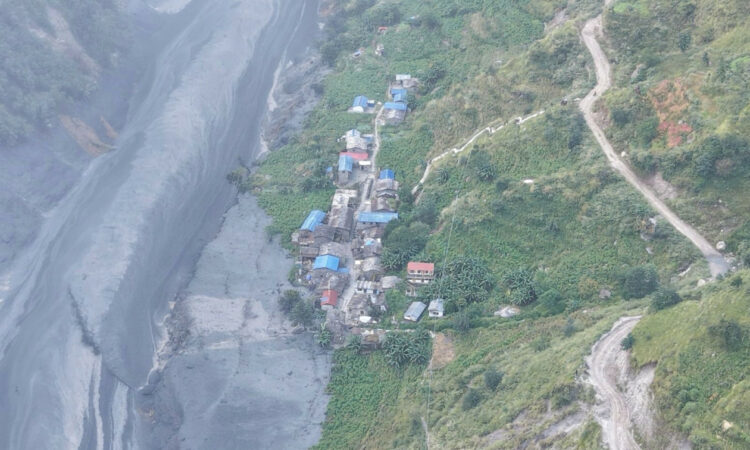



New images from massive floods in Nepal show the extent of the devastation caused by the overflowing Budhi Gandaki river. The torrential waters swept through residential areas in the north of the country, sweeping away homes, bridges and other vital infrastructure. At least five people are missing, while hundreds of residents have been forced to abandon their homes and seek shelter in safer areas. According to local authorities, about 50 people were rescued along the banks of the river, which flows through Gorkha province. So far, no casualties have been reported from the disaster, while the Nepalese army announced that search and rescue operations were suspended on Monday morning.
The floods have also caused significant damage to energy and communications infrastructure, affecting part of a hydroelectric power plant and several telecommunications towers. Authorities have warned residents living along the river to remain on alert until further notice. According to preliminary reports, the disaster began after a landslide near the village of Tsumtsure, which temporarily blocked the flow of the river and created a natural dam. When this dam collapsed, large masses of water quickly flooded lower areas, including settlements along the valley.
The released images show the waters rushing down the valley and engulfing an entire building complex. However, the number of villages affected by the floods has not yet been fully determined. One of the details that has come to light in the aftermath of the disaster is the delay by the authorities in warning residents. According to the newspaper The Kathmandu Post, many of them managed to leave their homes about an hour before official announcements arrived, after being informed by fellow villagers about the danger.
Suna Gurung said she woke up at 04:45 a.m. Sunday after receiving a call from a resident of a neighboring village who warned her that the river had overflowed its banks. “Within ten minutes, the river overflowed its banks. We immediately raised the alarm, woke everyone up and ran towards the forest,” she told the local newspaper. Gurung said that when she received the official message on her phone asking residents to stay in a safe place, she and others had been in the forest for more than an hour. Nepalese authorities have acknowledged delays in sending warnings. According to reported data, residents in higher areas received notifications almost two hours after the floods began, while those in lower areas were warned up to five hours later. The event has revived concerns about the effectiveness of the early warning system in Nepal, where rural communities often rely on peer-to-peer communication and social media to stay informed about natural hazards.
A short while ago: A devastating flash flood has swept away Salleri Bazaar (Market) and caused severe destruction in Jagat Bazaar along the Budhi Gandaki River, Gorkha District, Nepal.
(Video provided by Umesh.) https://t.co/aK74PD0S5t
— Weather Monitor (@WeatherMonitors) October 11, 2026
The latest floods hit a country still struggling to recover from severe natural disasters in recent months. According to reported data, August floods along the border with China caused more than 1,400 deaths and left thousands missing. Meanwhile, the government has announced that after the end of search and rescue operations, attention will focus on the rehabilitation of damaged areas, including the repair of roads and bridges, especially in remote regions where the destruction of infrastructure has made it difficult for emergency teams to intervene.
According to reported estimates, the cost of reconstruction after the floods amounts to about 4.26 billion euros. Almost 33 thousand people have been affected, while about 7,500 houses have been damaged or destroyed. The Budhi Gandaki River is a tributary of the Trishuli River, an important waterway for the capital Kathmandu region. The extent of the damage and the disappearance of people have raised concerns about the safety of communities living near the rivers, especially in mountainous areas, where landslides and heavy rainfall can cause flash floods.
Flash floods along Nepal's Budhi Gandaki River swept away homes and bridges, forcing residents to flee to higher ground.
Five people are missing, and six have been rescued, authorities said. https://t.co/wv7zilln7C
— Al Jazeera English (@AJEnglish) October 12, 2026